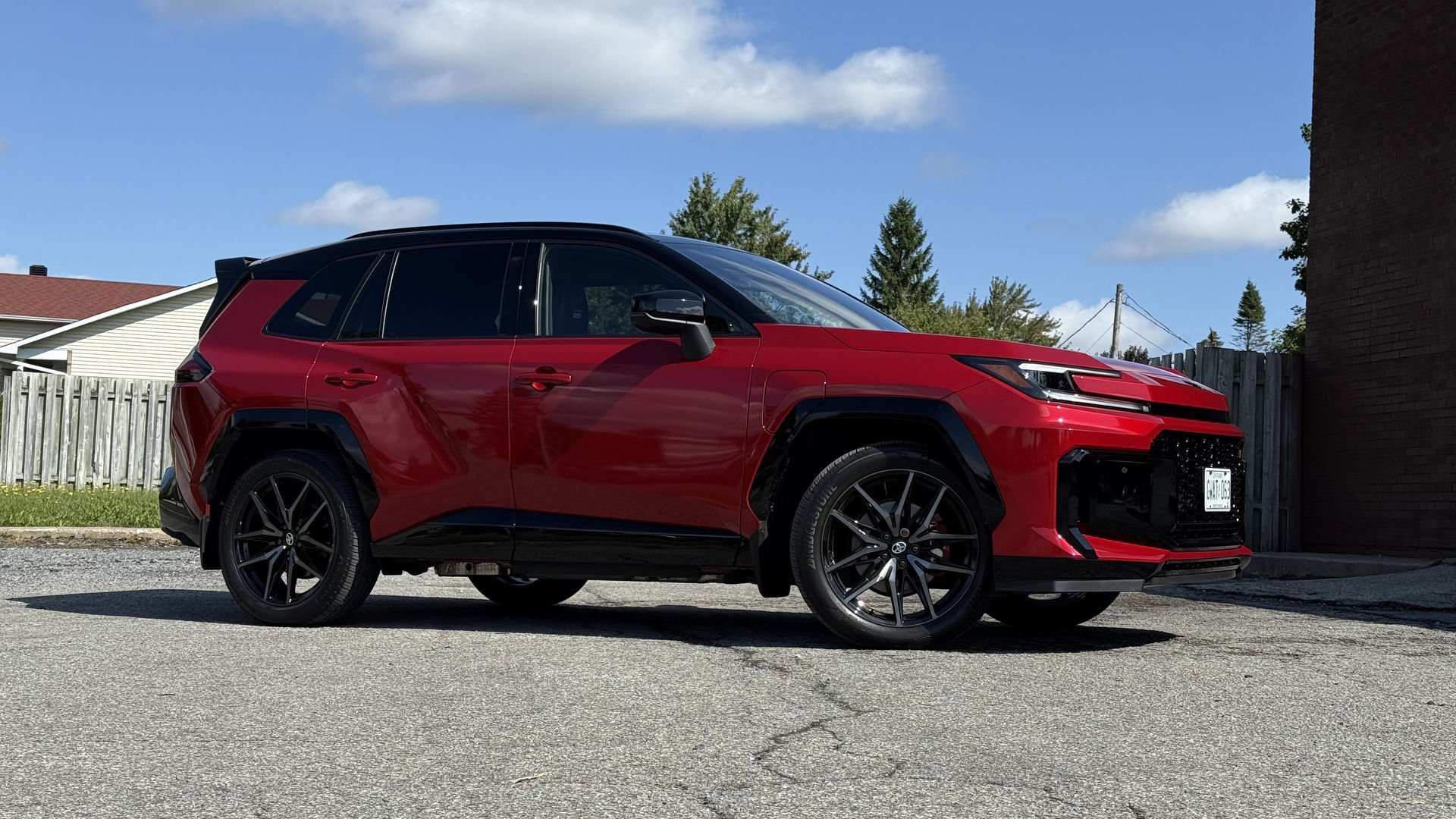
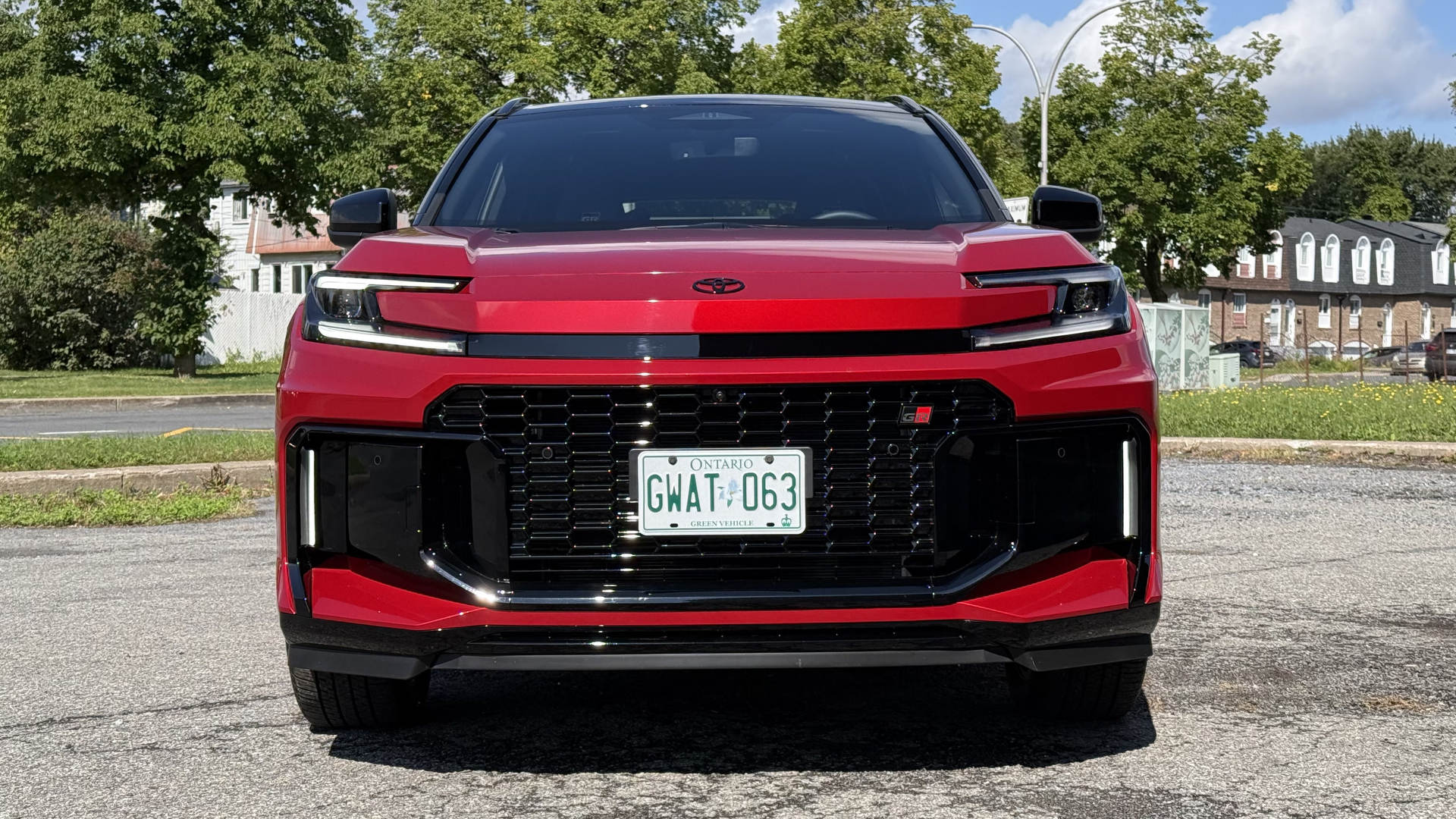
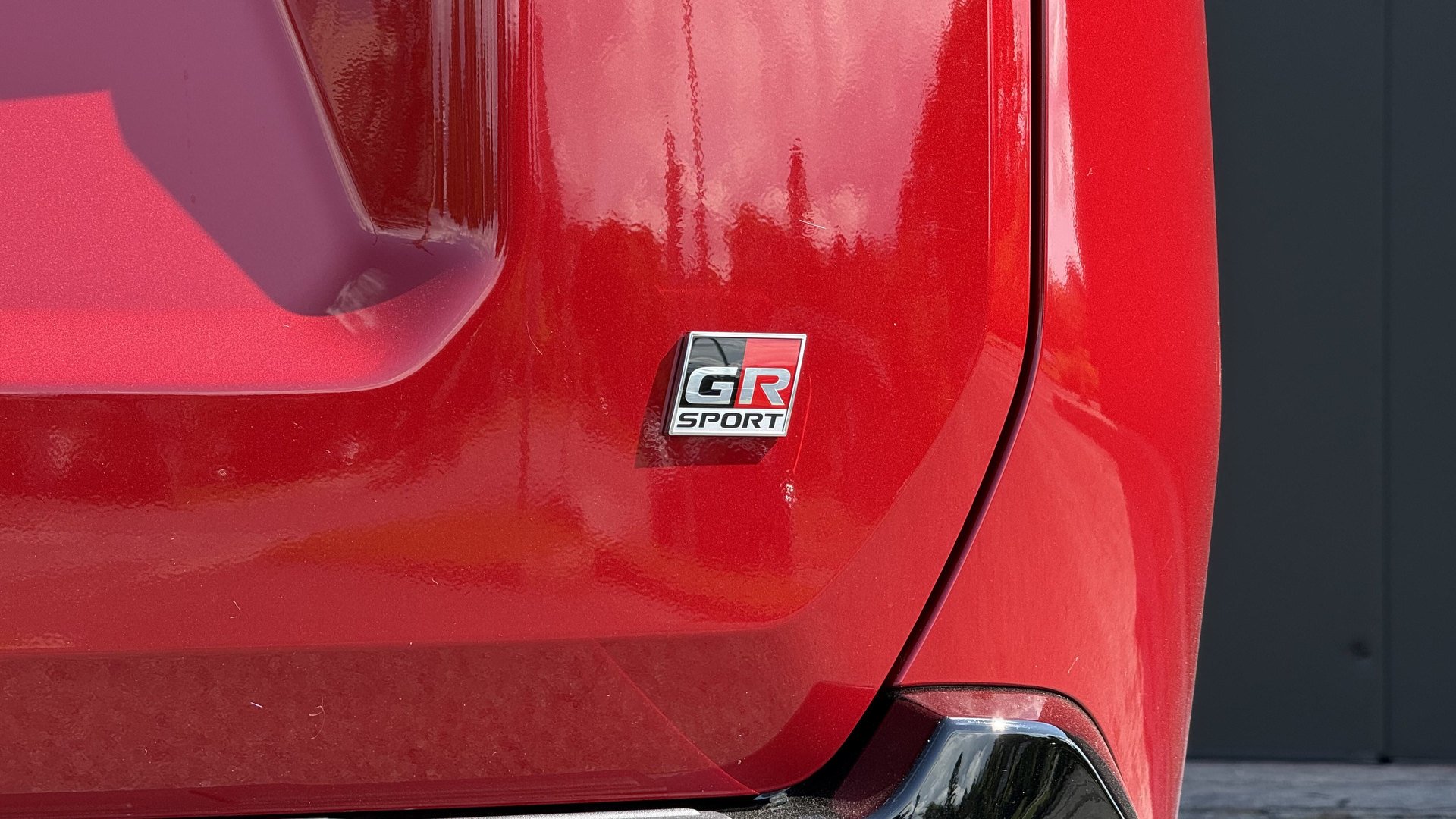
Muscular styling makes the GR Sport easily the most visually interesting RAV4 Toyota has produced yet.
Its 324-hp plug-in hybrid system combines genuinely strong acceleration with true everyday electric driving range.
Sharper chassis tuning adds entertainment without compromising the practicality that makes the RAV4 so universally appealing.
Toyota could have stopped with the regular 2026 RAV4. The new sixth-generation model already does virtually everything expected of a compact family SUV. It’s roomy, efficient, practical, easy to operate and available exclusively with electrified powertrains. Job done.
For a few extra dollars, buyers of the new RAV4 can opt for a plug-in hybrid powertrain for usable EV range and extra power. What more can be done to the relatively simple and extremely popular SUV?
 2026 Toyota RAV4 Plug-In Hybrid GR Sport | Photo: Matt St-Pierre
Toyota asked itself the question and decided the RAV4 needed a little attitude, too.
Enter the 2026 RAV4 GR Sport, the range-topping plug-in hybrid that sits as though it should have substantially more menace under the hood than your neighbour’s RAV4.
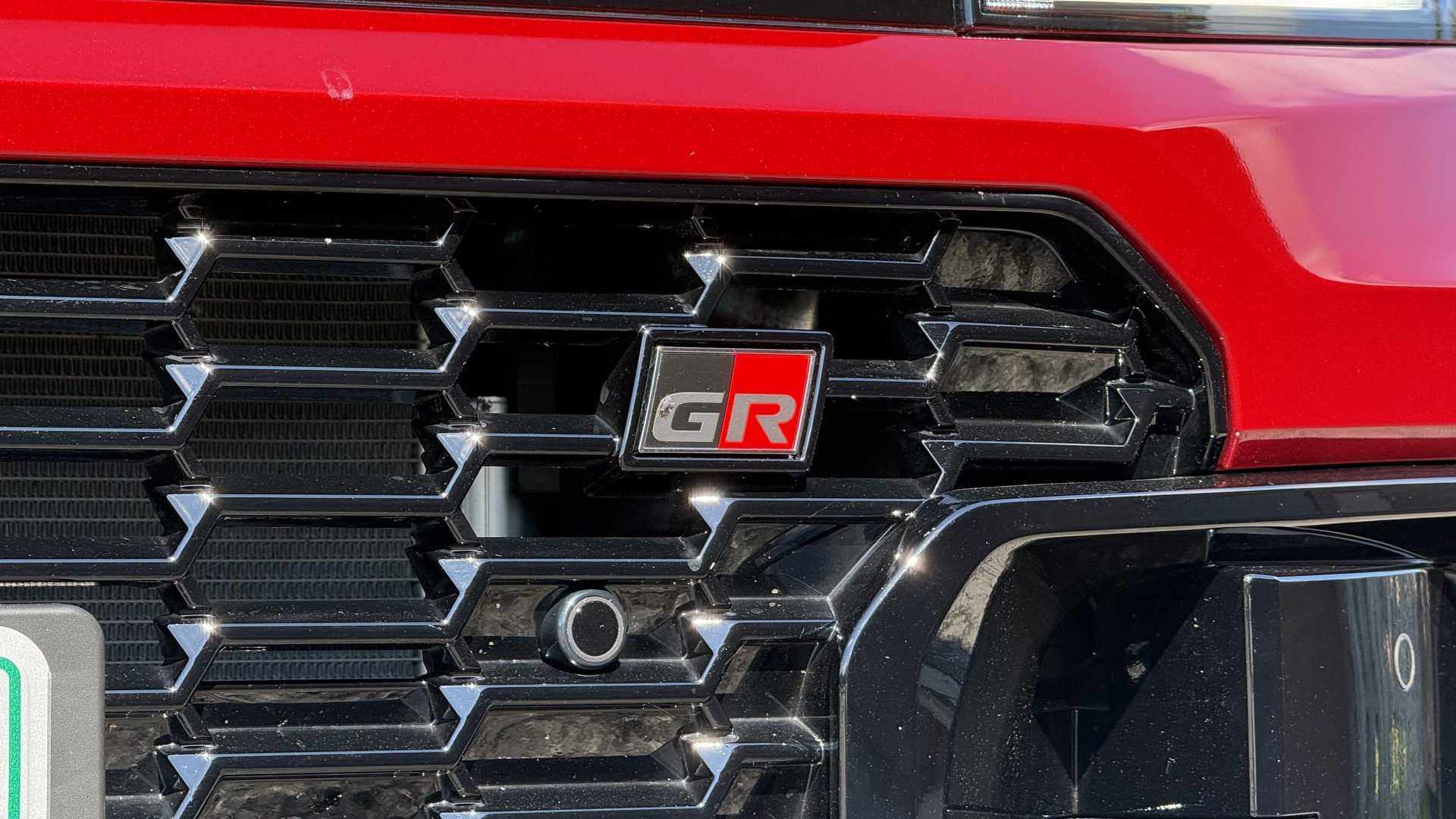
And before anybody gets too excited as I initially was, the important word here is “Sport”. This isn’t a RAV4 GR. Toyota hasn’t stuffed GR Corolla hardware beneath the sheet metal and created some deranged compact SUV. Though, I kinda wish they had…
Instead, Toyota has taken the already potent plug-in hybrid RAV4 and given it sharper styling and some worthwhile chassis changes.
 2026 Toyota RAV4 Plug-In Hybrid GR Sport | Photo: Matt St-Pierre
A RAV4 With Some Attitude
Pricing for the 2026 RAV4 Hybrid begins at roughly $40,500, while the plug-in hybrid lineup starts around $51,750 for the SE. The XSE sits above it, followed by this GR Sport at approximately $60,500.
That isn’t cheap, particularly because the GR Sport isn’t simply the RAV4 with every possible feature thrown at it. Some of what you’re paying for is appearance, and this in exchange for some features. In this case, I think that trade-off is beyond fair.
 2026 Toyota RAV4 Plug-In Hybrid GR Sport | Photo: Matt St-Pierre
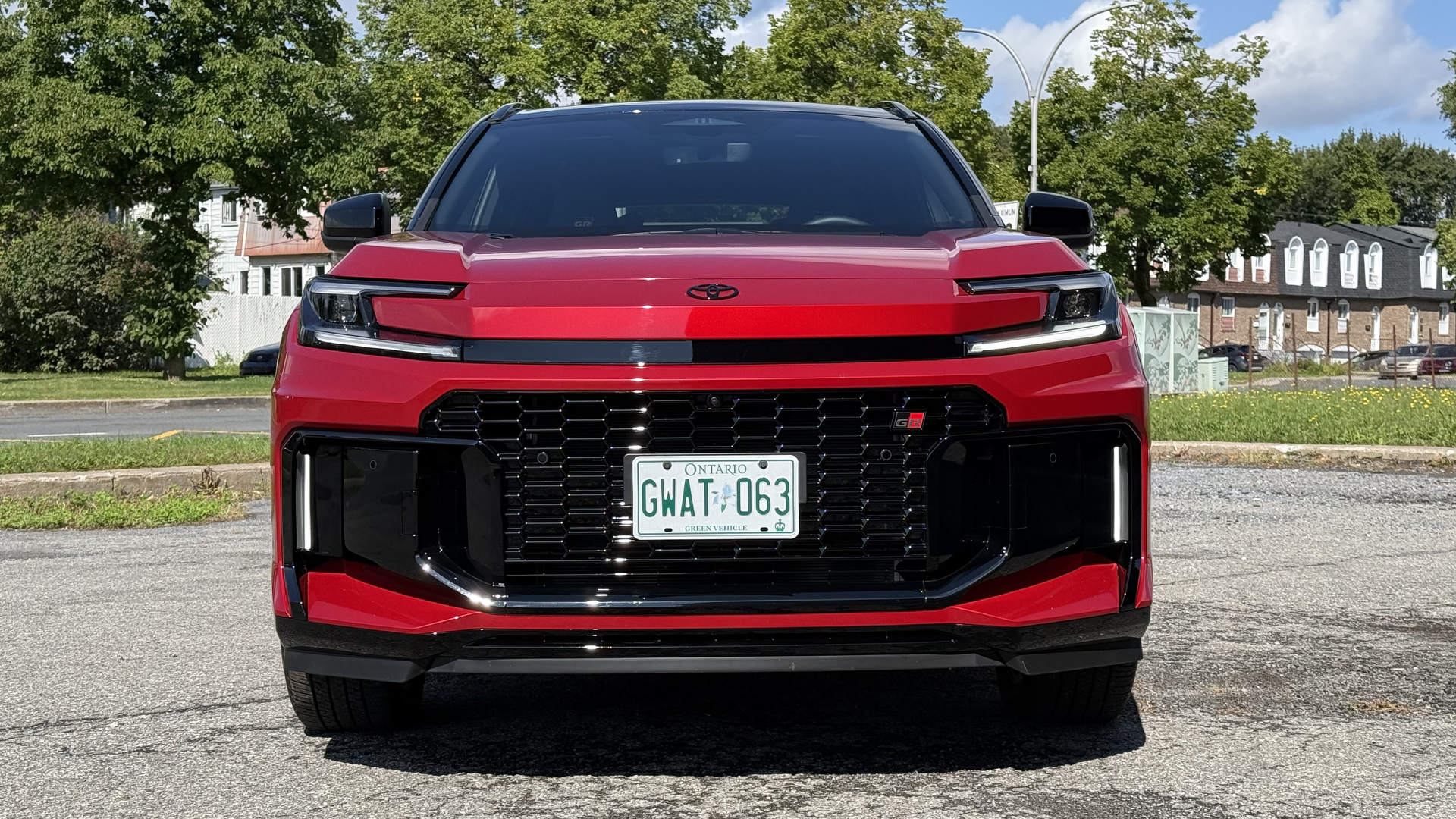
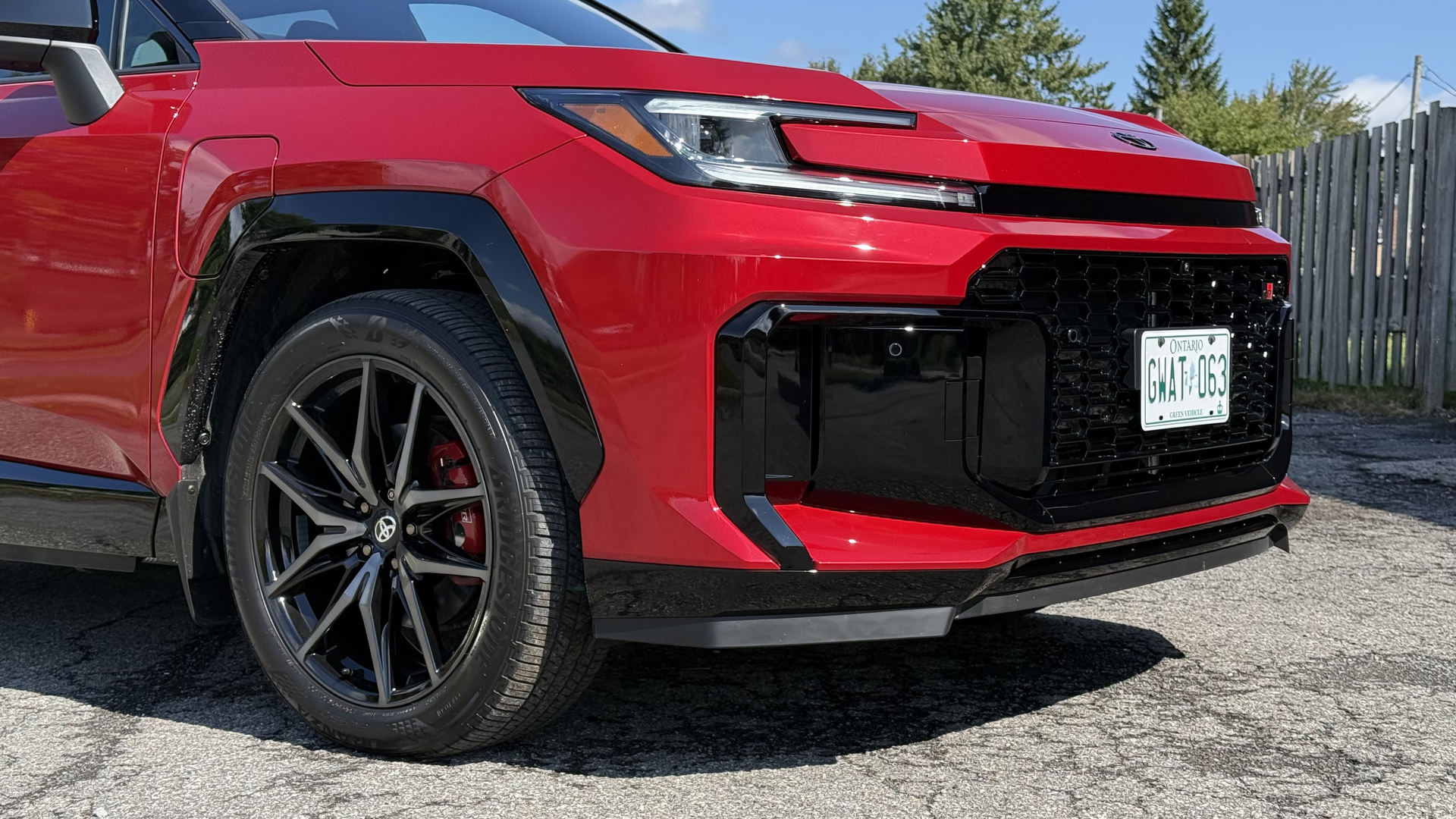
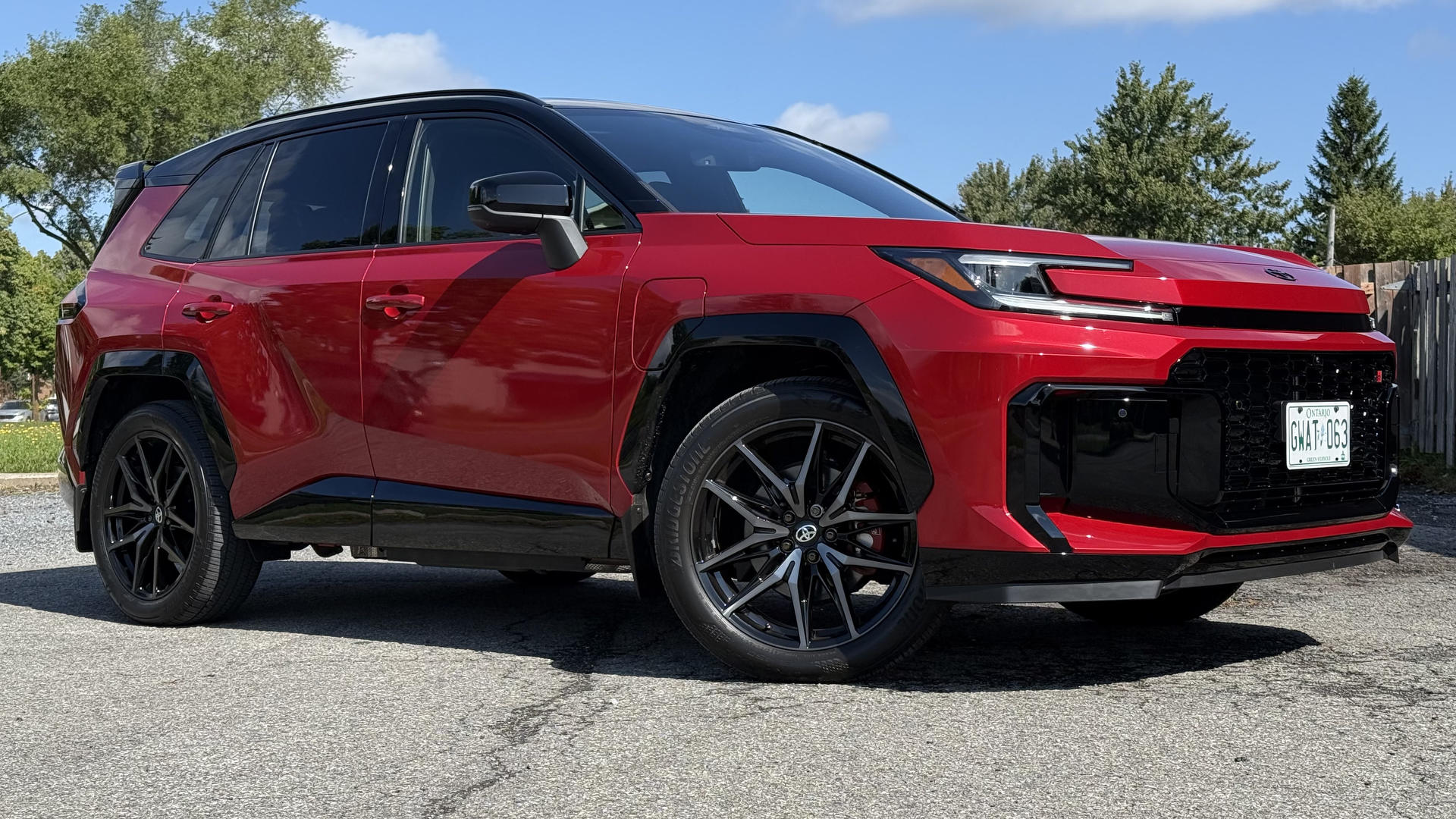
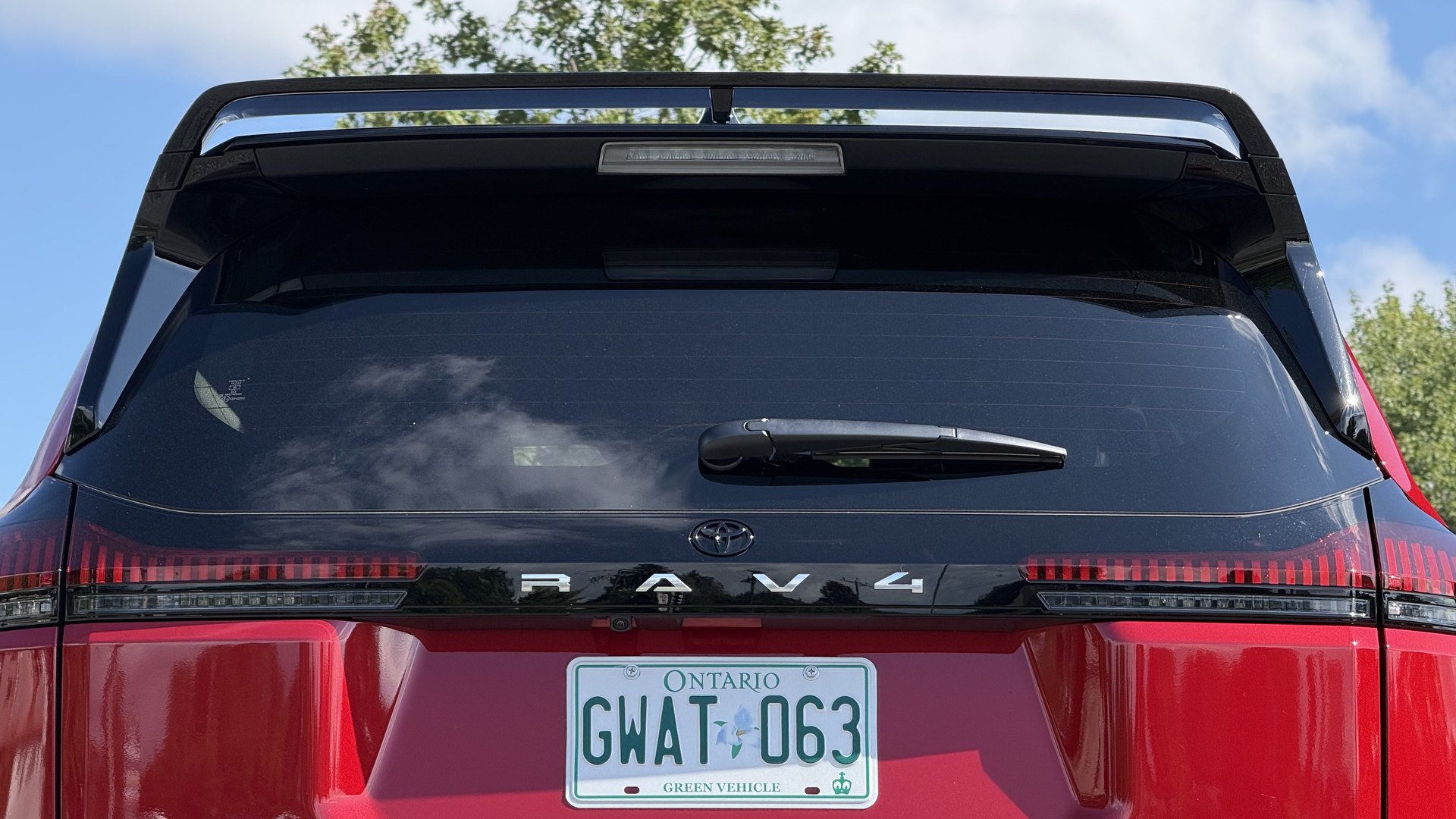
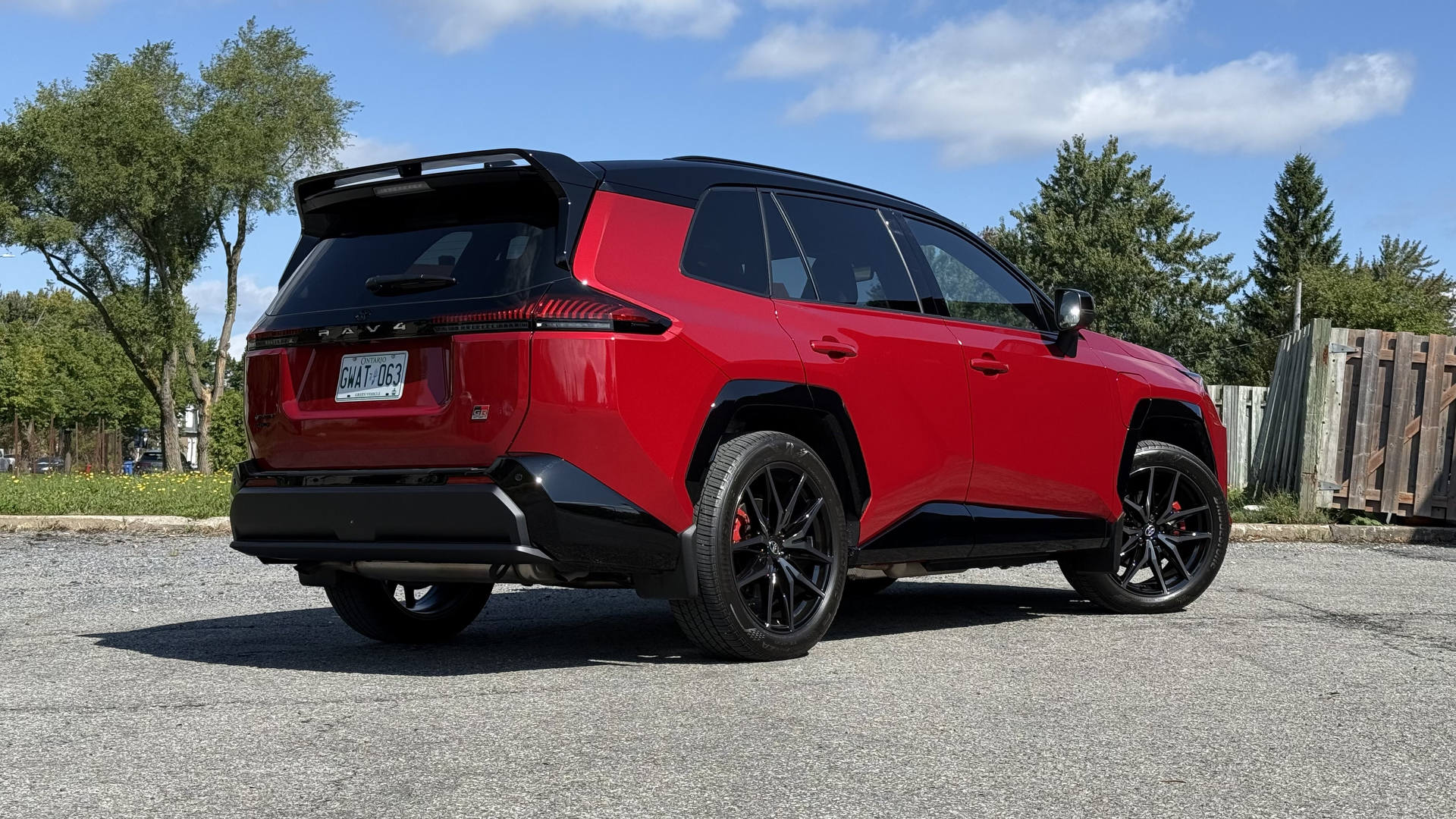
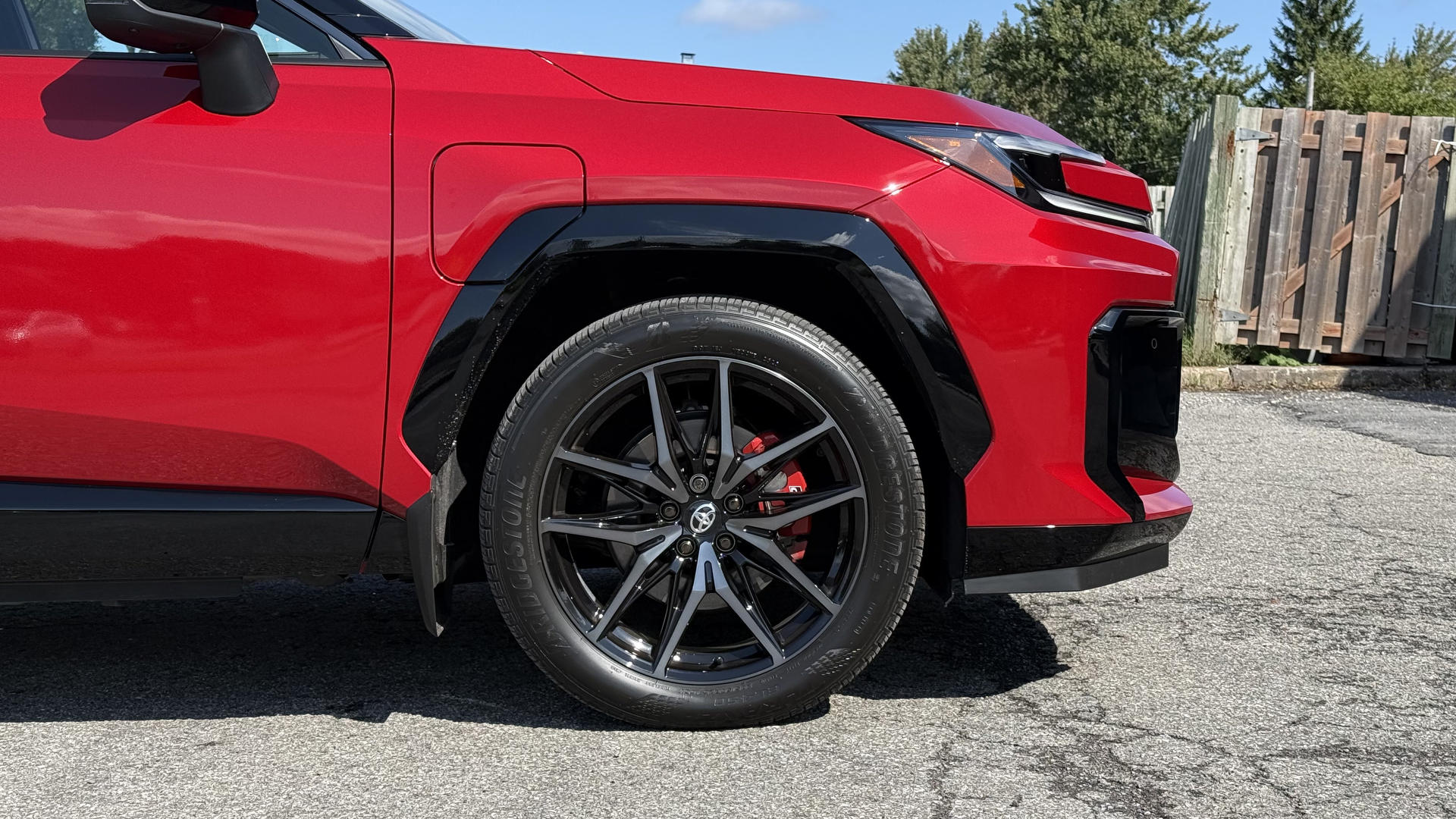
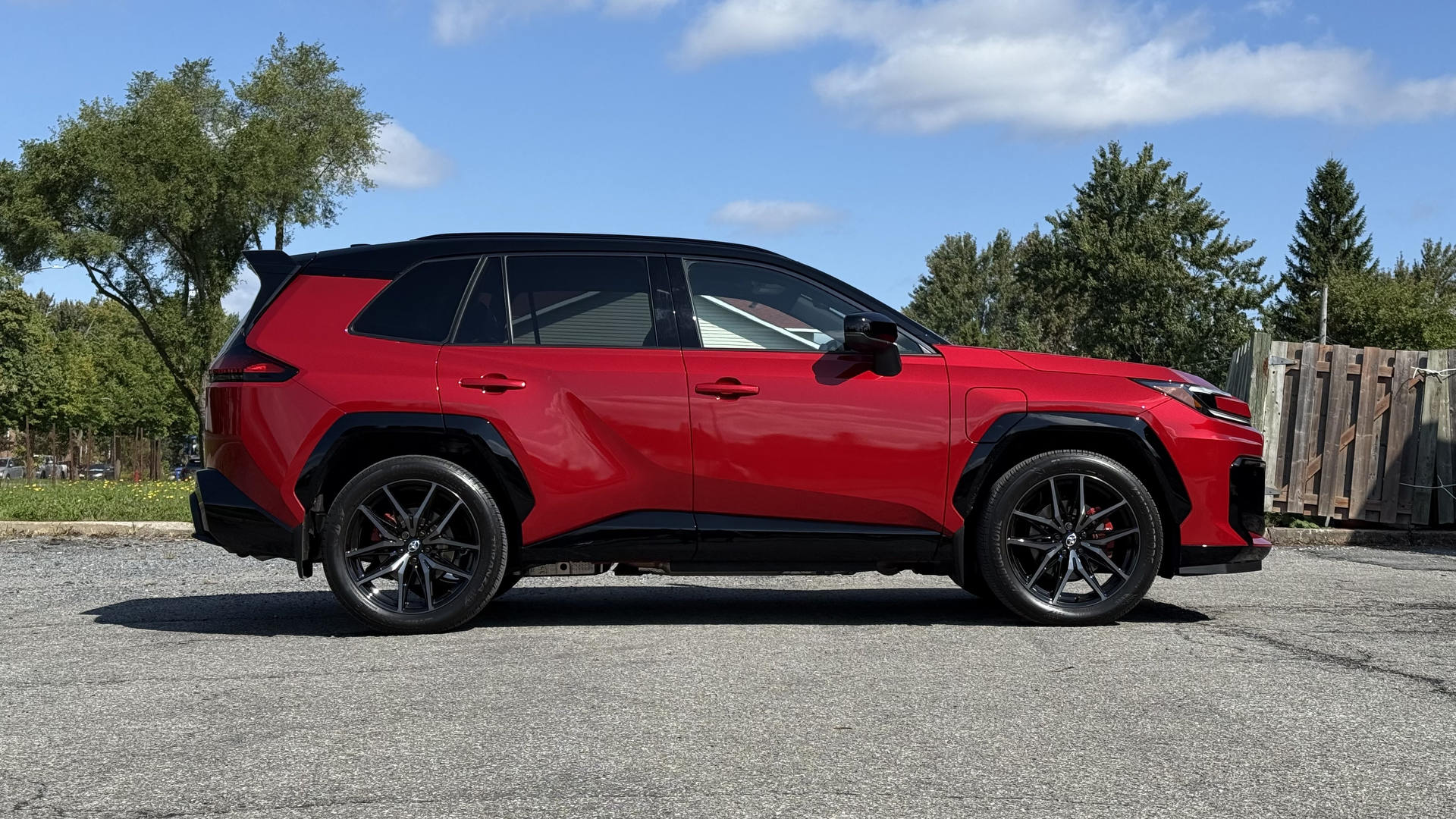
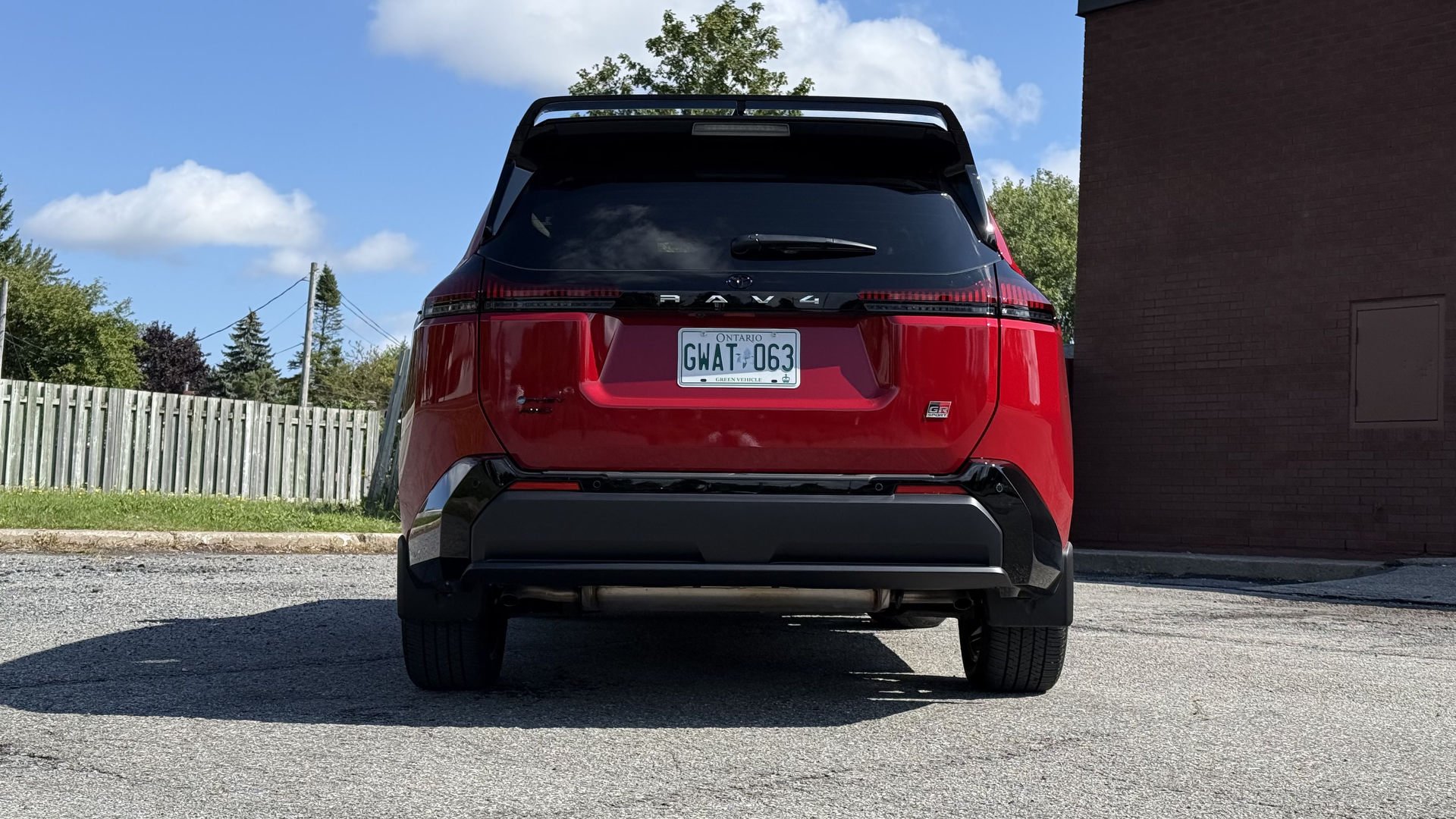
Unique 20-inch wheels, revised front and rear bumpers, extra exterior trim, a black roof and a fantastic rear spoiler completely change the RAV4’s character. Supersonic Red only makes the whole thing better.
The suspension also drops the body slightly, which adds brilliantly to the exterior treatment and gives the GR Sport a wider, more hunkered appearance. I can’t remember the last time a RAV4 caught my attention simply because it looked good. Yet here we are.
There’s just one problem: those looks write a cheque the chassis can’t entirely cash.
 2026 Toyota RAV4 Plug-In Hybrid GR Sport | Photo: Matt St-Pierre
Sport Is the Important Word
Underneath is Toyota’s 2.5L naturally aspirated engine, paired with a plug-in hybrid system that includes a 22.7 kWh battery and two electric motors. Combined output is 324 hp, an increase of 22 compared with the previous RAV4 Prime or PHEV. More to come?
This is plenty of power. Acceleration is quick, especially once the petrol engine and electric motors work together in hybrid mode. But this still isn’t the manic little SUV its GR-inspired appearance might suggest.
Toyota gives the GR Sport dedicated suspension tuning, including sportier dampers and a slightly dropped ride height. It responds nicely, steering has decent weight, and the brakes are particularly good.
 2026 Toyota RAV4 Plug-In Hybrid GR Sport | Photo: Matt St-Pierre
Push a tad harder, though, and the RAV4 eventually reminds you what it is. There’s still a decent amount of understeer, and you won’t get anything resembling the tenacious cornering behaviour of a GR Corolla.
I found myself wanting more powertrain aggression simply because the exterior kept tricking me into expecting more.
That doesn’t make the GR Sport disappointing. Quite the opposite. Among mainstream compact SUVs currently available, this is one of the more entertaining ones I’ve driven. More importantly, Toyota hasn’t destroyed the ride quality in pursuit of the GR badge. This RAV4 version is a daily driver with some extra spice.
 2026 Toyota RAV4 Plug-In Hybrid GR Sport | Photo: Matt St-Pierre
The Electric Side… Is More Important
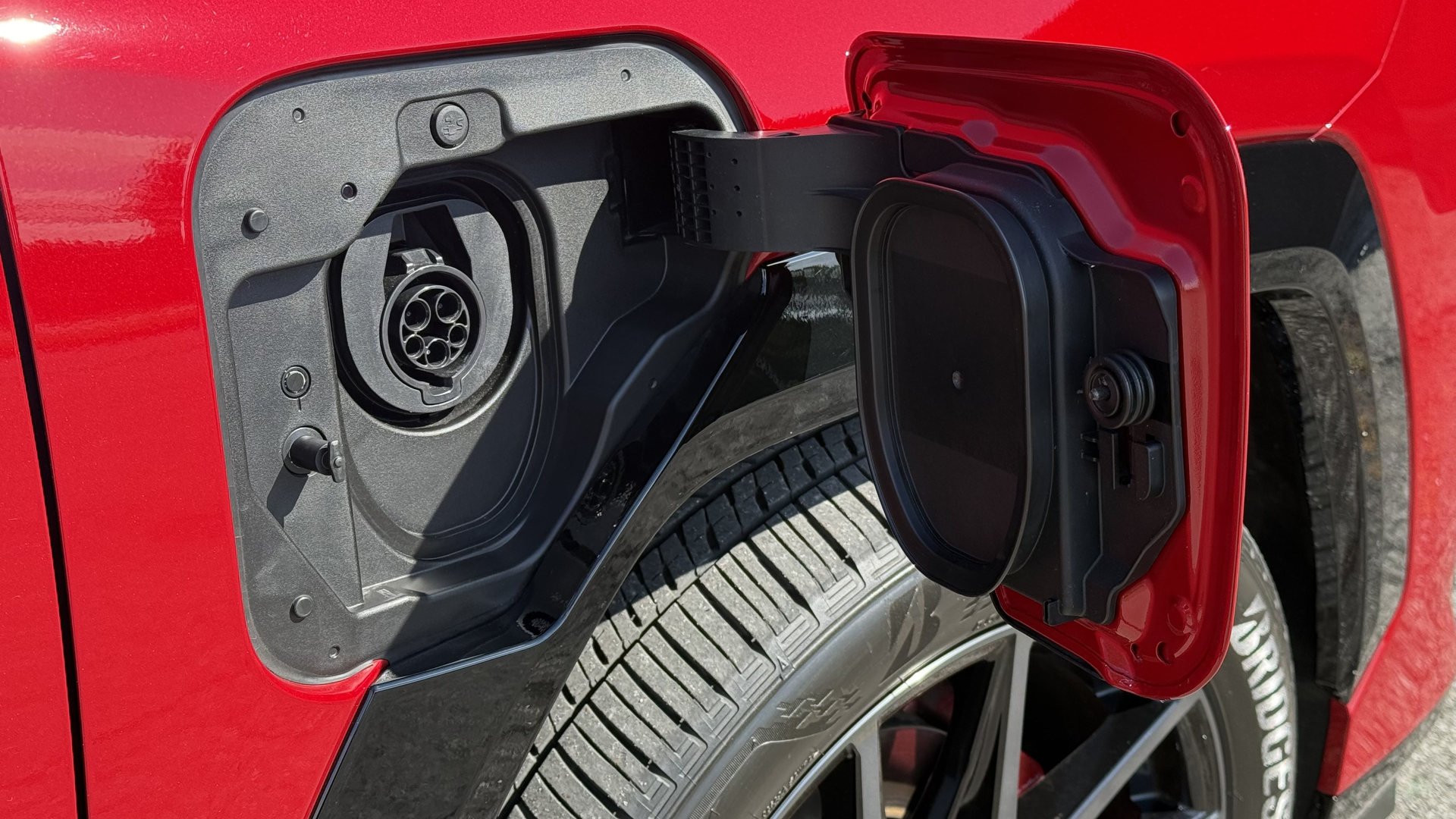
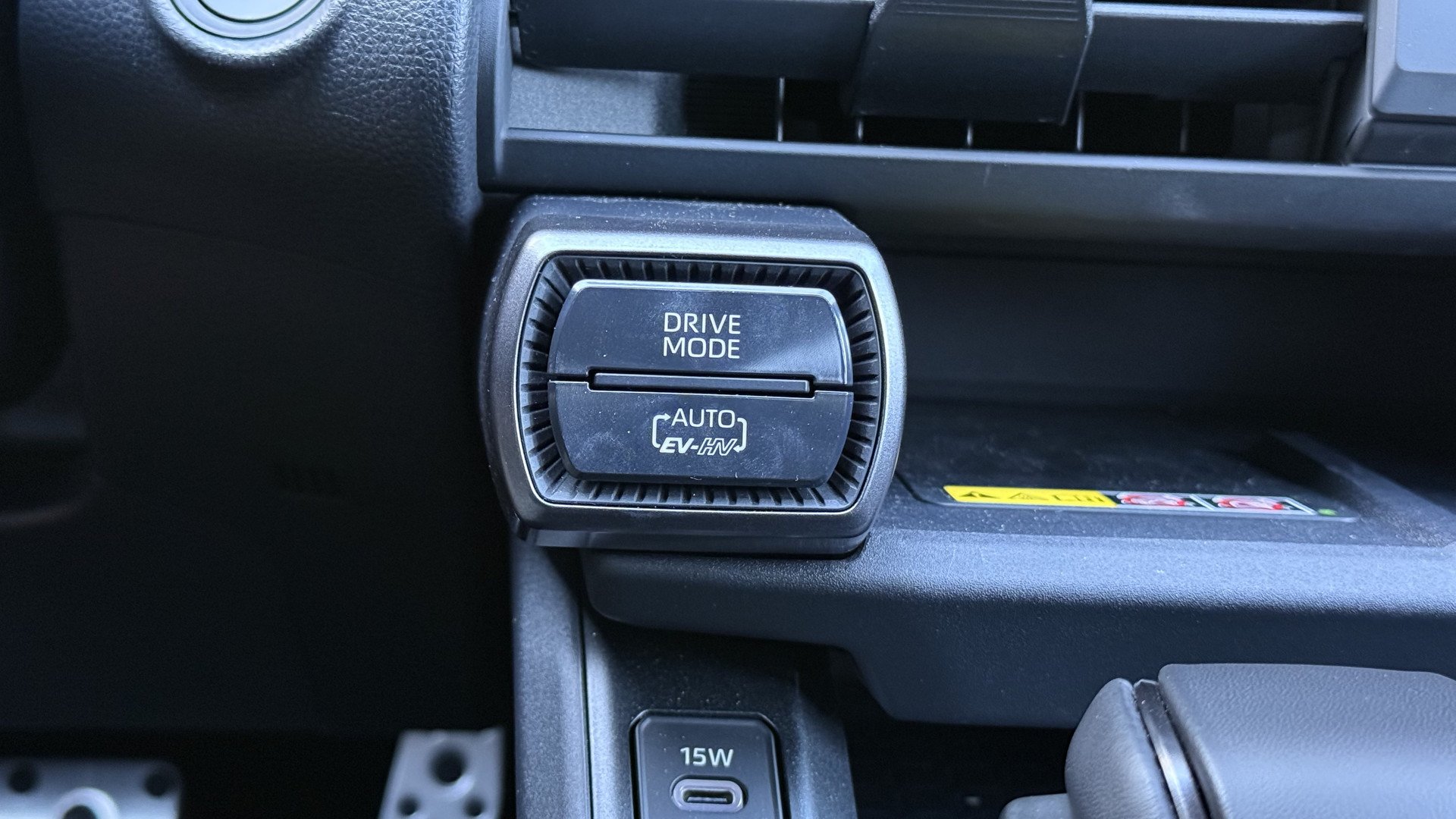
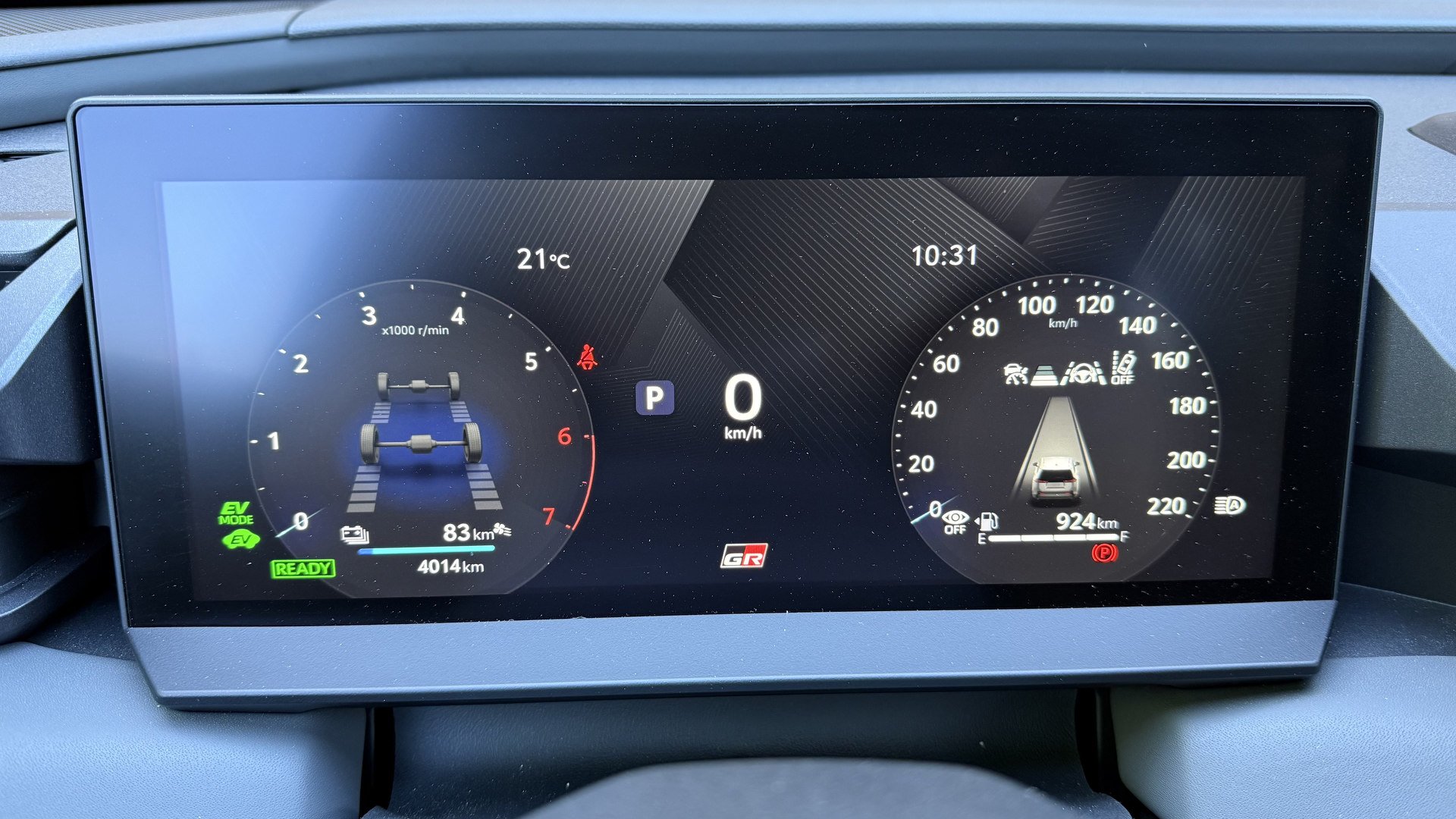
The RAV4’s battery delivers an electric driving range of 79 to 89 km depending on trim. The GR Sport lands at 79 km because its tires and styling aren’t optimized for maximum efficiency. My tester showed 83 km after charging, and real-world electric driving proved the number to be believable. The amount of available range is what makes this PHEV a viable stopgap between hybrids and EVs.
Over several days, I completed most of my normal driving without ever needing the petrol engine. That’s the real beauty of this powertrain. You can commute electrically, then switch to hybrid operation when you want the system’s full performance.
Level 2 charging is standard across the plug-in hybrid range and takes about three hours to fully charge the battery. The XSE can also be equipped with a roughly $3,000 technology package adding DC fast charging, reducing charging time to around 35 minutes.
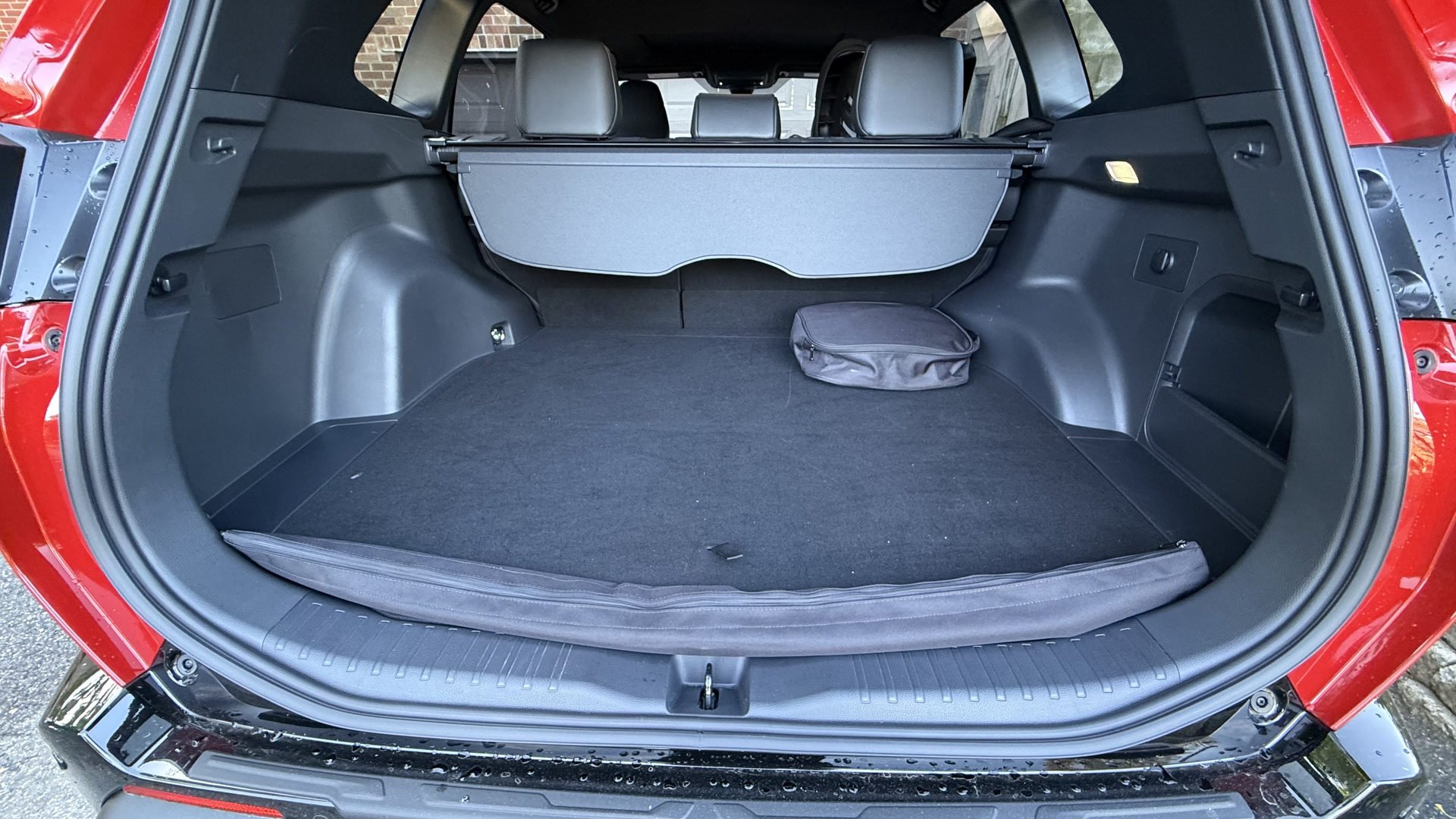 2026 Toyota RAV4 Plug-In Hybrid GR Sport | Photo: Matt St-Pierre
No Practicality Penalty
Despite the styling and performance treatment, Toyota hasn’t messed with the basic RAV4 formula.
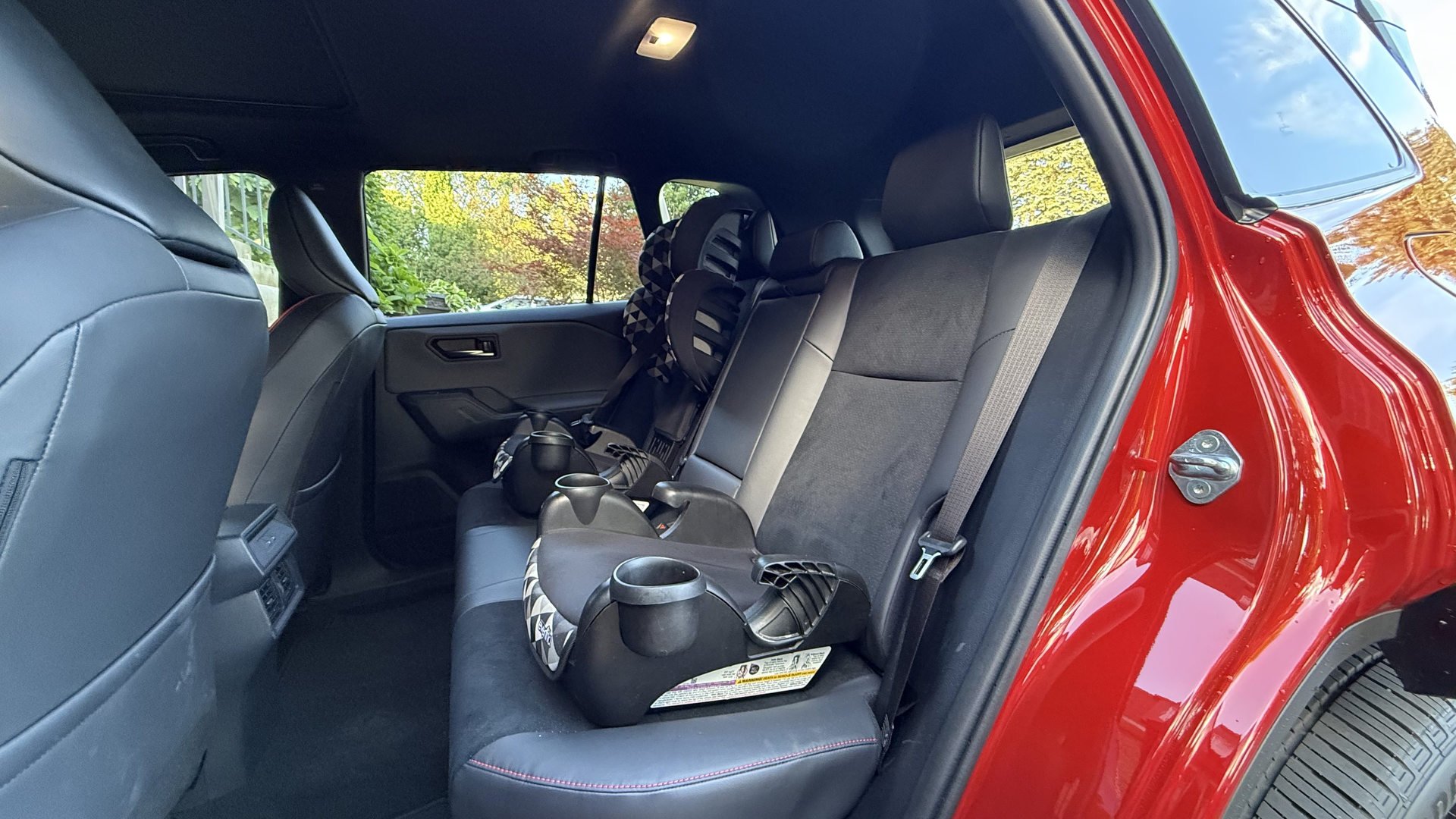
Cargo capacity remains a substantial 951 litres. The rear seat is genuinely spacious enough to carry three people, and a power tailgate is standard on the plug-in hybrids.
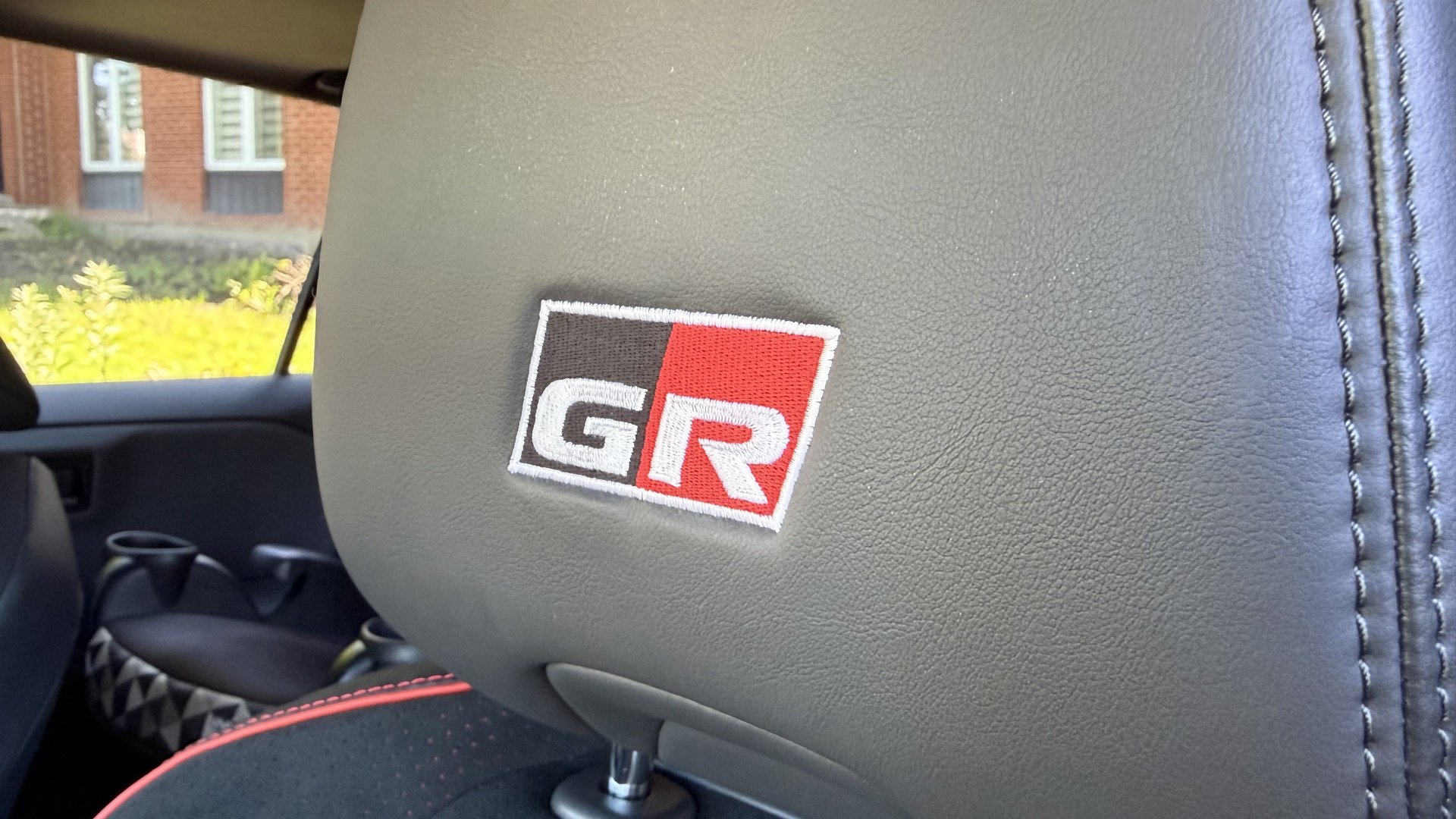
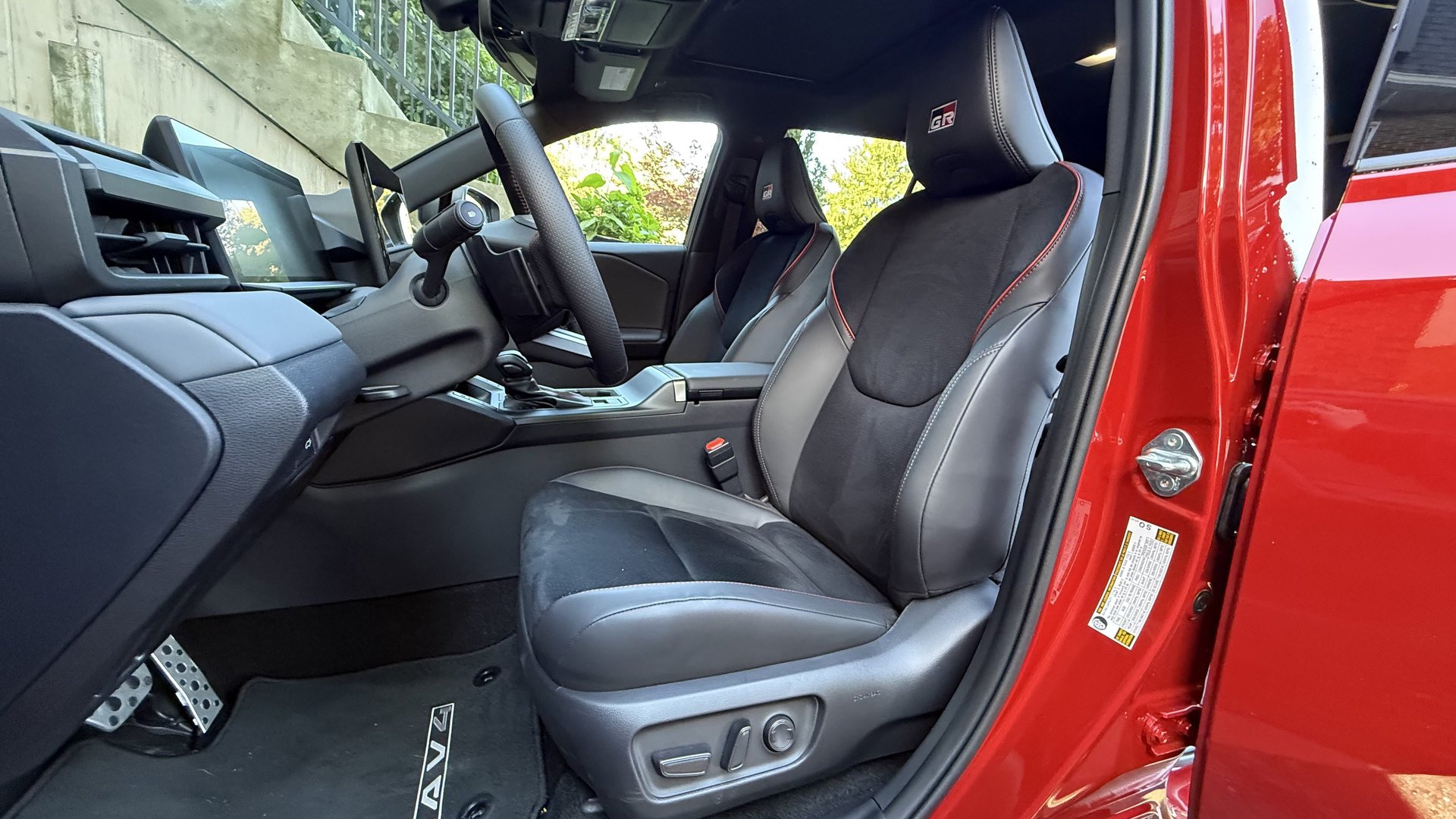
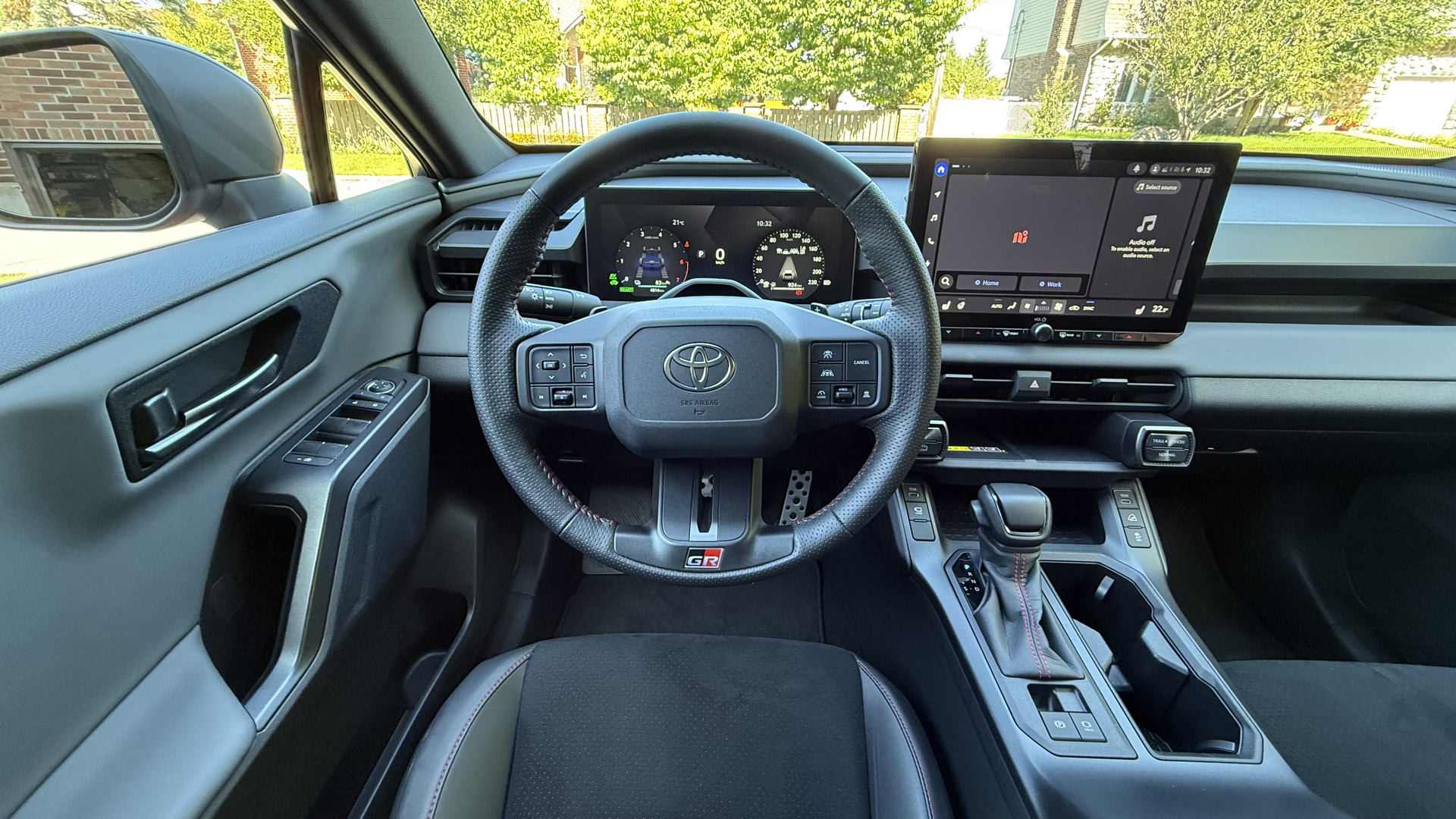
GR Sport seats add suede, faux leather, red piping and contrast stitching. They’re comfortable and supportive, but the rest of the cabin doesn’t quite live up to the exterior. Again, I wanted more.
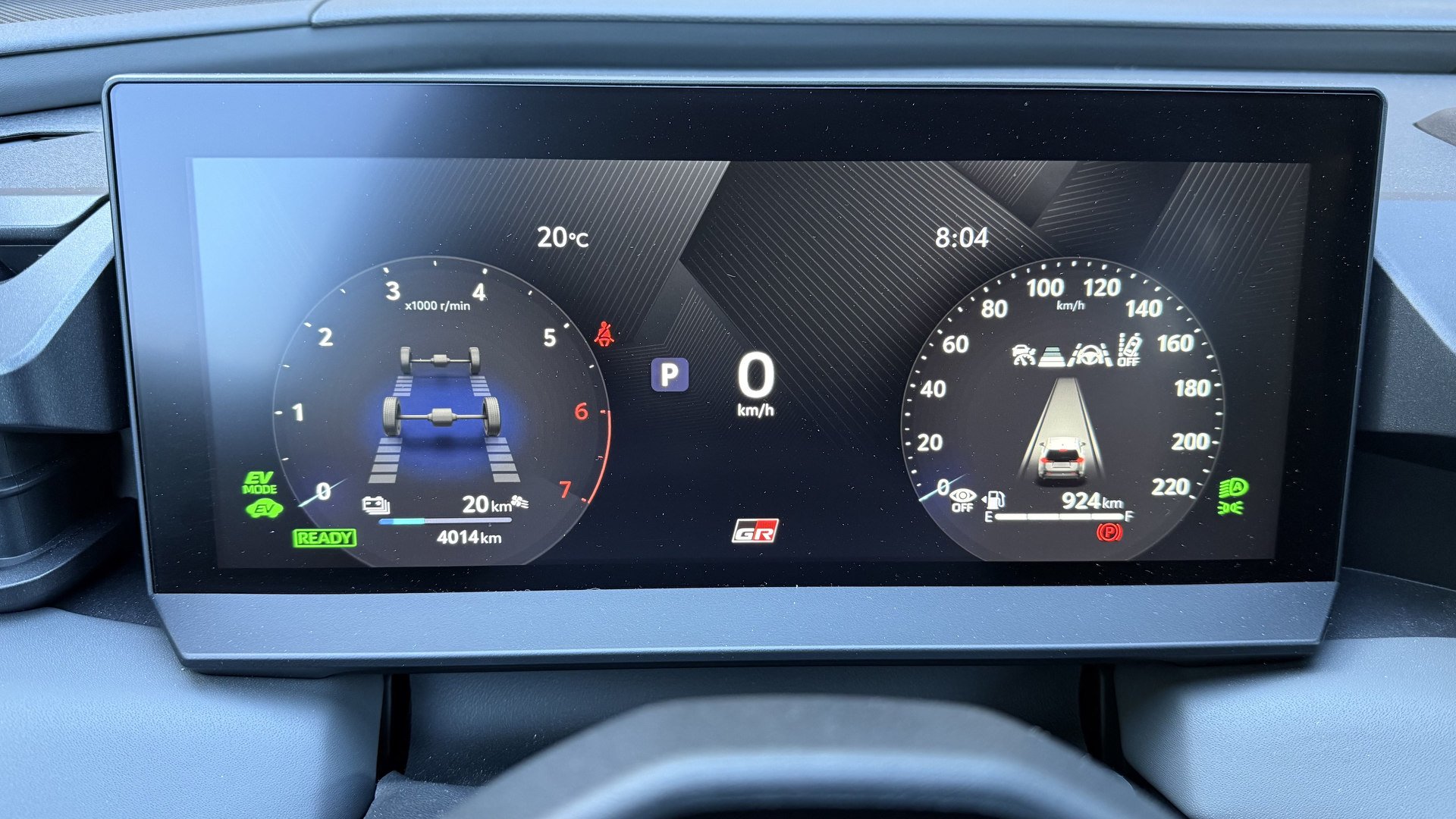
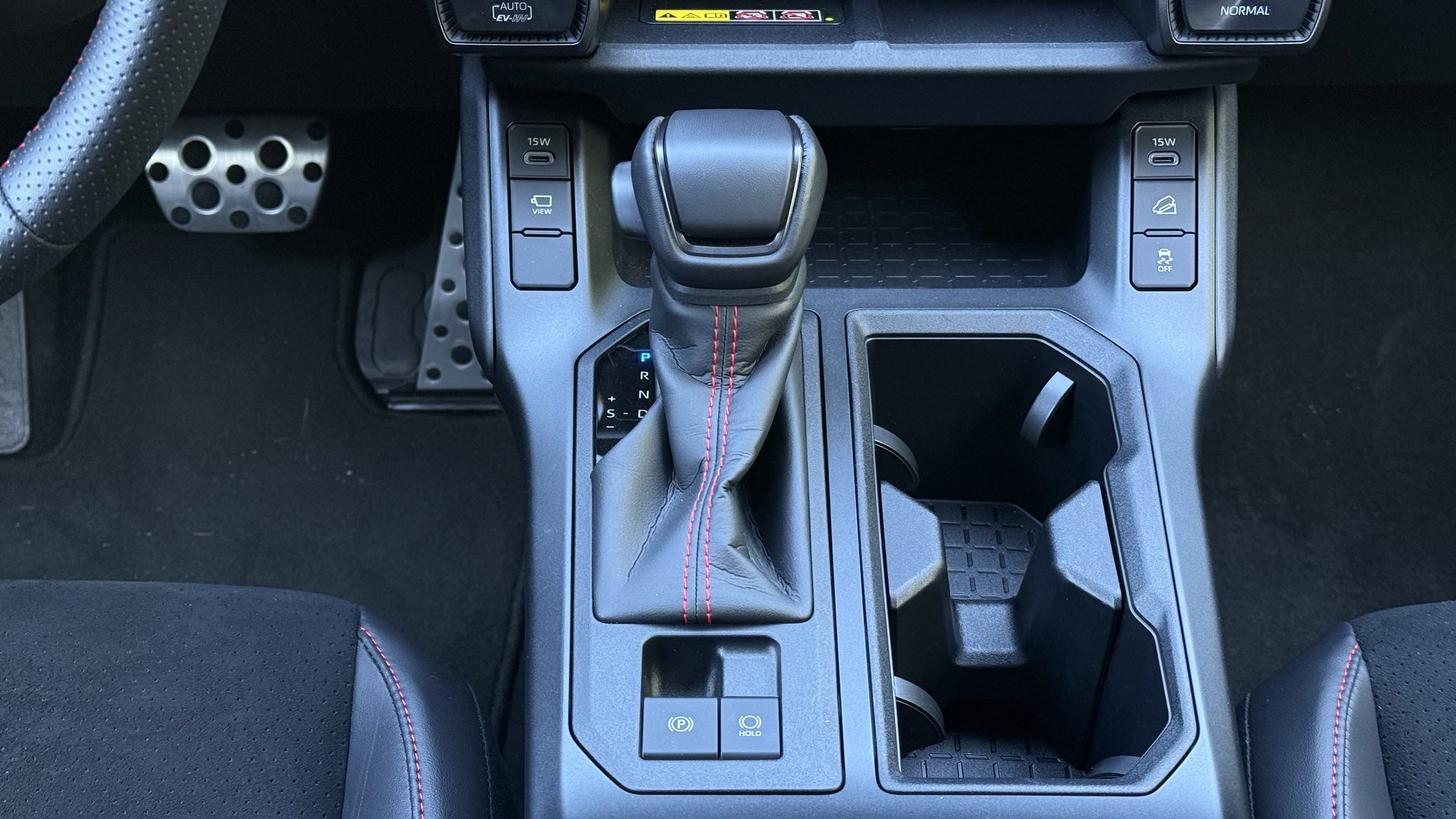
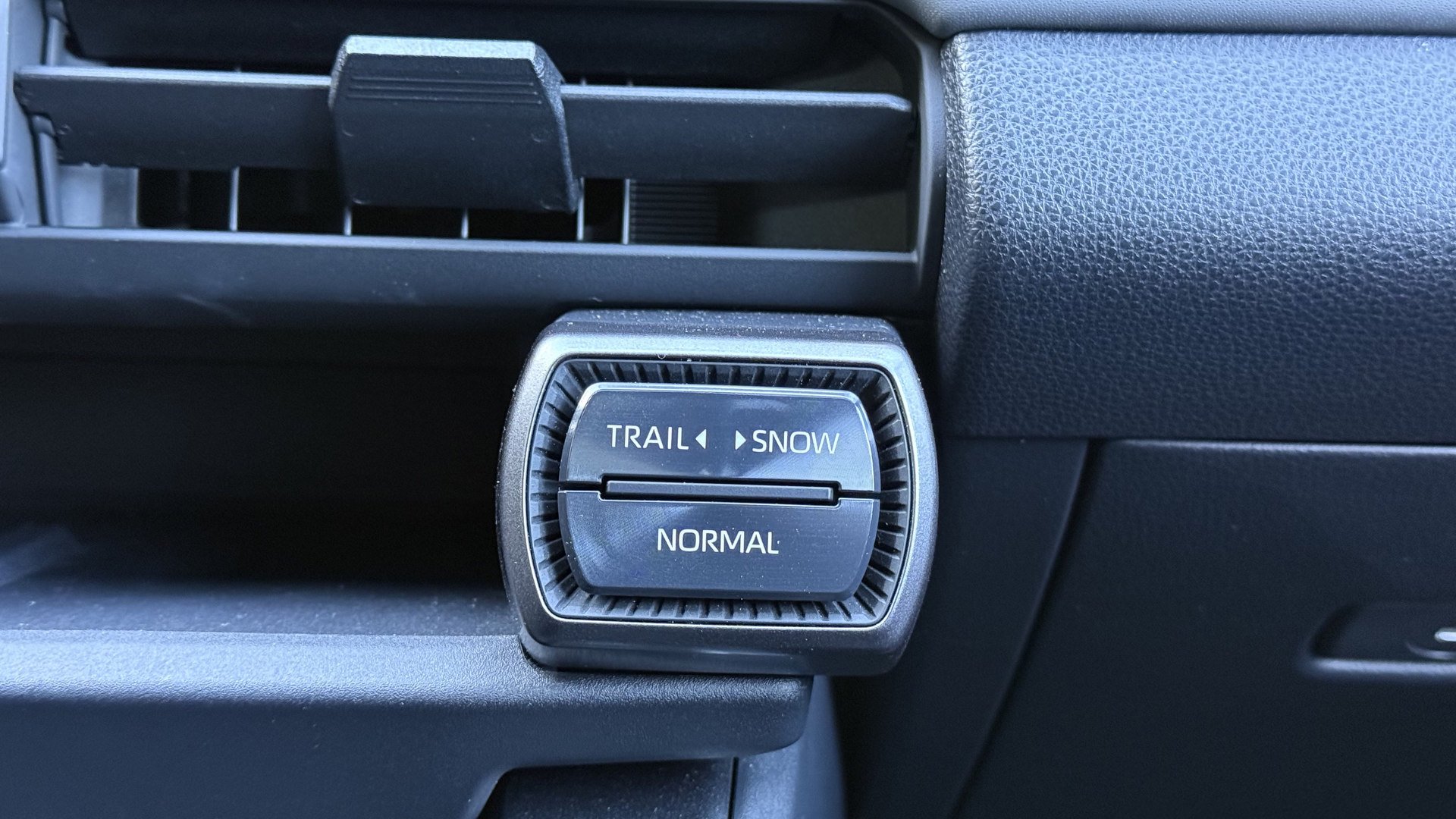
The 12.9-inch touchscreen and digital instrumentation work well, storage is plentiful, and the basic layout remains functional. More physical controls would help, though the climate functions are at least reasonably accessible.
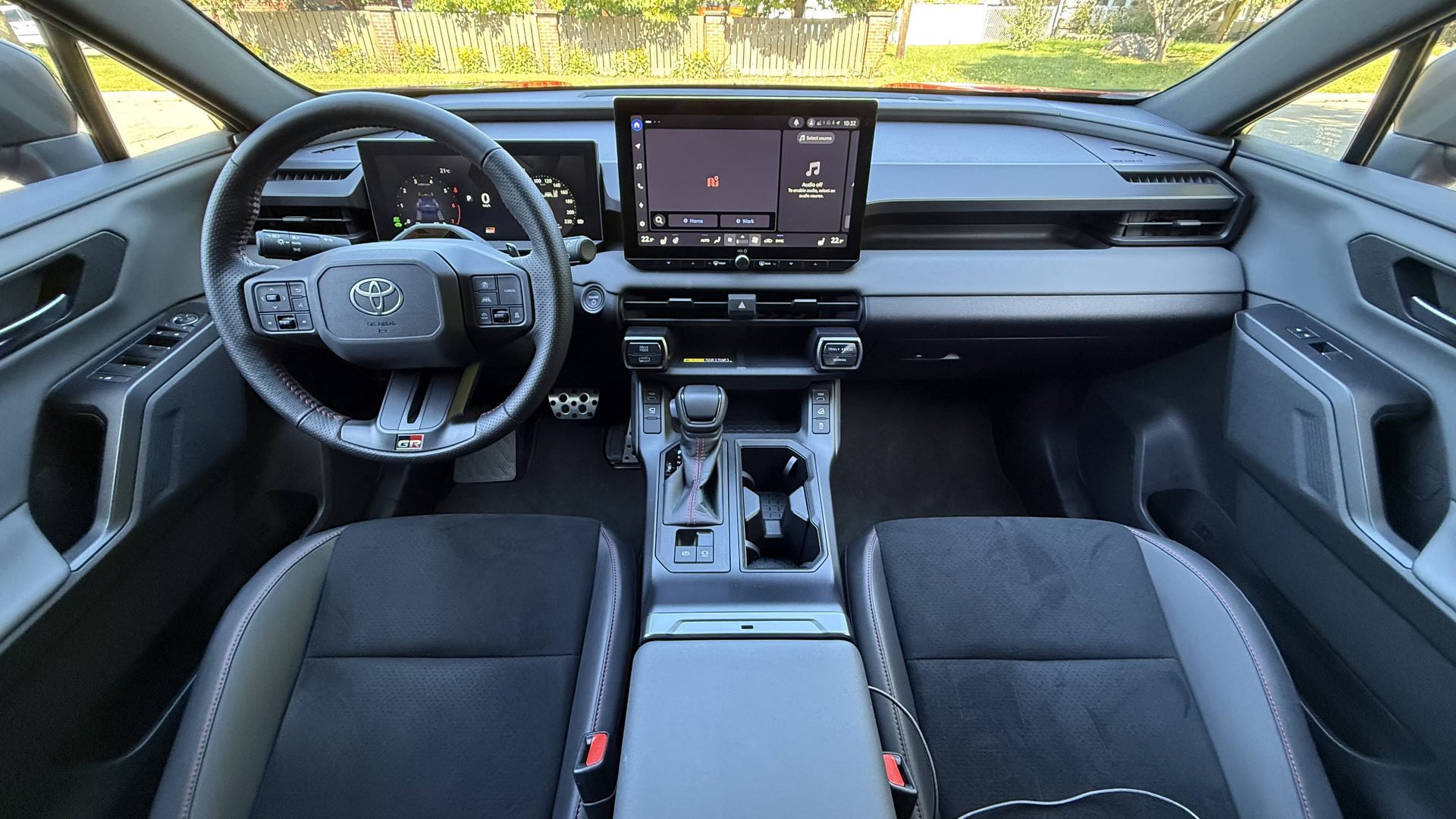 2026 Toyota RAV4 Plug-In Hybrid GR Sport | Photo: Matt St-Pierre
Functionally, there’s very little to complain about. Emotionally, the cabin could use another dose of whatever Toyota gave the exterior designers.
At the very least, give the GR Sport a “GR” drive mode?
What to Watch For
Long-term durability of the electrified hardware deserves attention, especially given the corrosion-related high-voltage cable problems associated with previous RAV4 models. Hopefully Toyota’s latest-generation hardware addresses those concerns.
The GR Sport’s 20-inch wheels and tires may also make replacement costs higher than on lesser trims. Finally, its roughly $60,500 price is substantial, so owners who rarely charge may struggle to extract the full value of the plug-in powertrain.
Otherwise, it’s a safe bet.
 2026 Toyota RAV4 Plug-In Hybrid GR Sport | Photo: Matt St-Pierre
So, Is This the RAV4 to Get?
There are remarkably few reasons to argue against it. Yes, $60,000-plus for a RAV4 takes some processing. Hyundai’s Tucson and Kia’s Sportage may also appeal to buyers looking for a smoother overall experience when comparing to an SE or XSE plug-in RAV4.
Overall, the Toyota counters with excellent efficiency, substantial electric range, serious everyday practicality, strong performance and, finally, styling worth getting excited about. Right now, nothing matches the GR Sport.
I’m particularly curious to see how Nissan’s upcoming Rogue e-Power will stack up. Based on my experience with the Qashqai e-Power, Nissan’s system has the potential to deliver impressive efficiency, a polished driving experience, as well as a decent dollop of performance.
 2026 Toyota RAV4 Plug-In Hybrid GR Sport | Photo: Matt St-Pierre
For now, though, the new RAV4 lineup is extremely difficult to fault. And if I’m spending my own money on one, I know which version I’m walking toward first. And I’d wait for it too.
A red one with the ultra-cool rear spoiler.
 |  |  | |
|---|---|---|---|
| Model | 2026 Toyota RAV4 Plug-In Hybrid GR Sport | 2027 Kia Sportage SX PHEV | 2026 Mitsubishi Outlander PHEV GT Noir S-AWC |
| Price (with fees) | $60,500 | $56,500 | $66,900 |
| Powertrain | 2,5L 4-cyl / + 2 electric motors / eCVT | 1,6L turbo 4-cyl + electric motor / 6-speed auto. | 2.4L 4-cyl + 2 electric motors / N/A |
| Electric range | 79 km | 53 km | 72 km |
| Battery Size (kWh) | 22.7 | 13.8 | 22.7 |
| Estimated mixed fuel consumption | 6.4 L / 100 km | 6.6 L / 100 km | 8.6 L / 100 km |
| Power (hp) | 324 | 268 | 248 |
| Torque (lb-ft) | N/A | 271 | 332 |
| Ground clearance (inches) | 7.5 | 8.3 | 7.8 |
| Screen size (Cluster/touchscreen) (inches) | 12.9 / 12.3 | 12.3 x 2 | 12.3 x 2 |
| Cargo space behind 2nd row (L) | 951 | 977 | 872 |