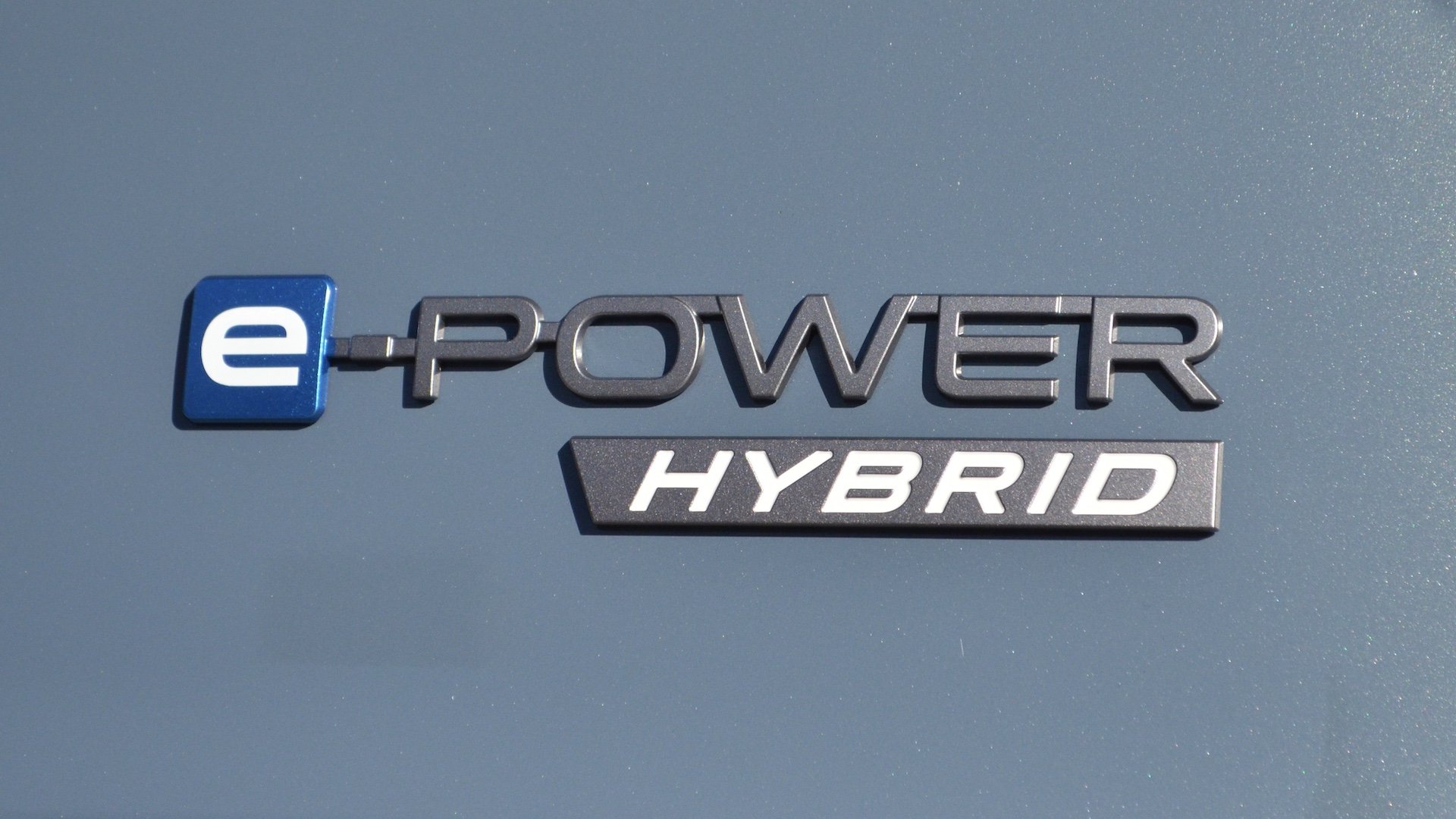
- The Rogue e-POWER uses a turbocharged 1.5-litre engine as a generator, while two electric motors are solely responsible for propulsion.
- The system produces a combined 225 horsepower and comes standard with electric all-wheel drive in Canada.
- Pricing will range from $42,845 for the SV to $53,845 for the Platinum.
An Essential Fourth Generation for Nissan
The Nissan Rogue has become a particularly important model for the automaker in Canada. Since arriving on the Canadian market in late 2007, the compact SUV has surpassed 500,000 sales nationwide.
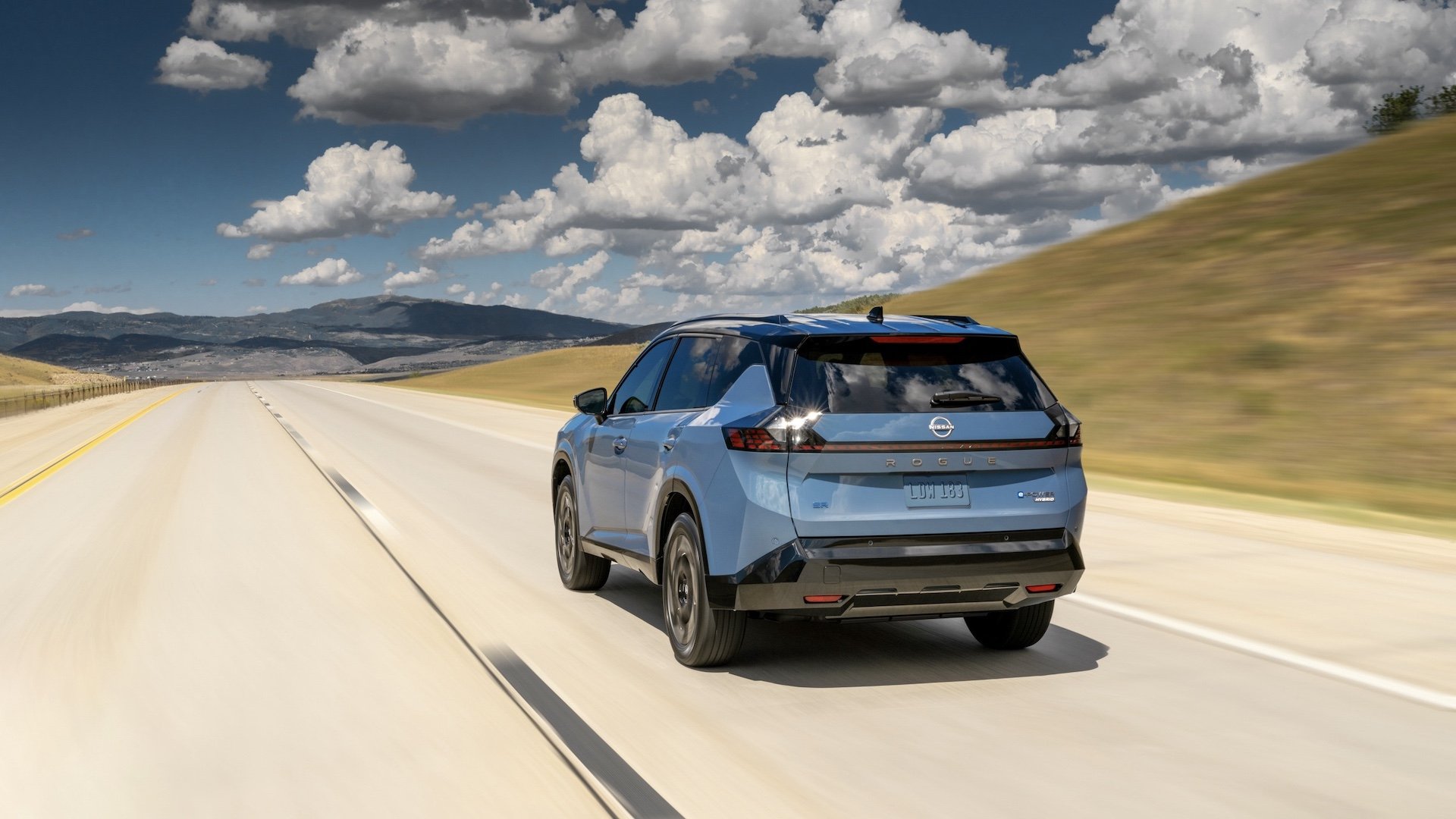
 2027 Nissan Rogue Hybrid SR (Picture by Nissan)
Its fourth generation, however, represents a much more significant change than a simple redesign. For the first time in Canada, the Rogue will be offered with Nissan’s e-POWER hybrid technology. The system itself is not new globally: Nissan has been using it since 2016 and says nearly two million e-POWER-equipped vehicles have been sold across 68 countries.
The Rogue e-POWER will arrive at Canadian dealerships in fall 2026, initially in SR trim. The SV, SV Premium and Platinum variants will follow in early 2027.
| Model | MSRP | Selling price | Available from |
|---|---|---|---|
| SV AWD | CA$39,998 | CA$42,845 | Early 2027 |
| SV Premium AWD | CA$42,998 | CA$45,845 | Early 2027 |
| SR AWD | CA$47,998 | CA$50,845 | Fall 2026 |
| Platinum AWD | CA$50,998 | CA$53,845 | Early 2027 |
How Does the e-POWER System Work?
This is where the Rogue differs significantly from a conventional hybrid.
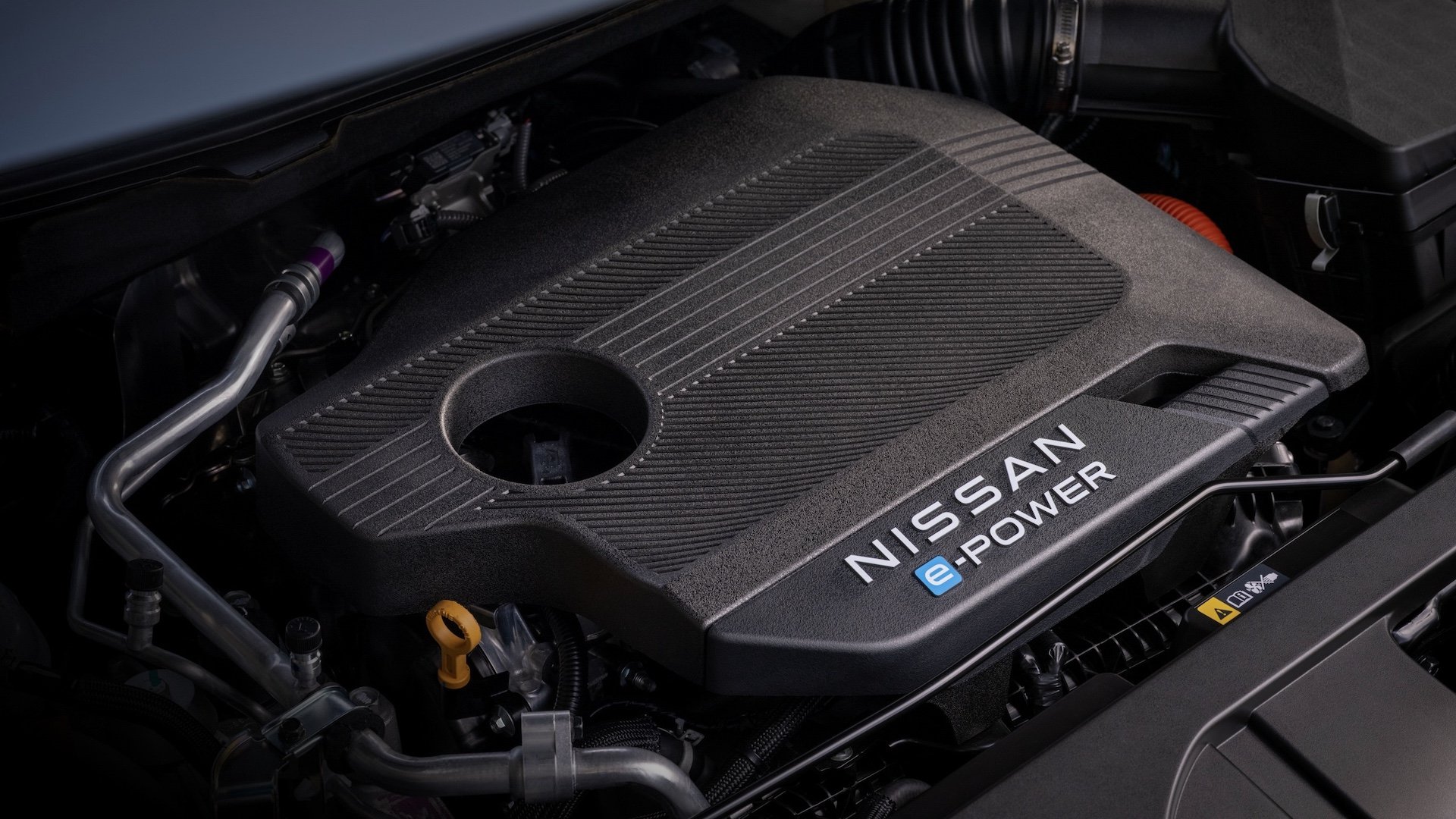
Under the hood is a turbocharged 1.5-litre three-cylinder engine producing 148 horsepower and 171 lb-ft of torque. However, there is no mechanical connection between this engine and the wheels. Its sole purpose is to generate the electricity required to operate the vehicle.
 2027 Nissan Rogue Hybrid SR (Picture by Nissan)
In other words, the gasoline engine essentially acts as an onboard generator. The electricity it produces can power the electric motors or be temporarily stored in a small 1.67-kWh battery. When the battery has sufficient energy, the combustion engine can shut down completely. Nissan also claims a thermal efficiency of 42 percent for the gasoline engine.
There is therefore no conventional transmission connecting the gasoline engine to the wheels.
Propulsion is always electric. A permanent-magnet synchronous motor at the front produces 202 horsepower and 243 lb-ft of torque, while a second motor on the rear axle delivers 134 horsepower and 144 lb-ft. Combined system output stands at 225 horsepower.
This architecture gives e-POWER a different operating principle from a traditional hybrid, where the gasoline engine can directly contribute to driving the wheels. In the Rogue, propulsion is always handled by the electric motors.
Fully Electric All-Wheel Drive
Every Rogue e-POWER sold in Canada will come standard with electric all-wheel drive.
Because each axle has its own electric motor, there is no need for a mechanical driveshaft connecting the front and rear axles. Instead, the system can continuously adjust torque distribution between them.
 2027 Nissan Rogue Hybrid SR (Picture by Nissan)
Nissan also uses this architecture to influence the Rogue’s handling. When cornering, the system can lightly brake the inside wheels to improve precision and stability.
Drivers will also benefit from e-Pedal, which increases energy regeneration when the accelerator is released and can slow the Rogue all the way to a complete stop, effectively providing true one-pedal driving. The Smooth Stop function automatically modulates braking during the final moments of a stop to reduce head movement for occupants.
6.2 L/100 km Despite Standard AWD
One of the main objectives of this approach is to significantly reduce the compact SUV’s fuel consumption.
Nissan estimates fuel economy at 5.9 L/100 km in the city, 6.7 L/100 km on the highway and 6.2 L/100 km combined.
 2027 Nissan Rogue Hybrid SR (Picture by Nissan)
The driving experience should therefore be quite different from that of a conventional gasoline-powered vehicle. The electric motors deliver torque directly to the wheels, while the combustion engine can operate independently of vehicle speed to generate the required electricity.
And unlike a plug-in hybrid, there is nothing for the driver to recharge. Gasoline remains the Rogue e-POWER’s only external energy source. However, a plug-in hybrid version with a larger battery and meaningful electric-only range can be expected in the coming years.
A More Assertive Rogue
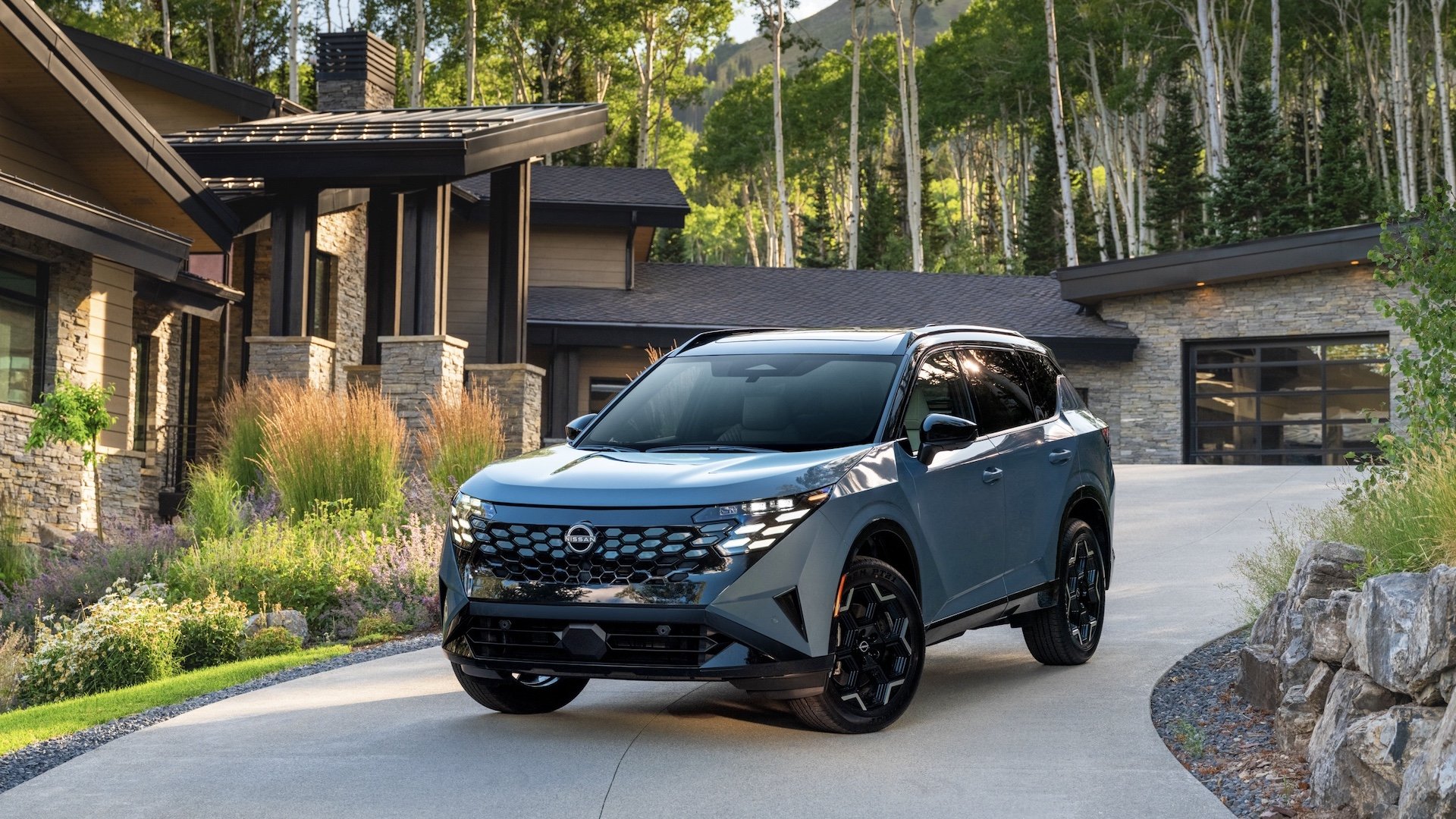
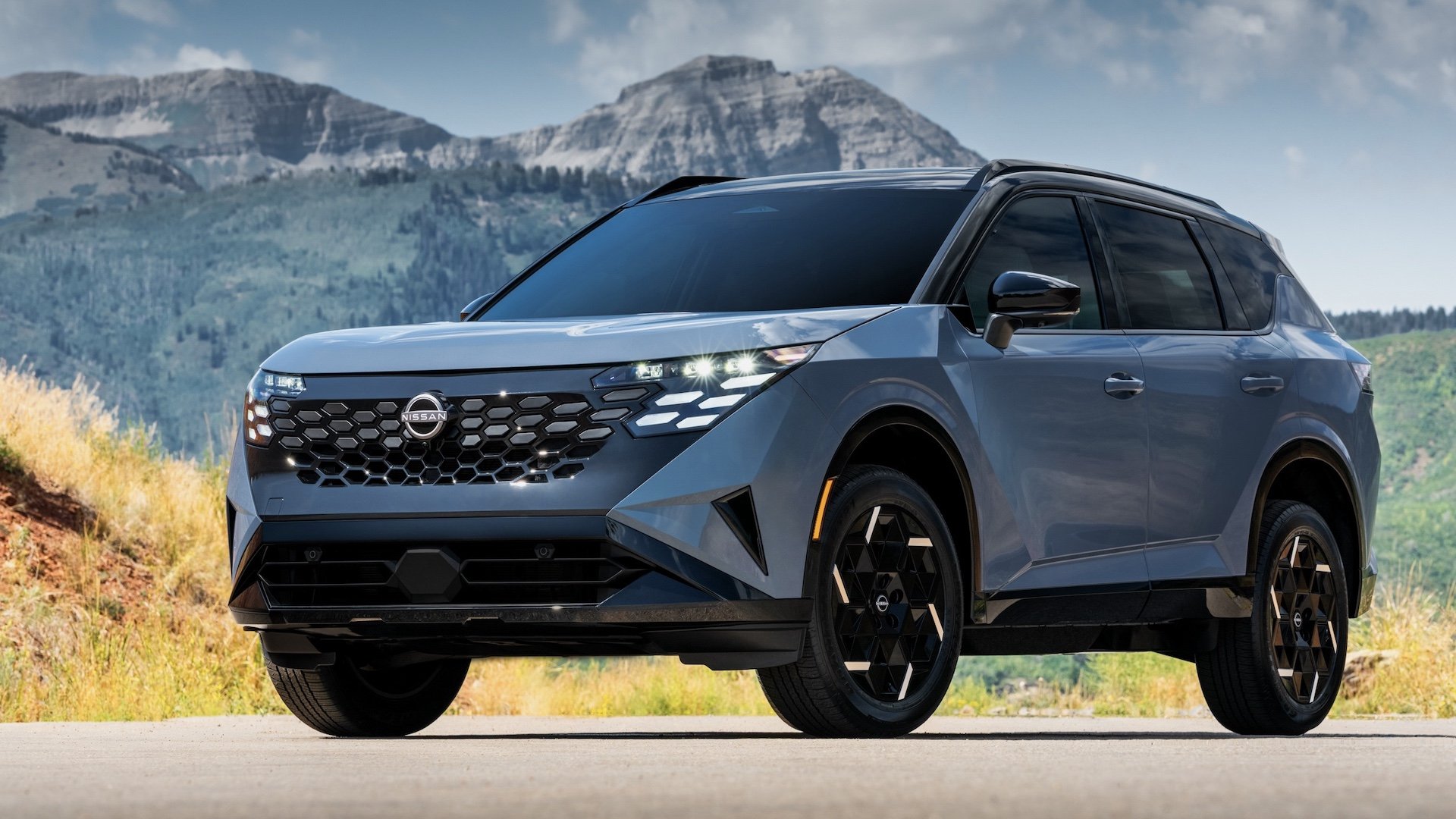
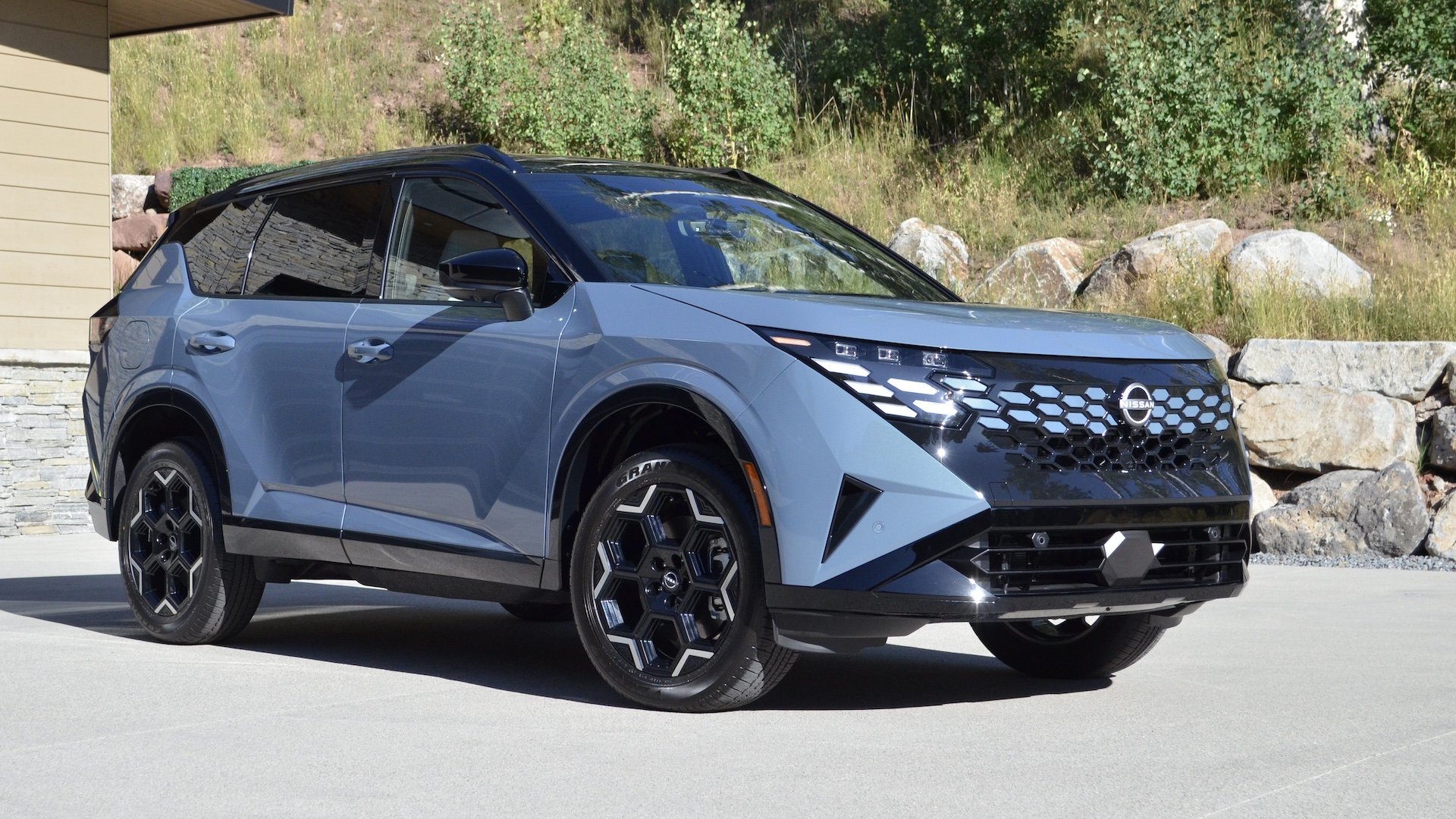
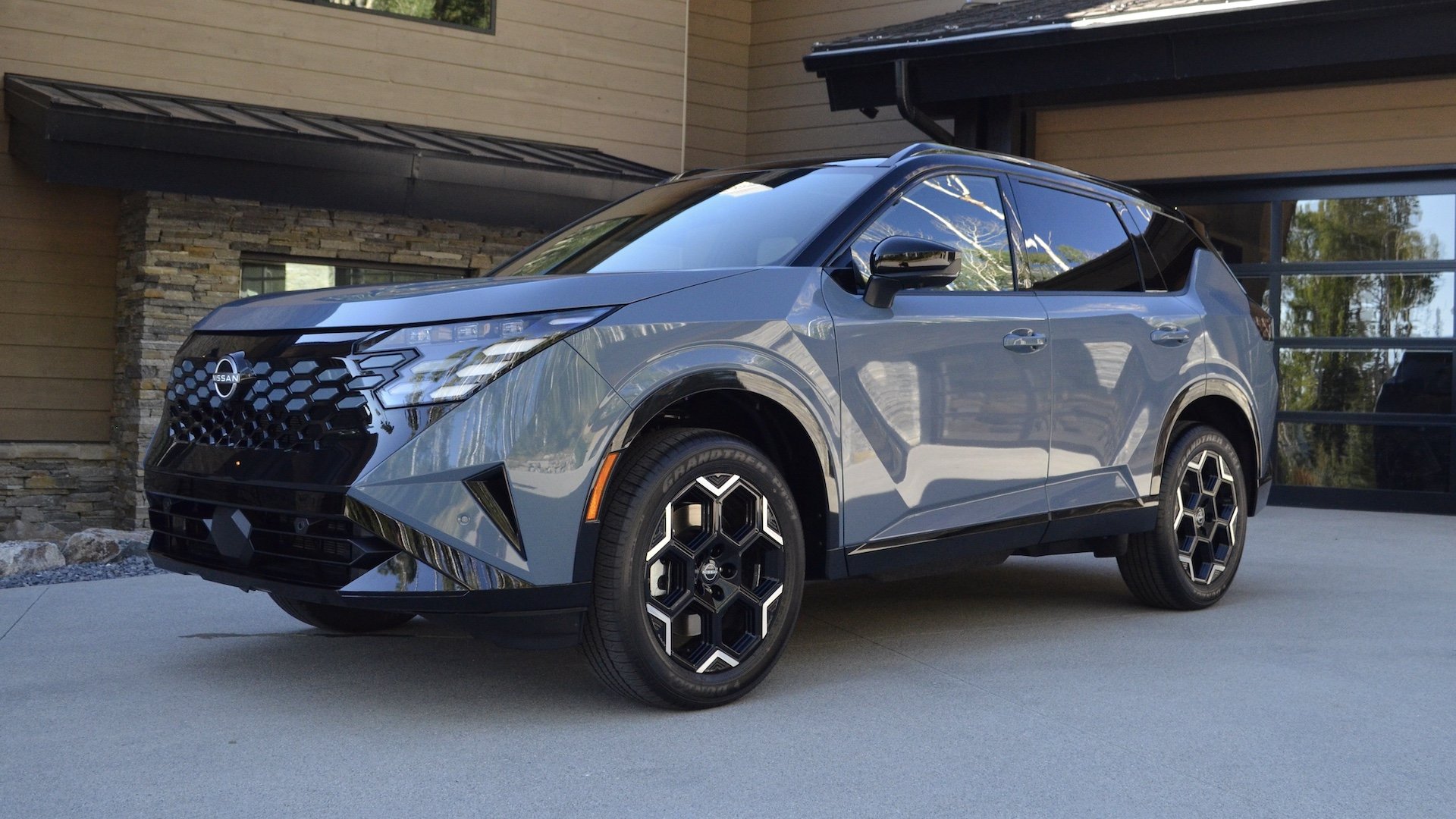
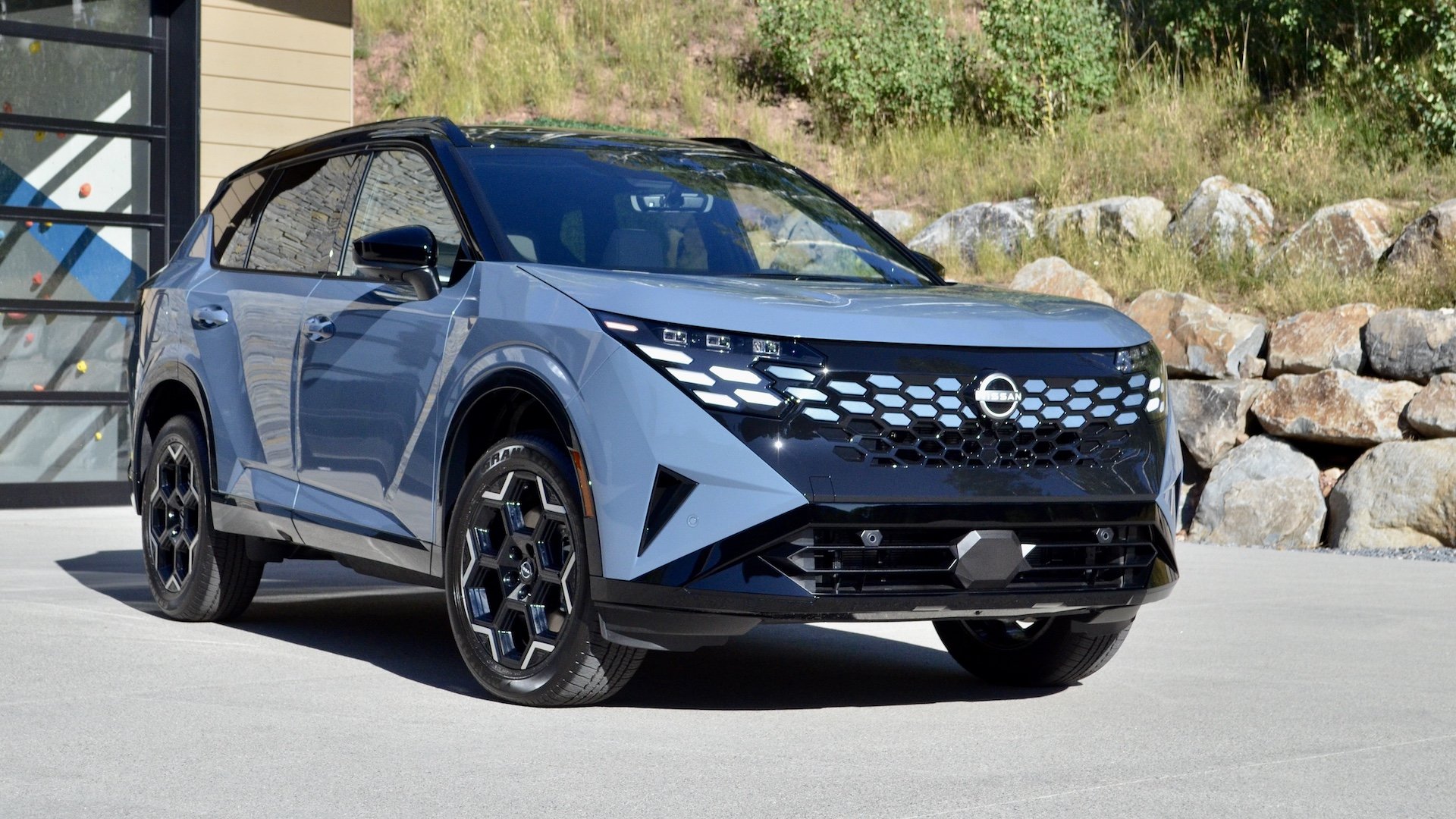
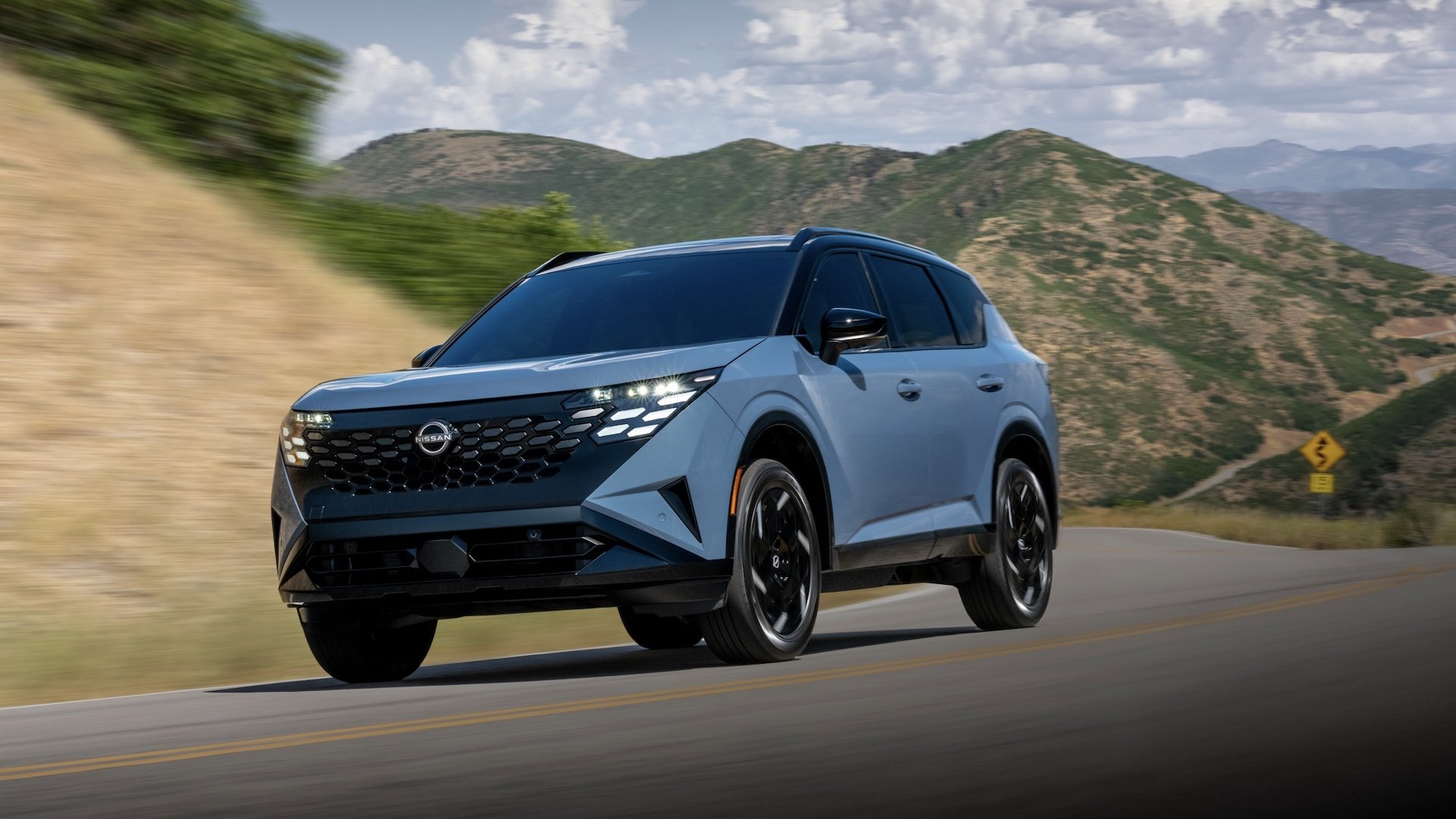
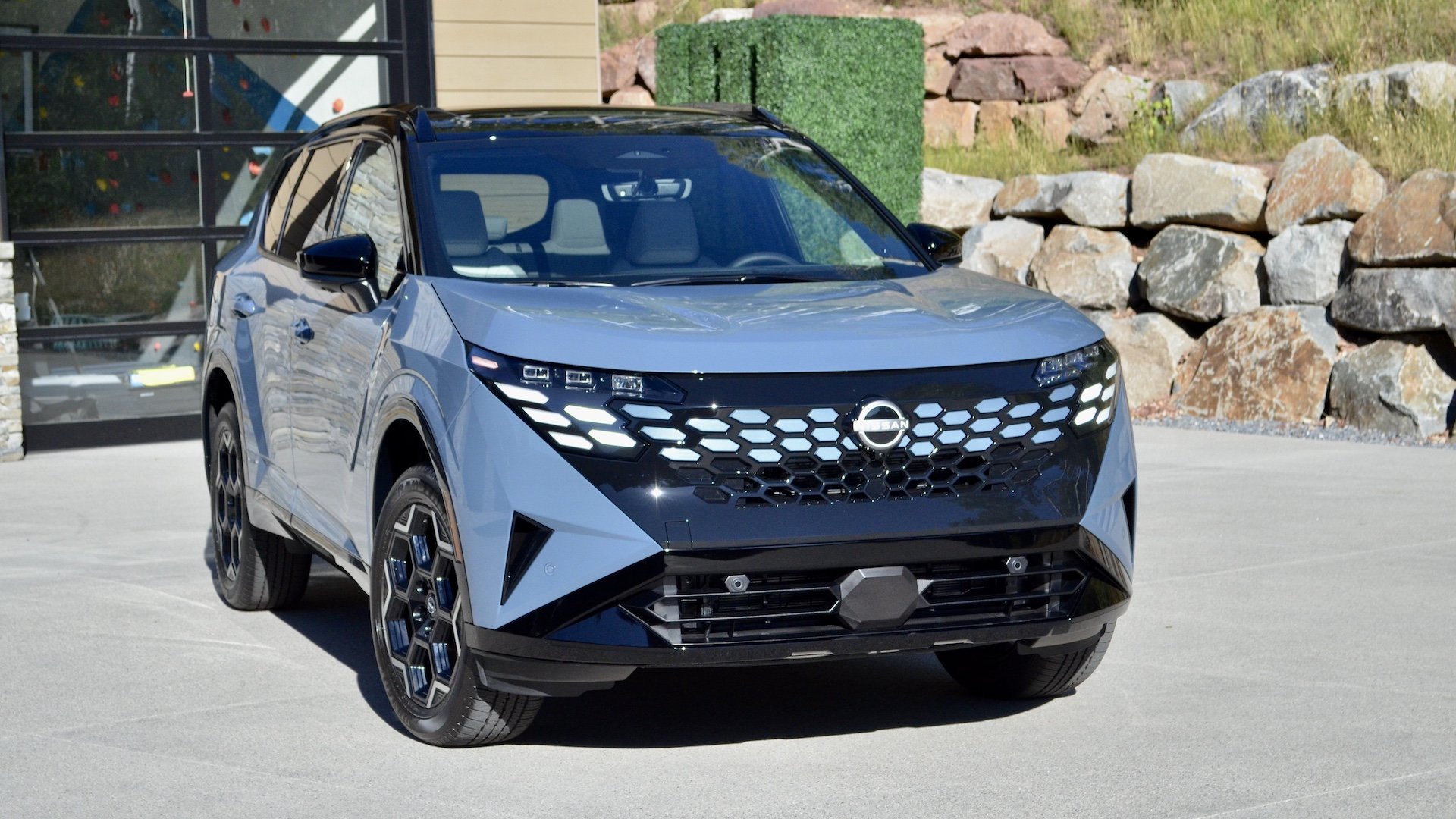
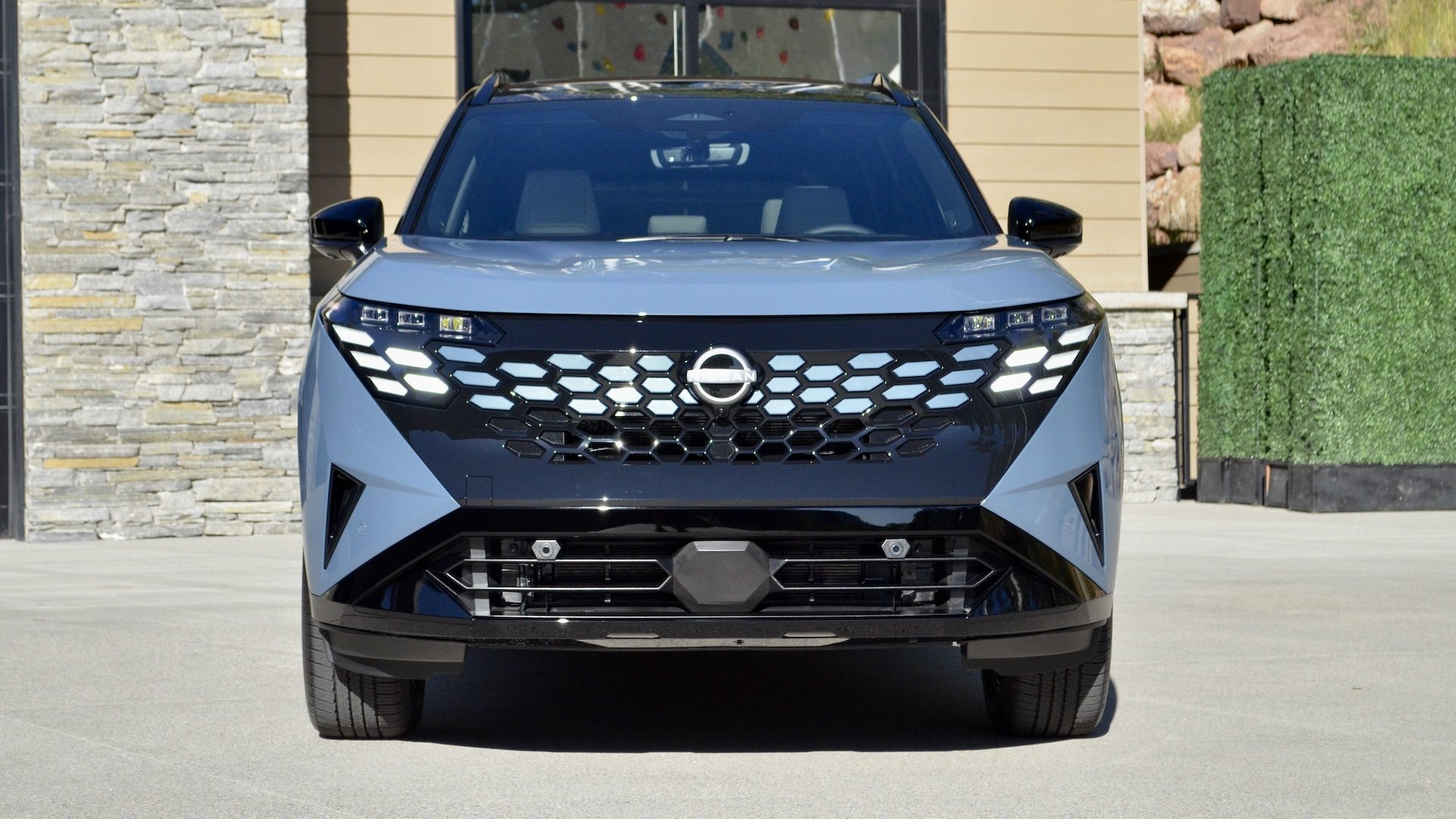
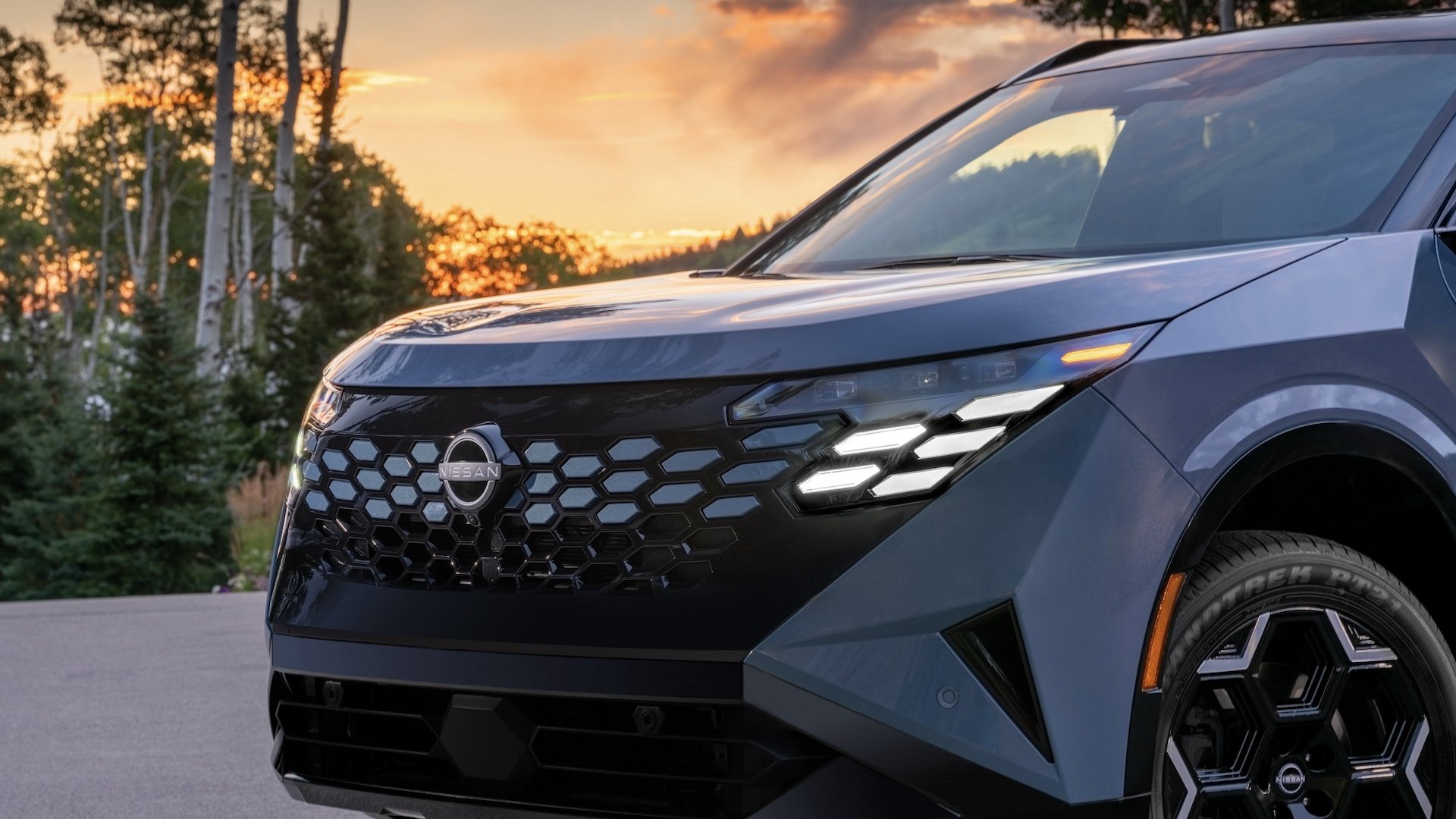
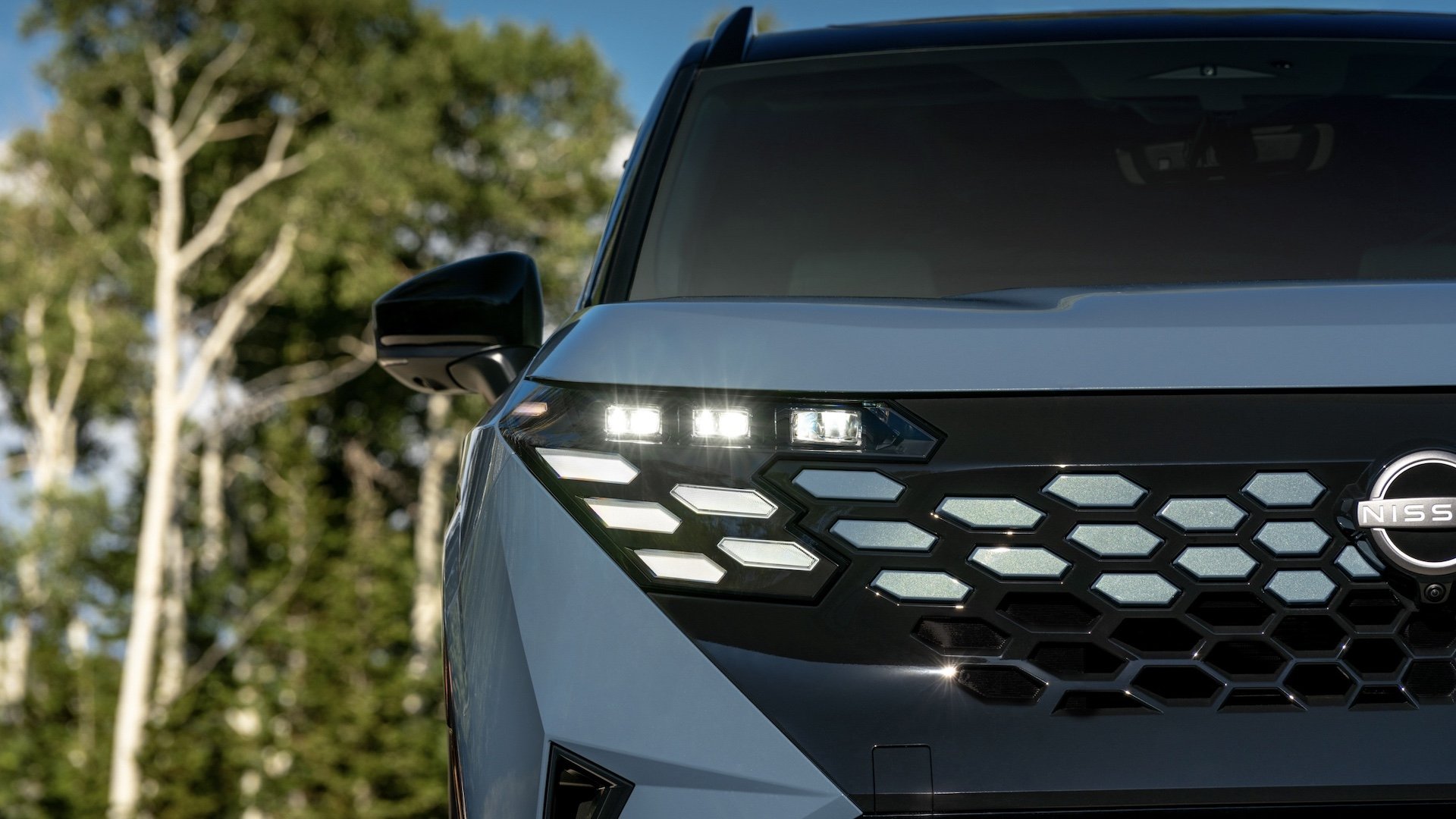
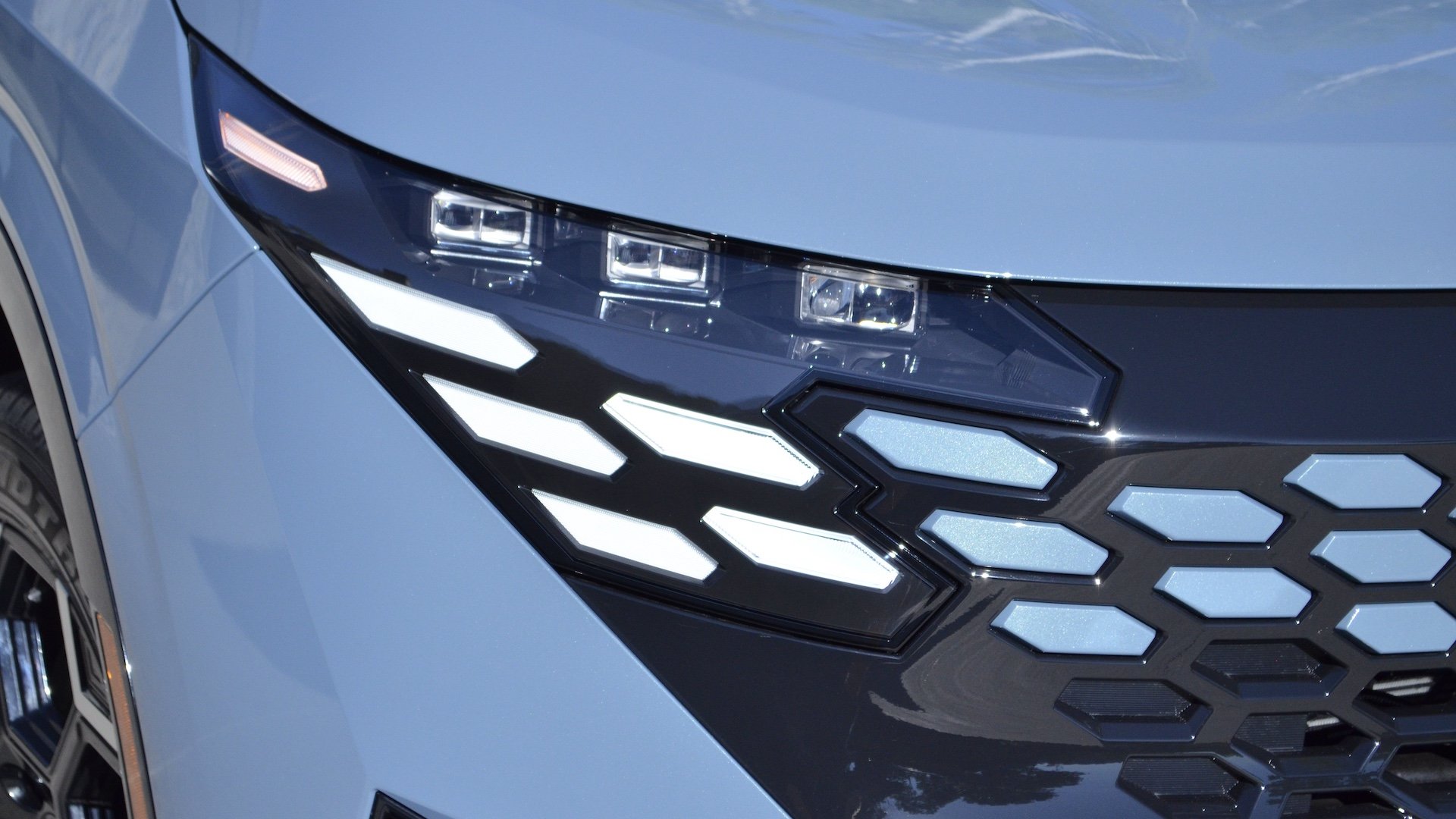
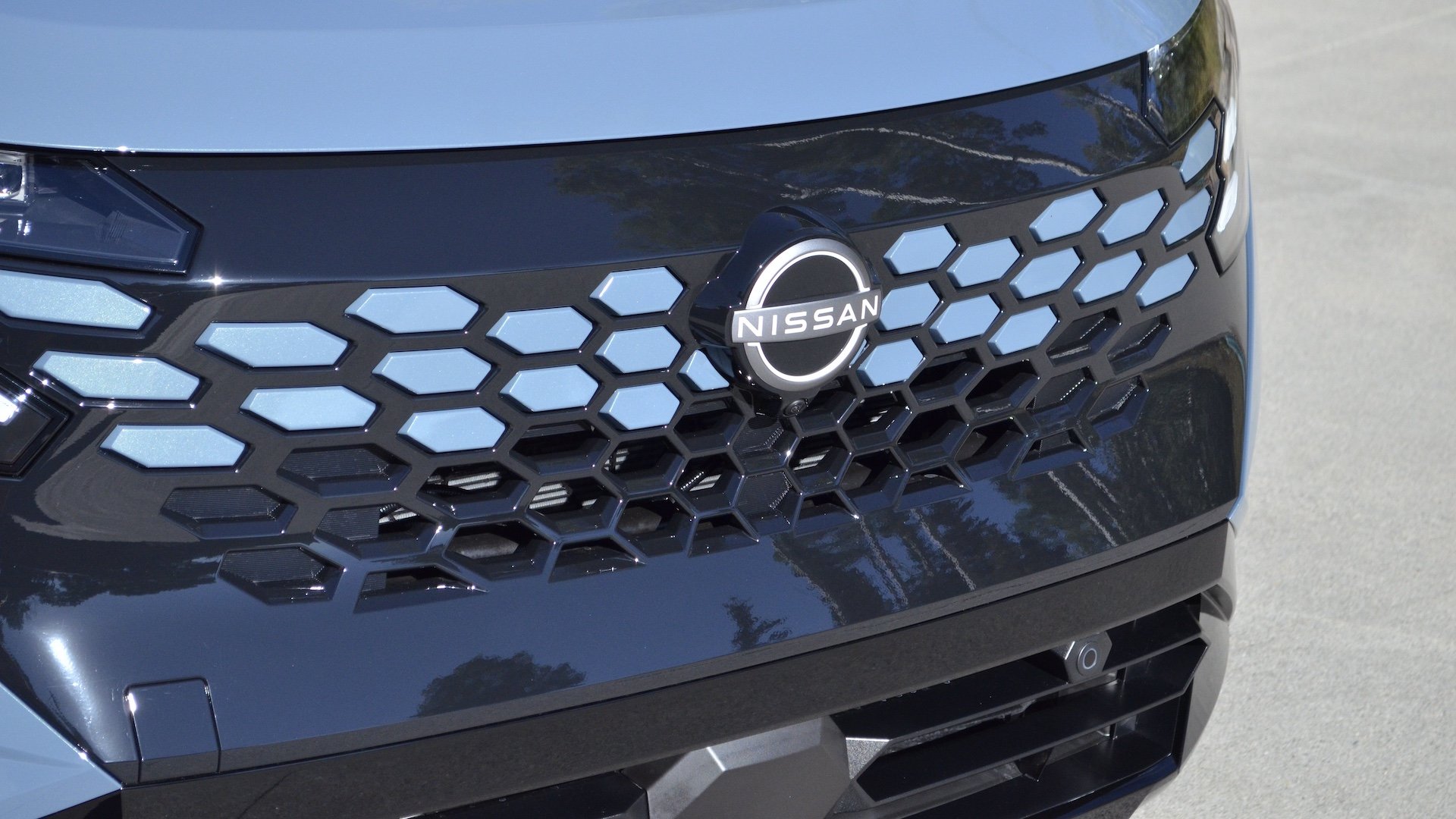
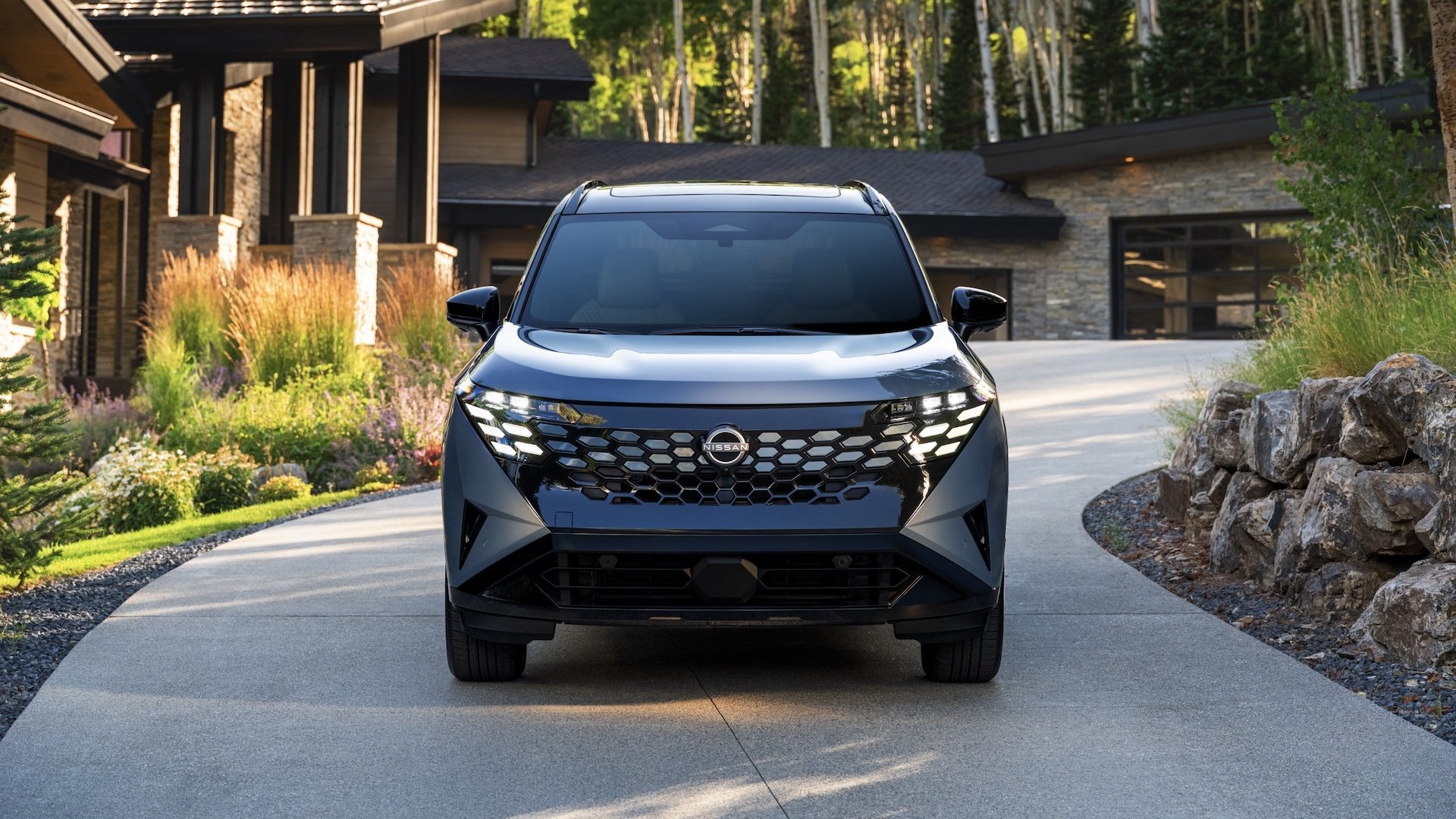
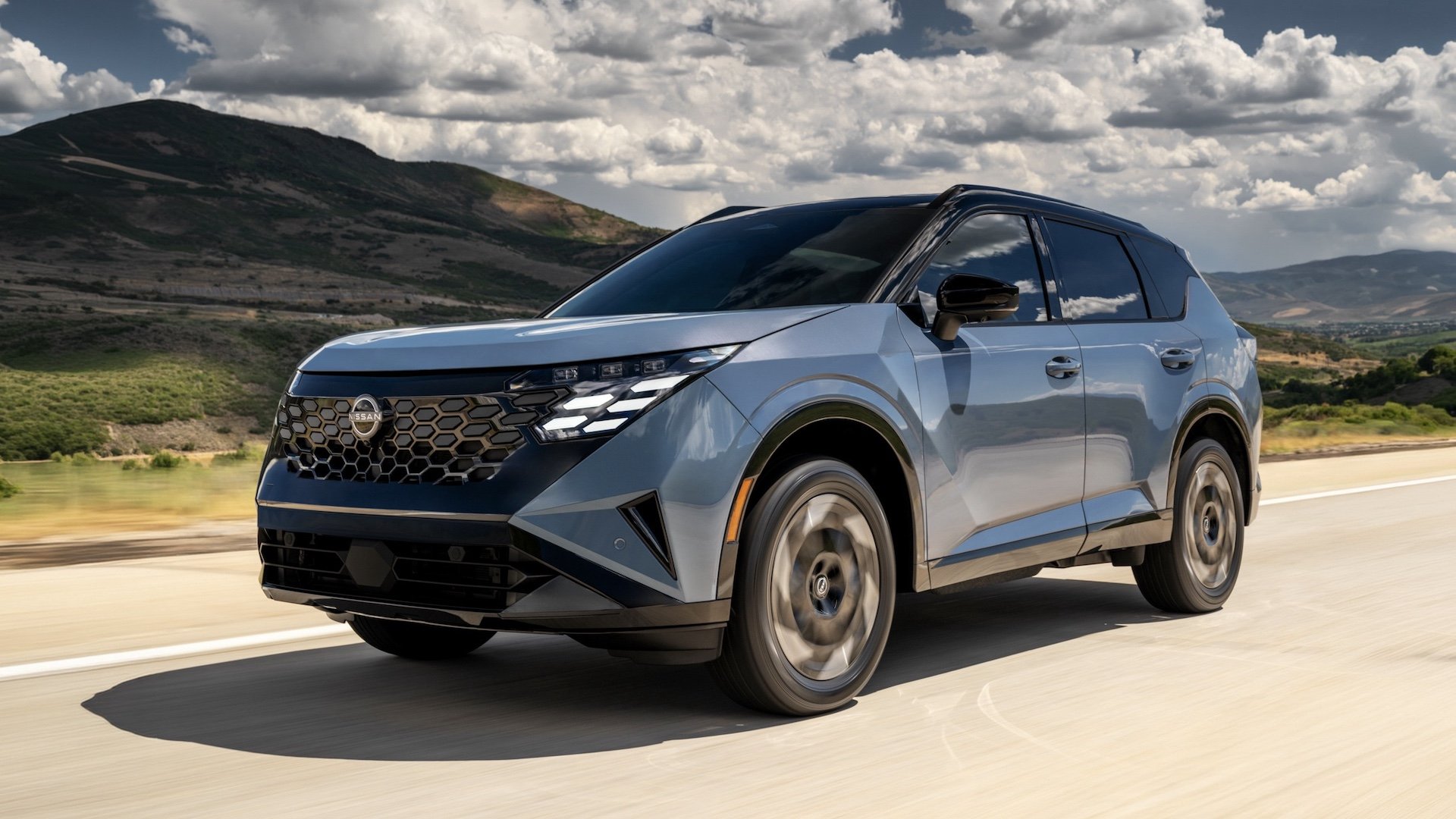
Visually, the new Rogue adopts a wider and more athletic stance. The front end is highlighted by a new hexagonal honeycomb grille that incorporates the LED headlights. In that respect, the Rogue creates a visual link between the electric Ariya and LEAF and the Sentra that was redesigned last year.
Talking Leaf S, Rogue e-Power, and Possible Chinese EVs with Nissan Canada
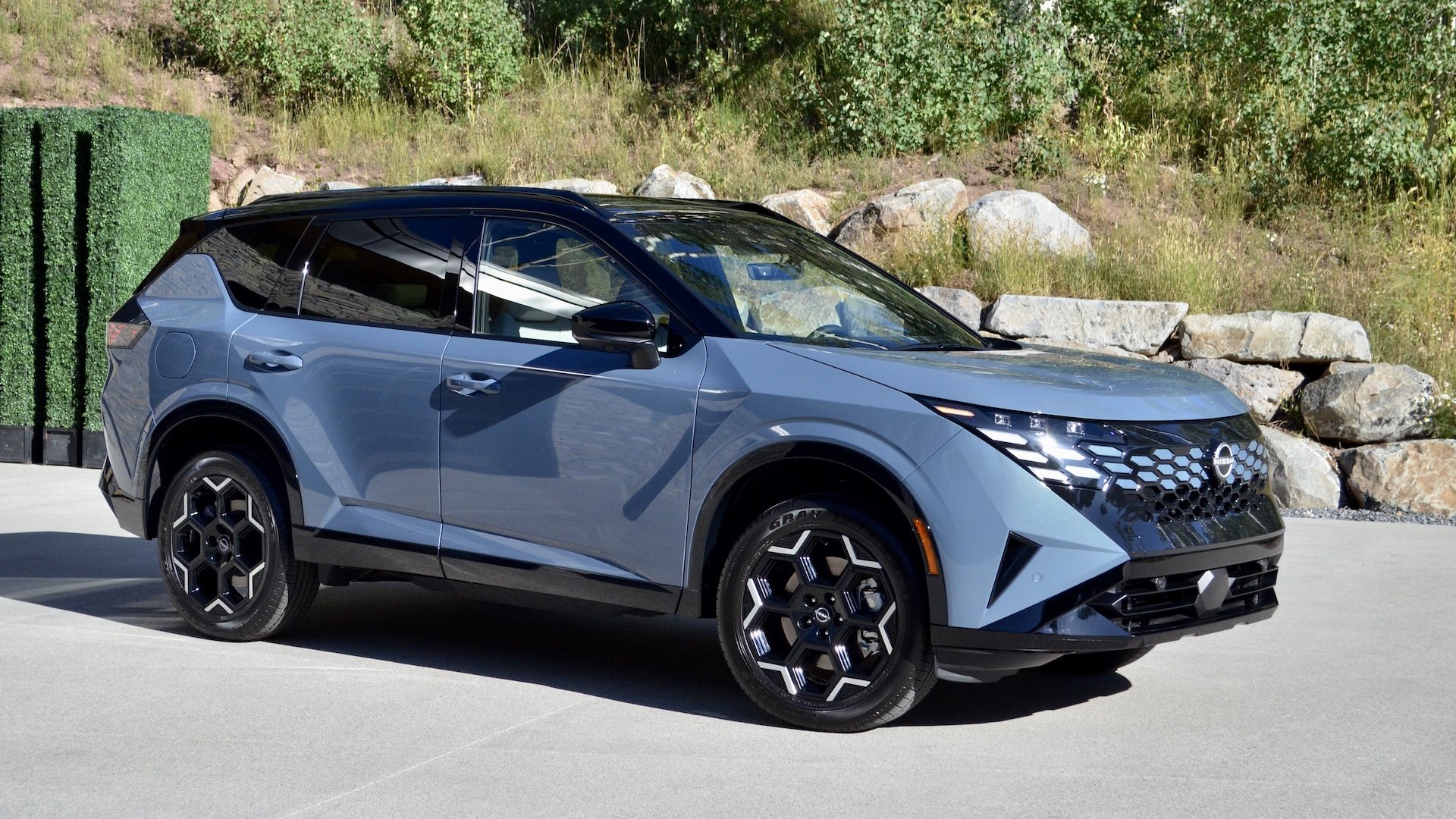
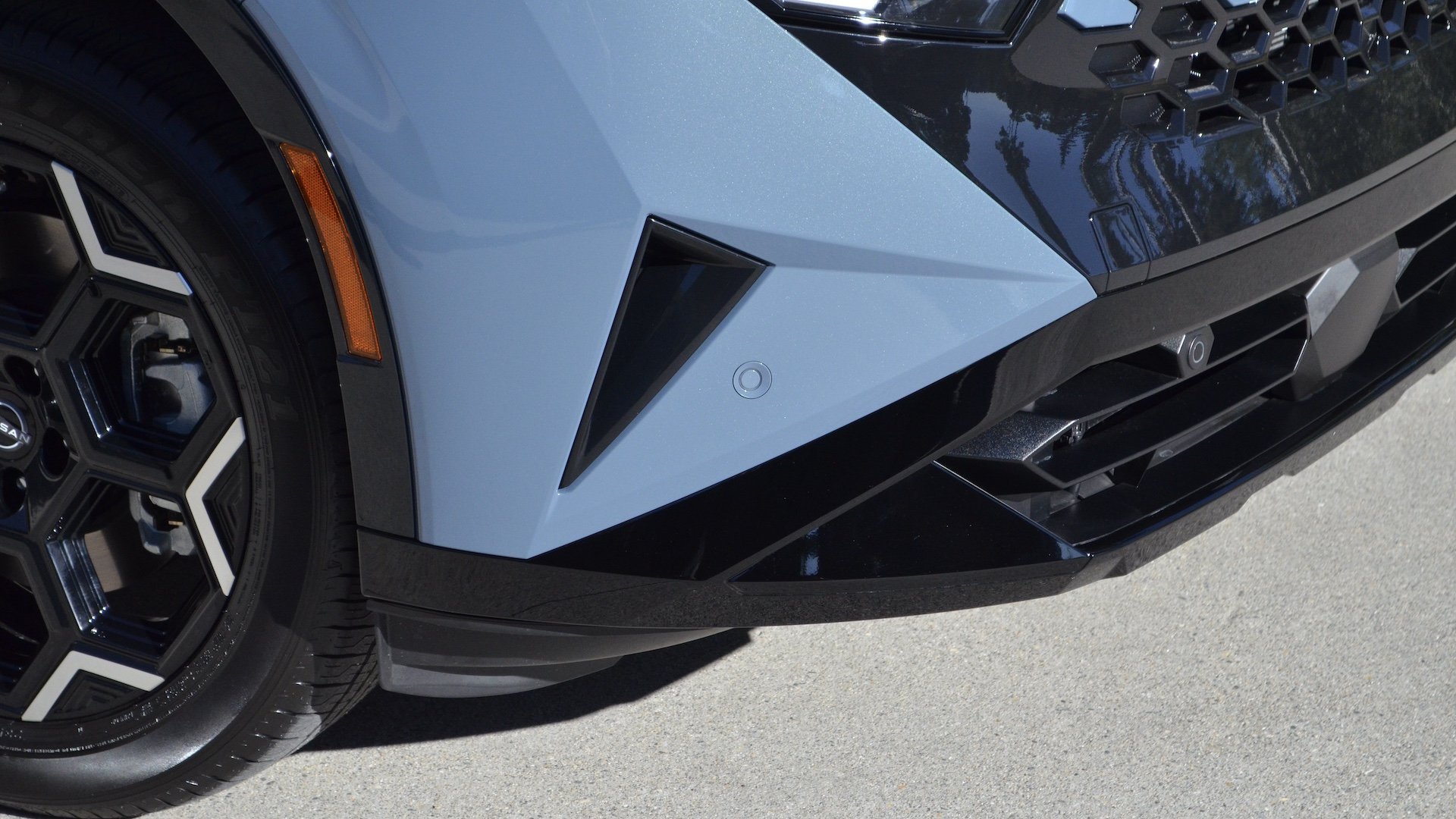
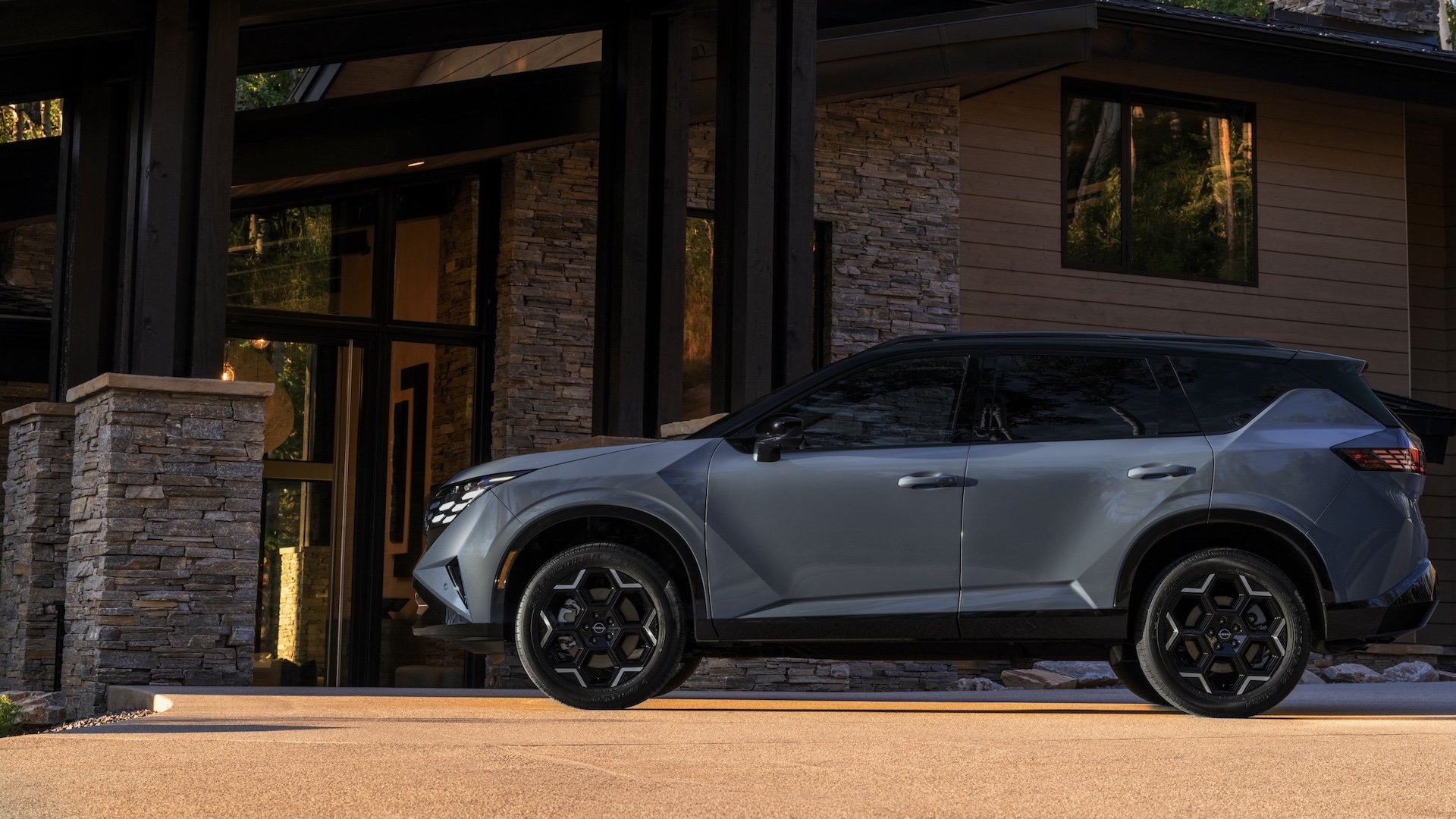
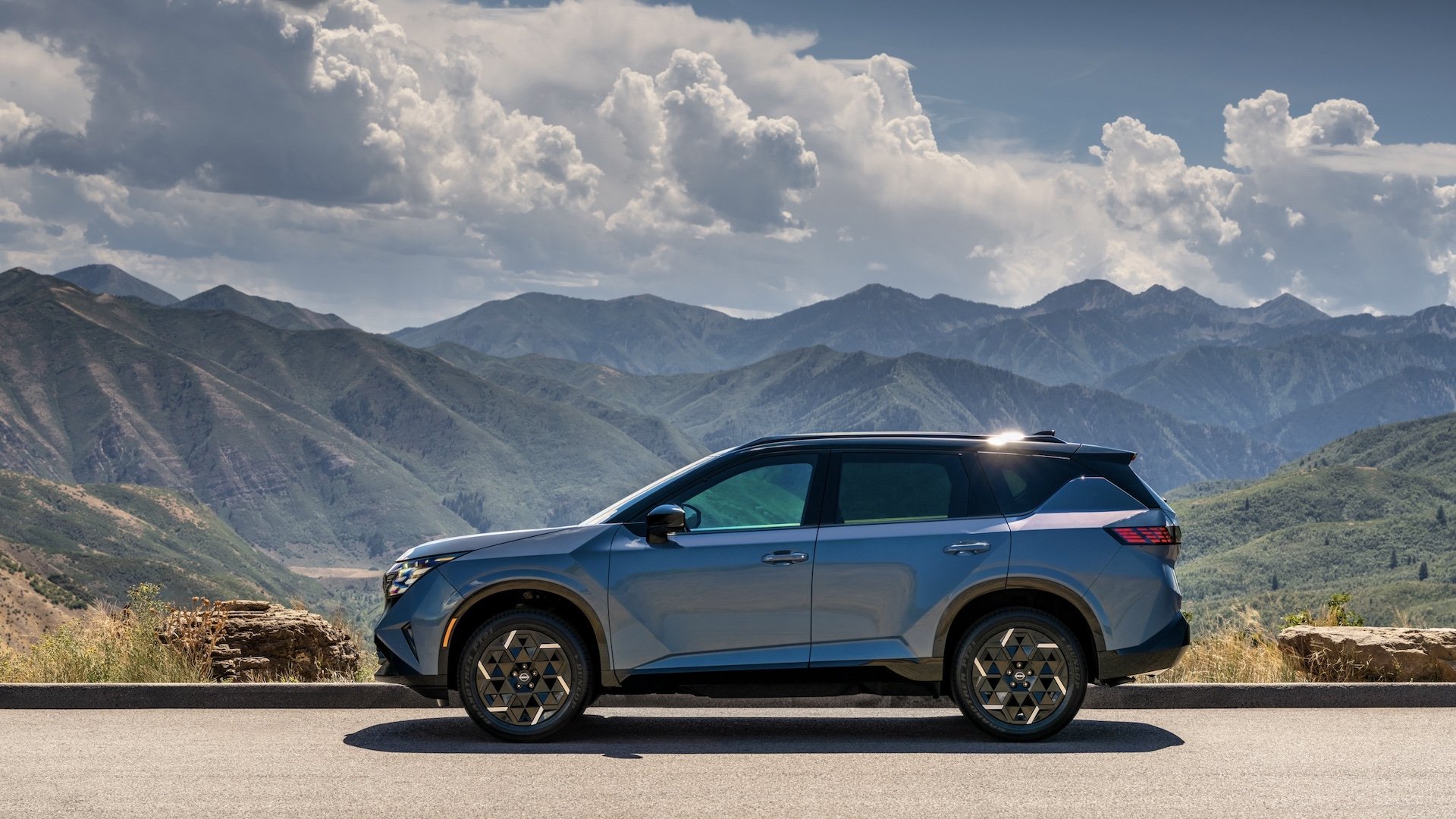
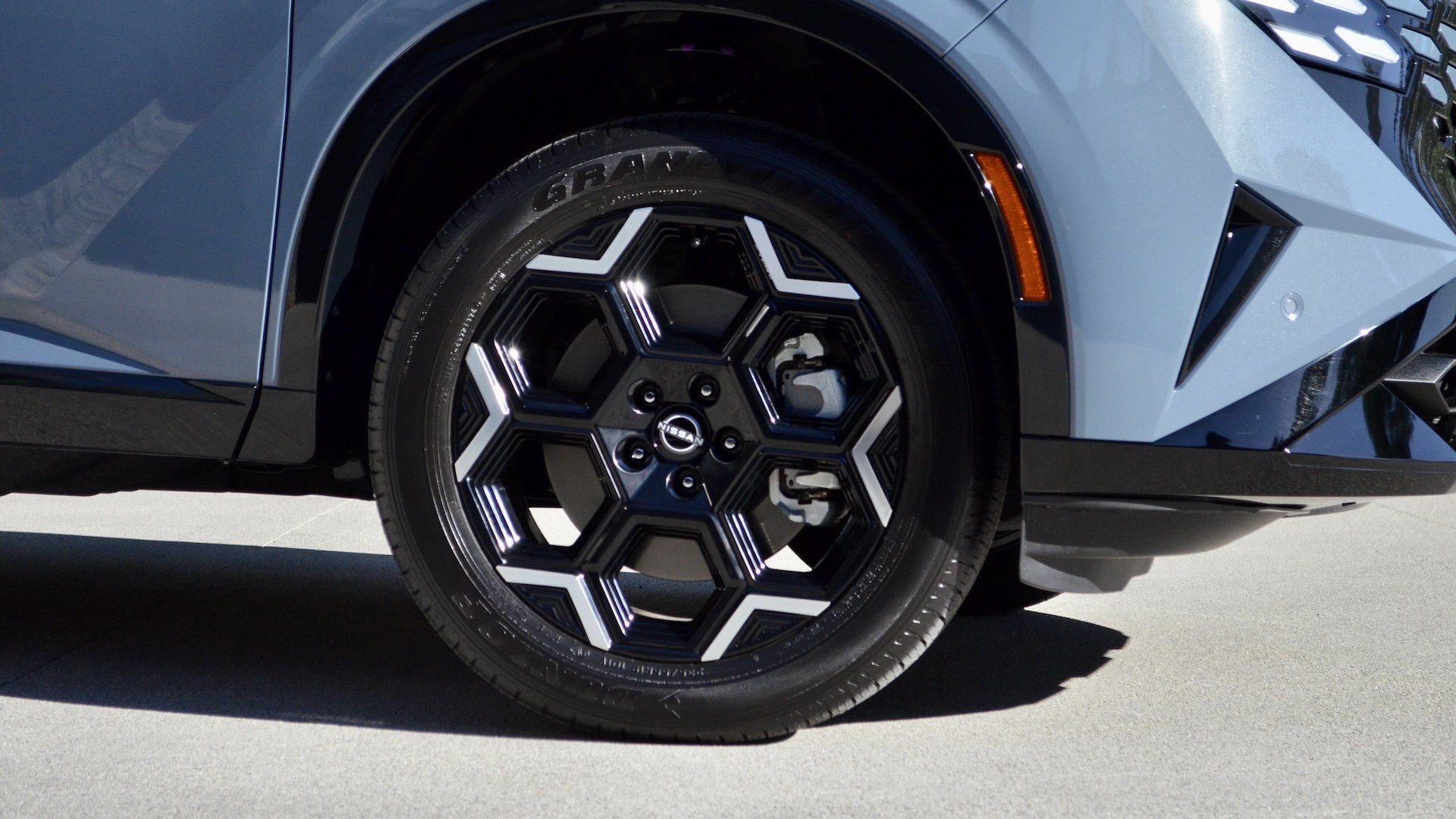
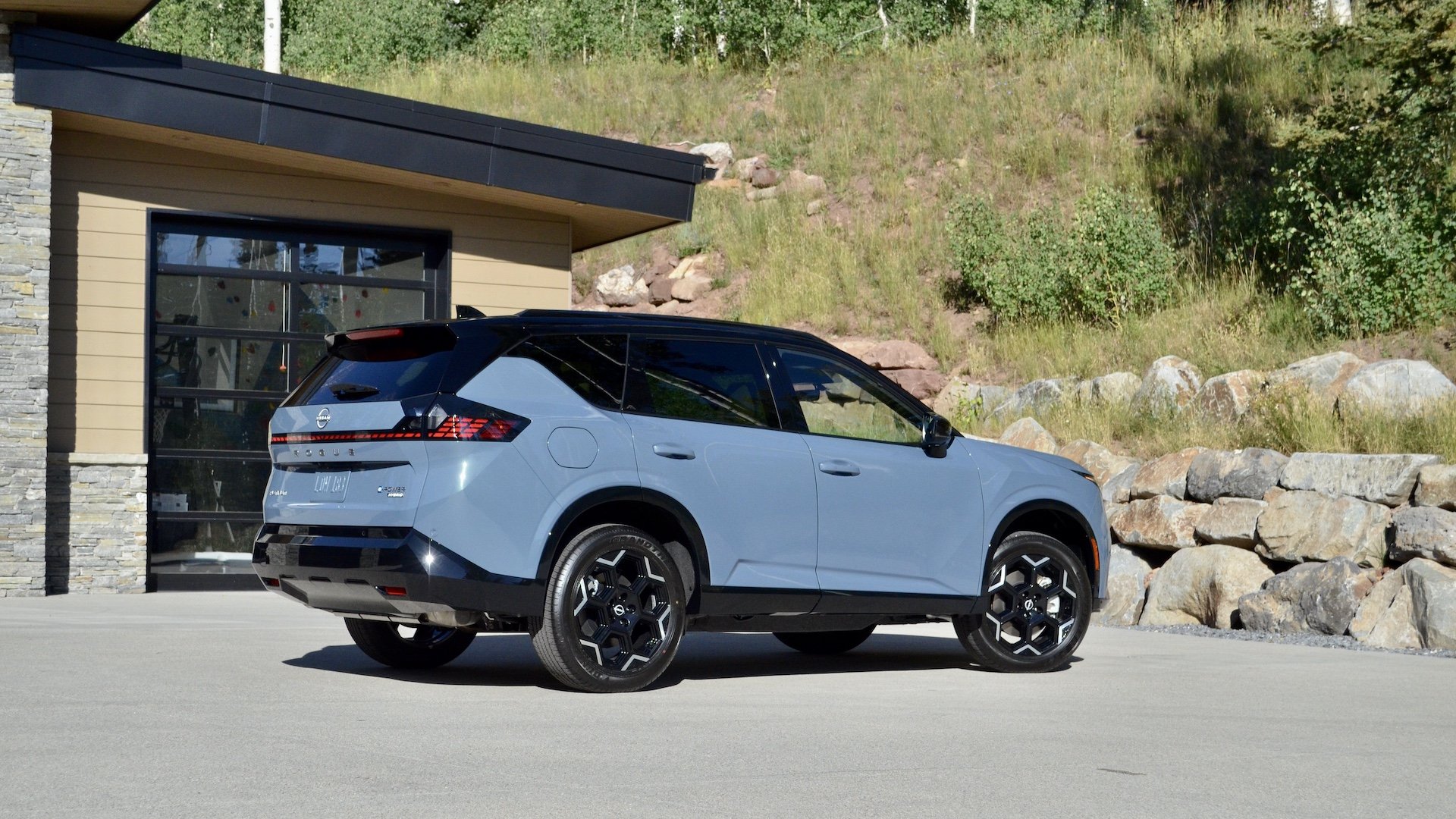
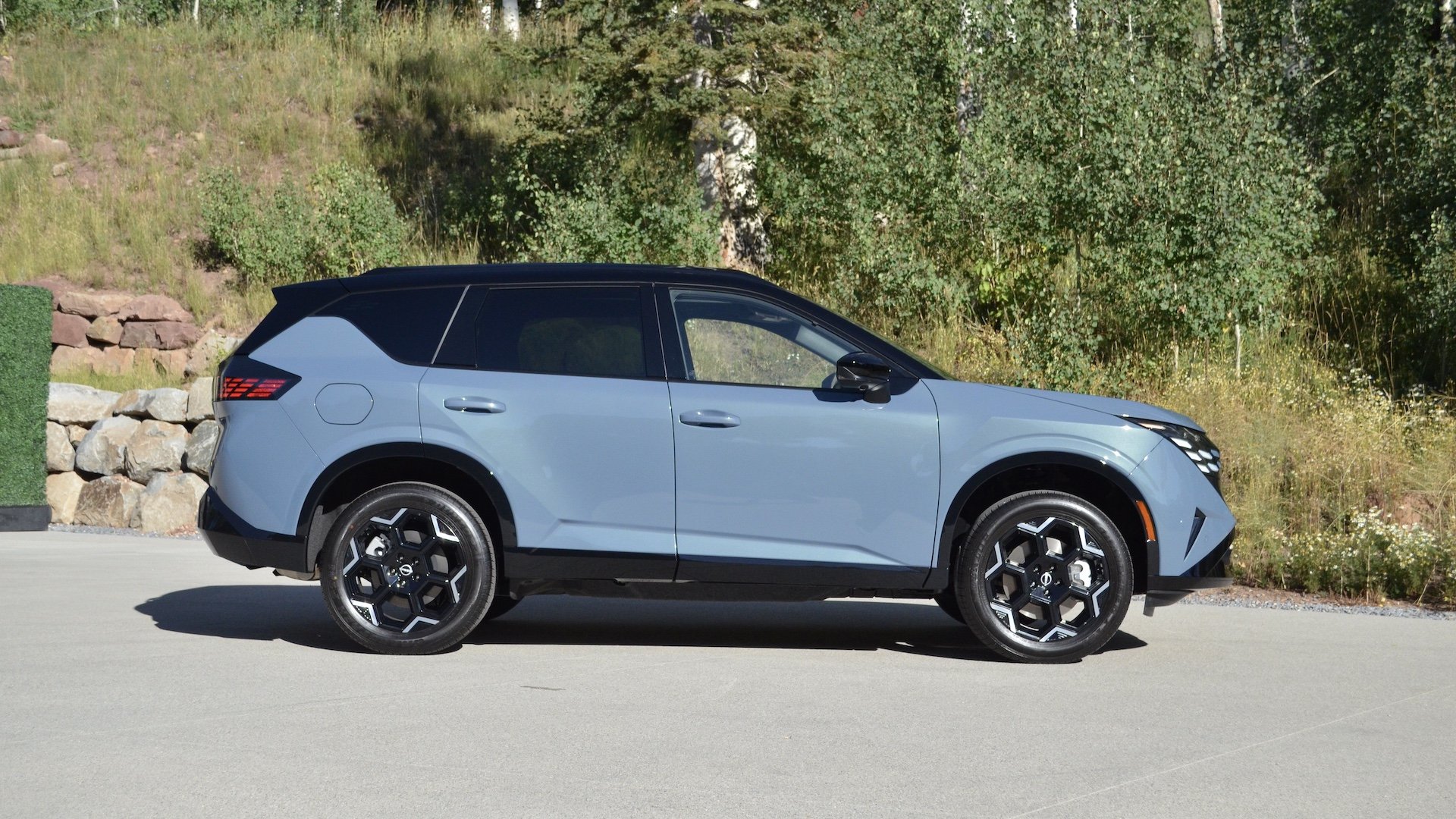
The SR emphasizes its sportier character with unique bumpers, 19-inch wheels and several gloss-black accents. The SV and SV Premium ride on 18-inch wheels, while the Platinum gets 19-inch wheels.
 2027 Nissan Rogue Hybrid SR (Picture by Luc-Olivier Chamberland)
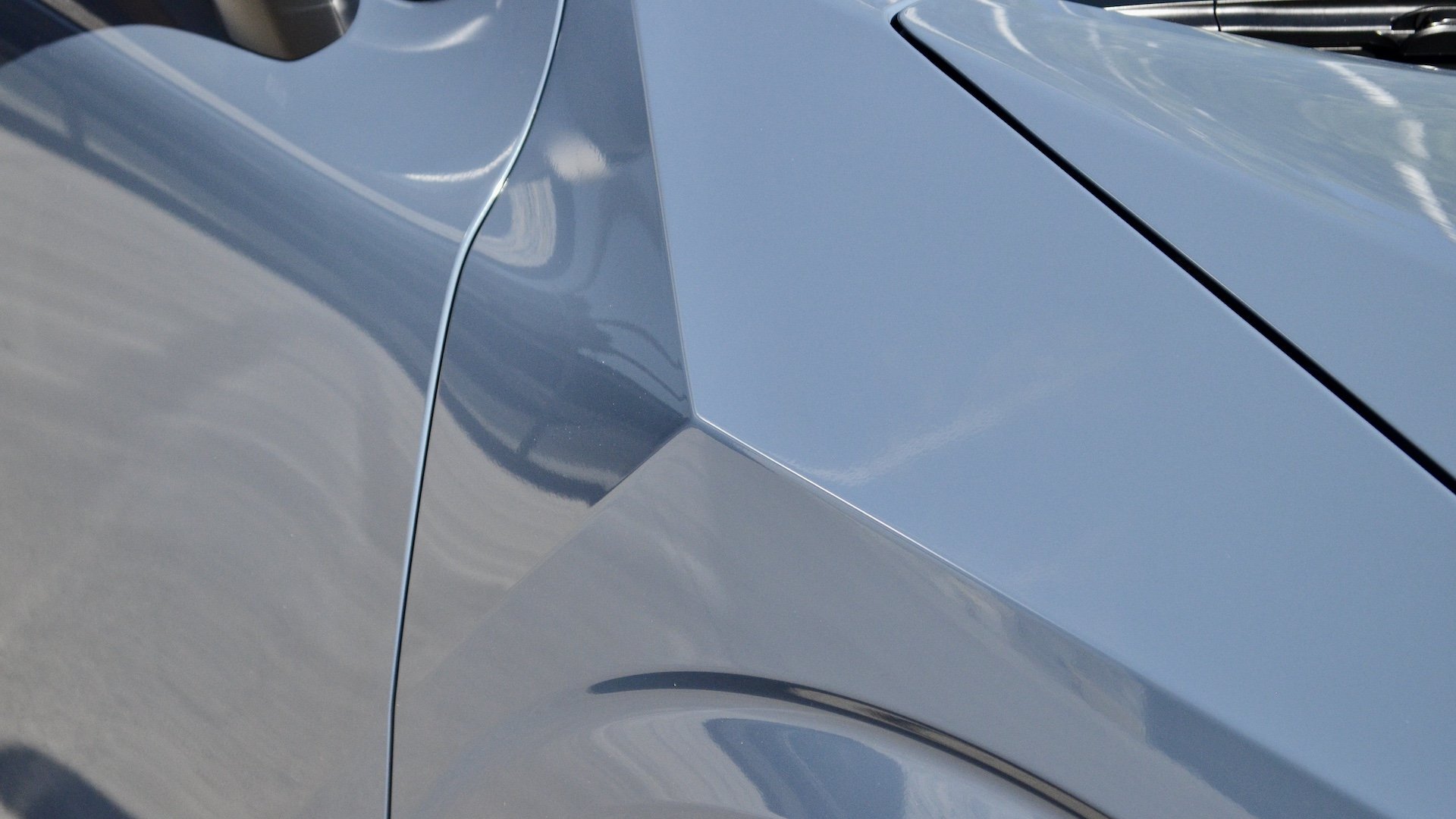
From the side, angular styling cues are somewhat reminiscent of the Hyundai Tucson, with a series of sharp character lines sculpting the bodywork.
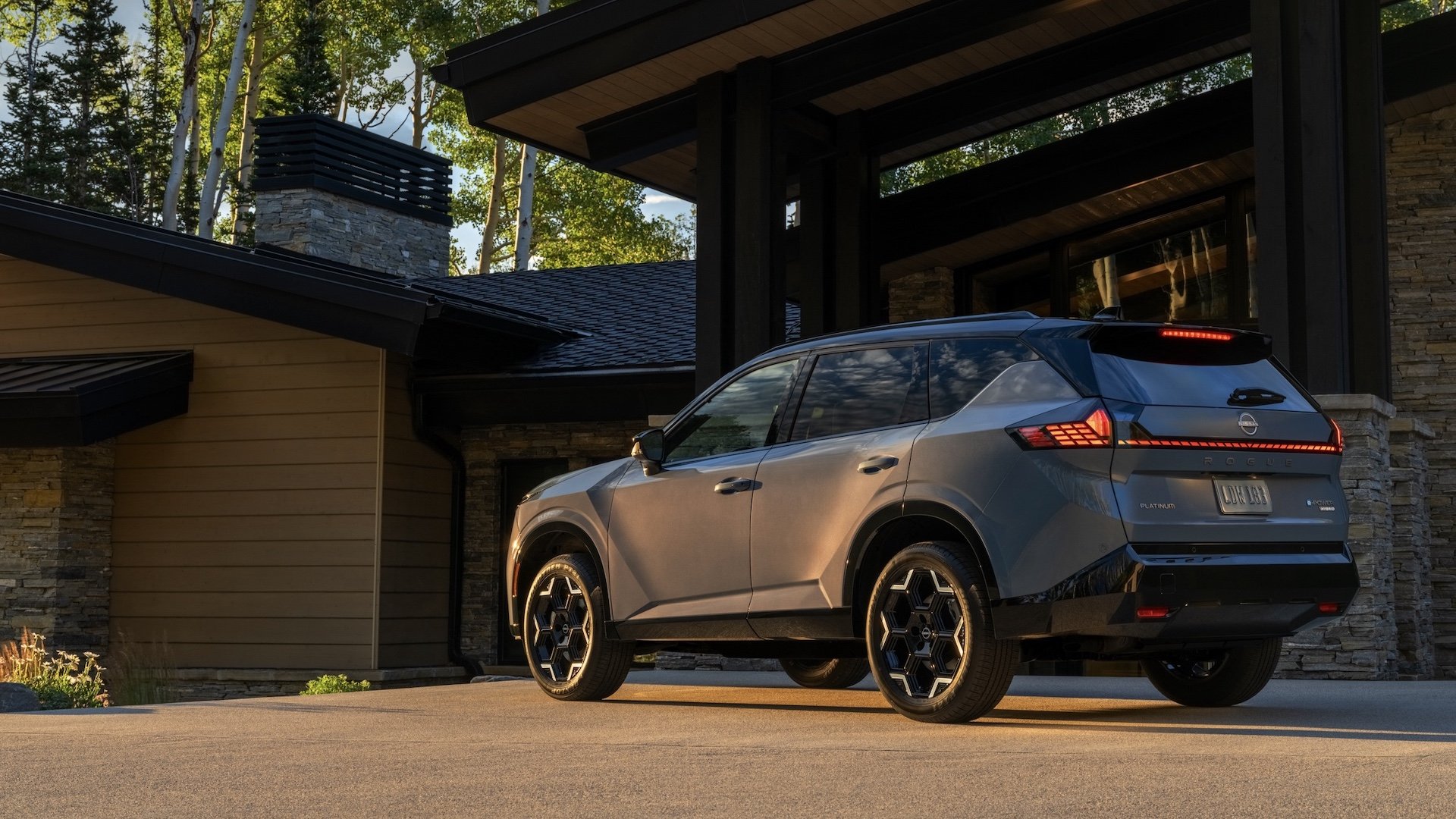
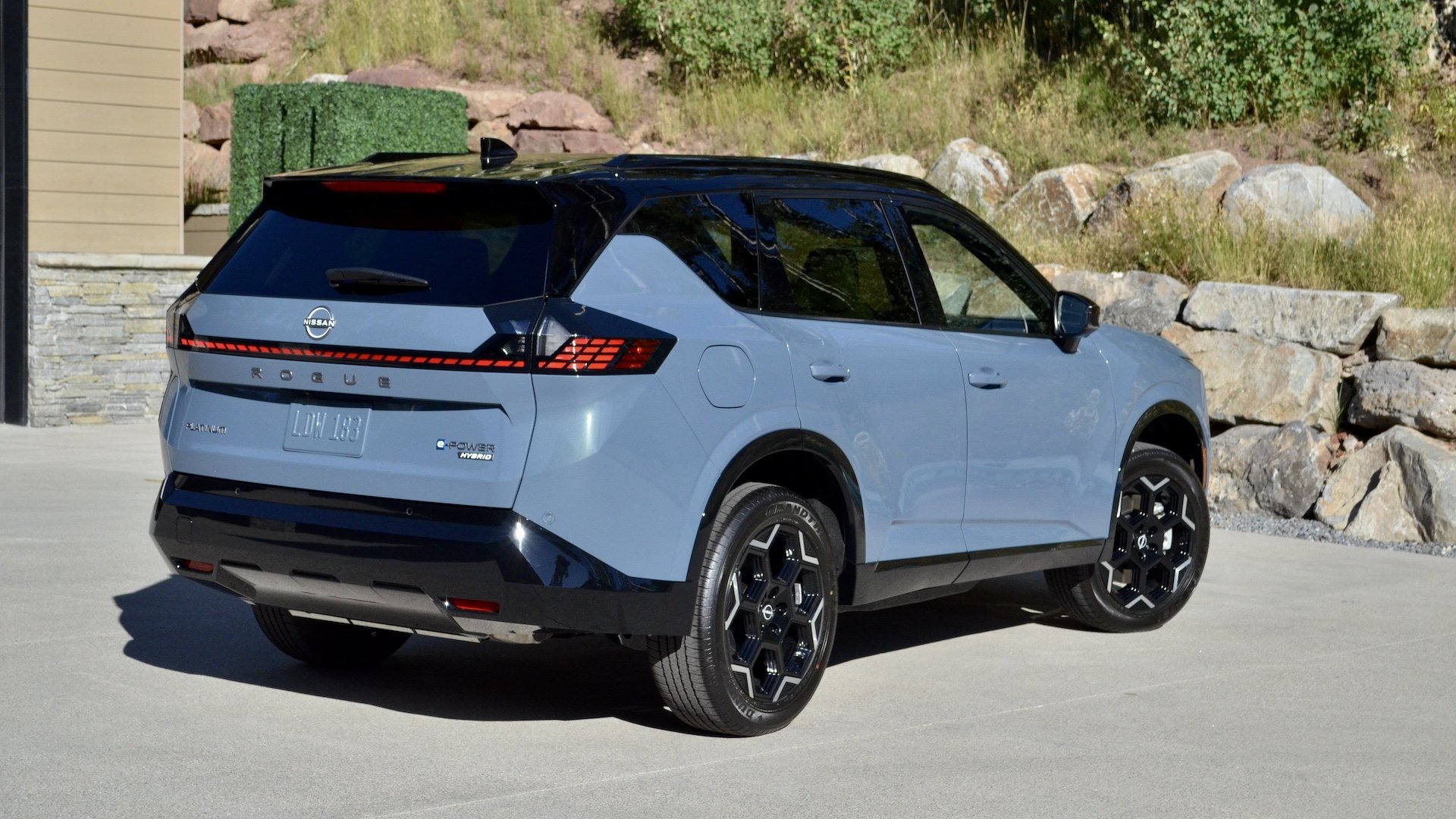
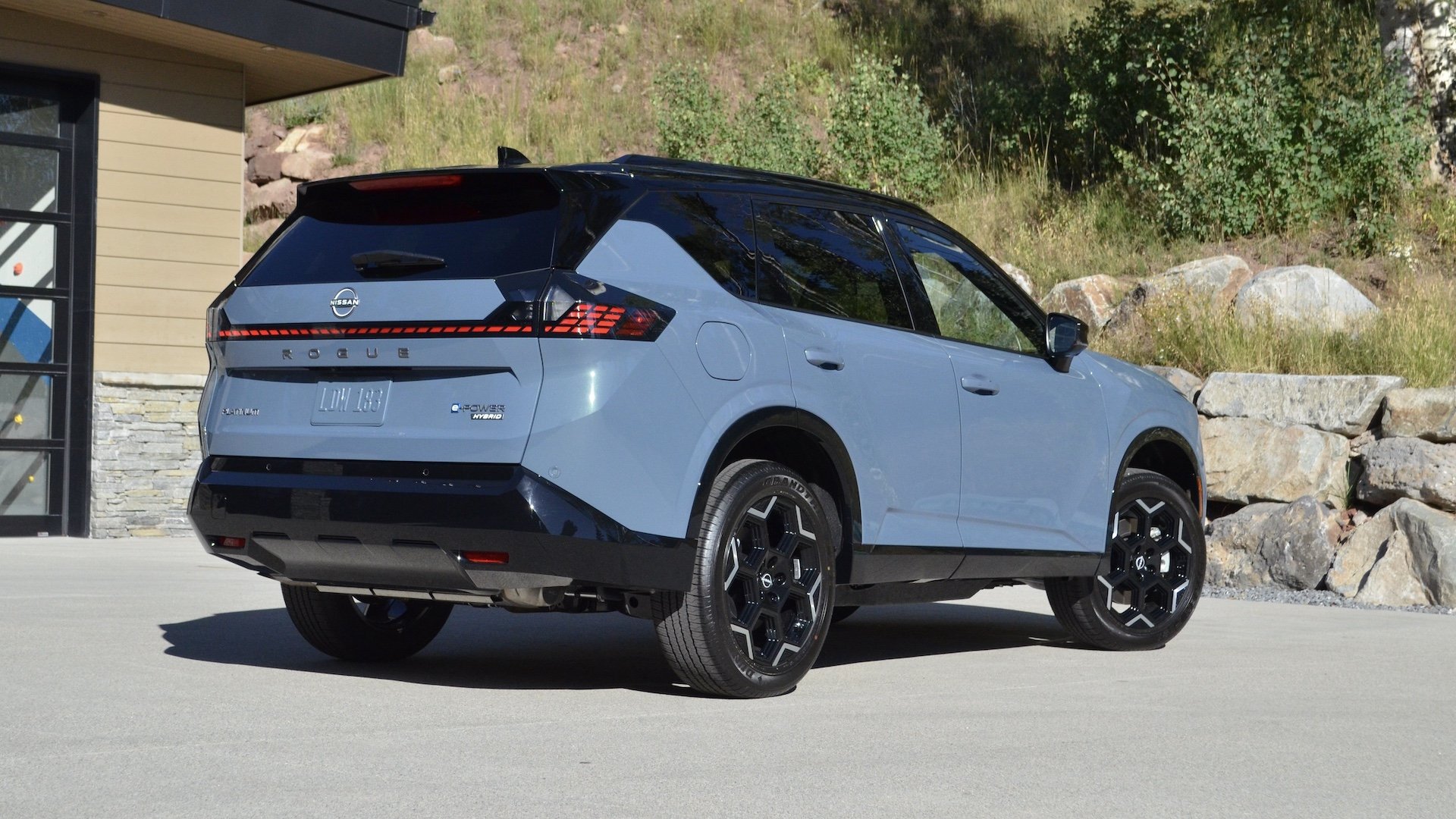
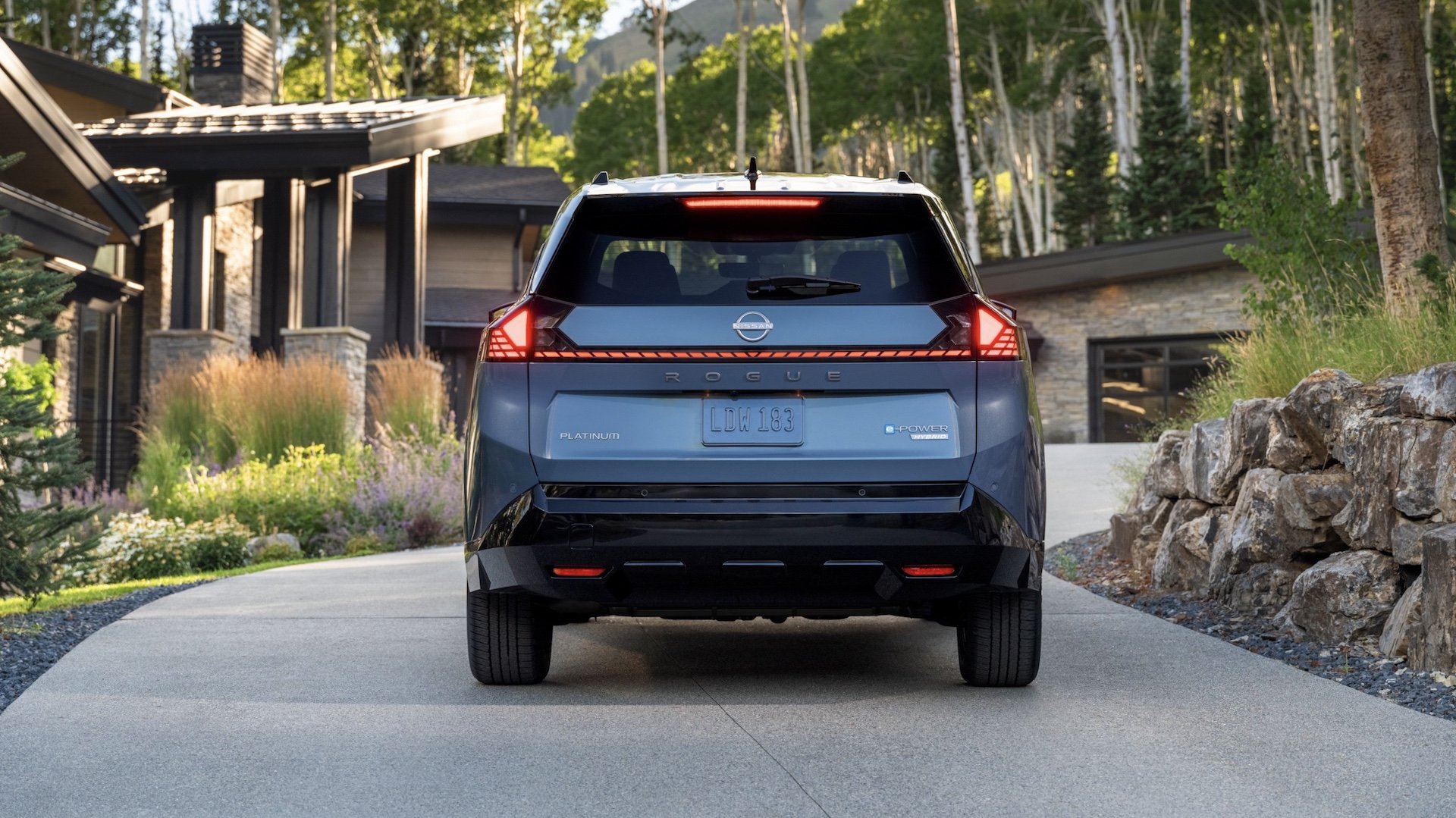
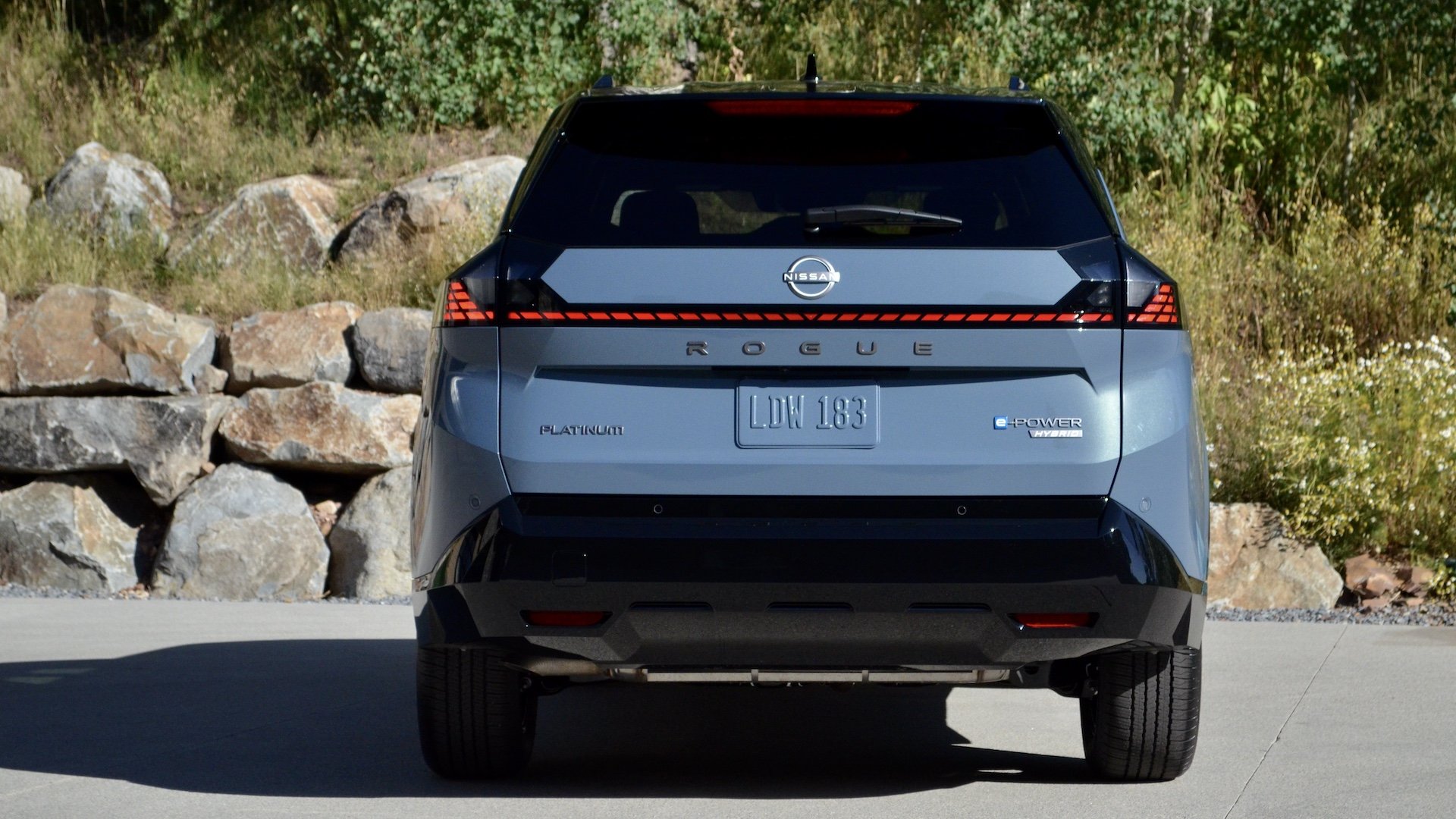
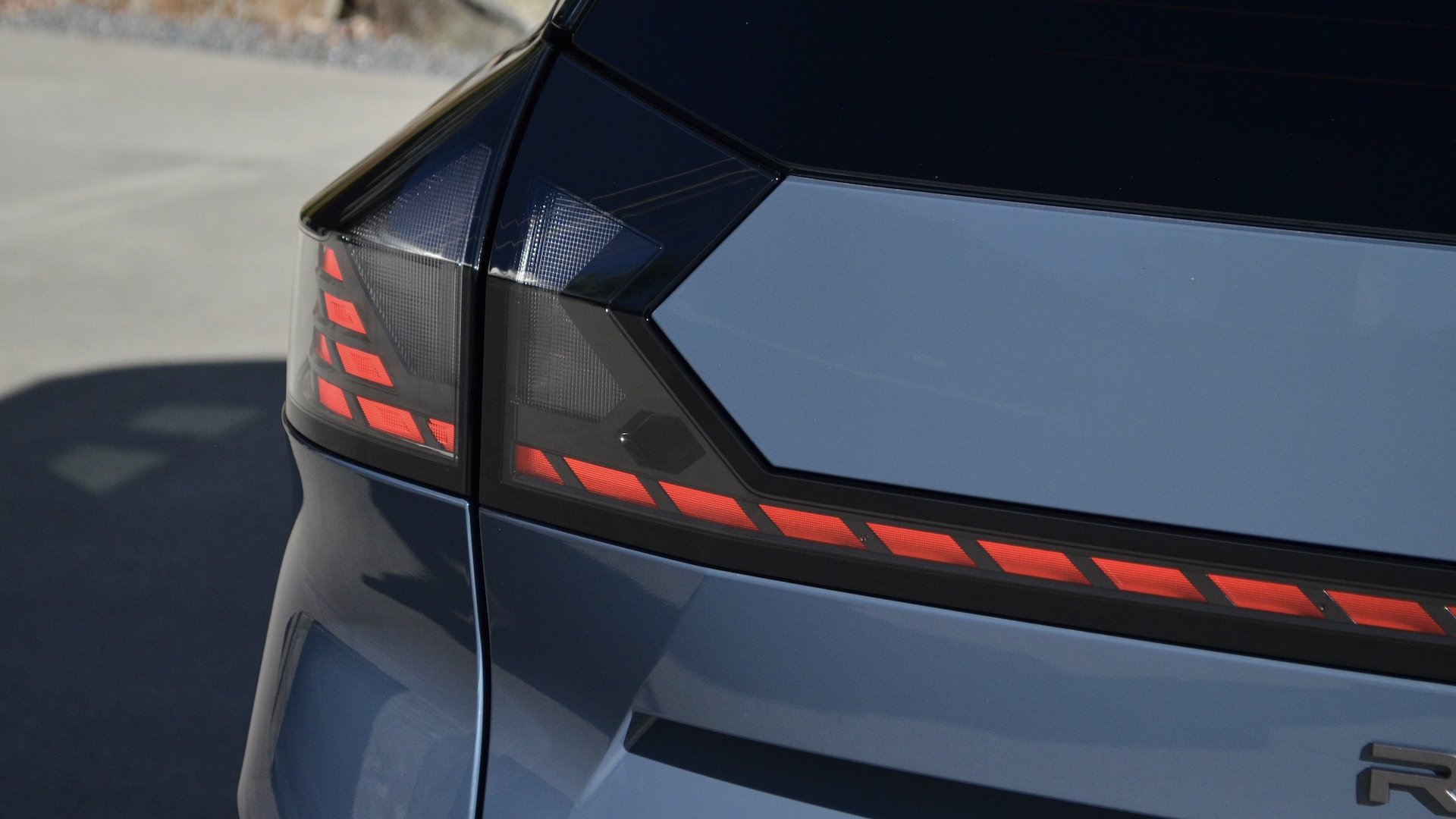
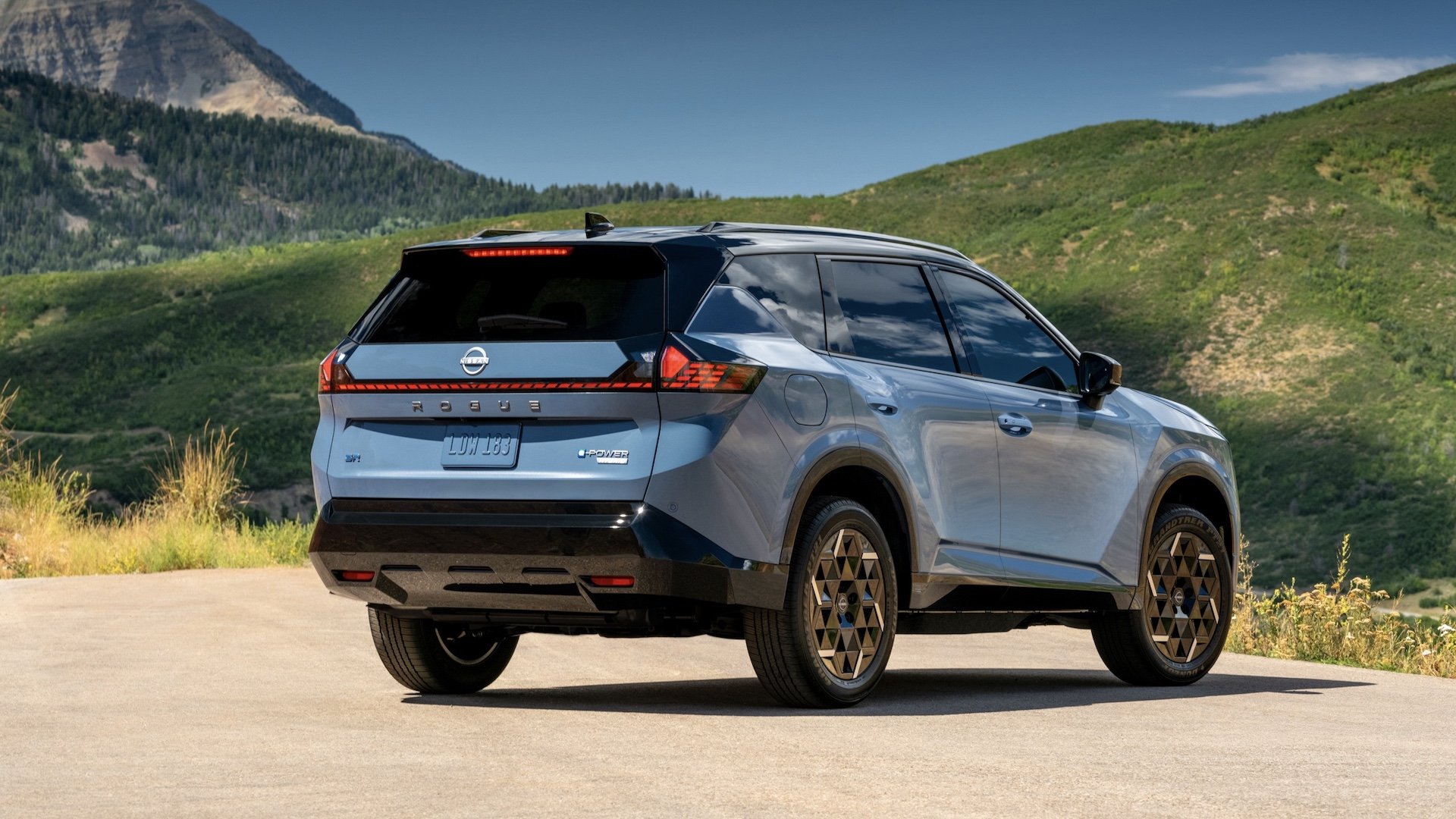
At the rear, the angular theme continues, most notably with an LED light bar connecting the taillights and creating a stronger visual signature. Three new colours also join the palette: Horizon Blue Pearl Metallic, Alpine Metallic and Aurora Dune Pearl. Depending on the selected exterior colour, a contrasting black roof will also be available.
More Technology Inside
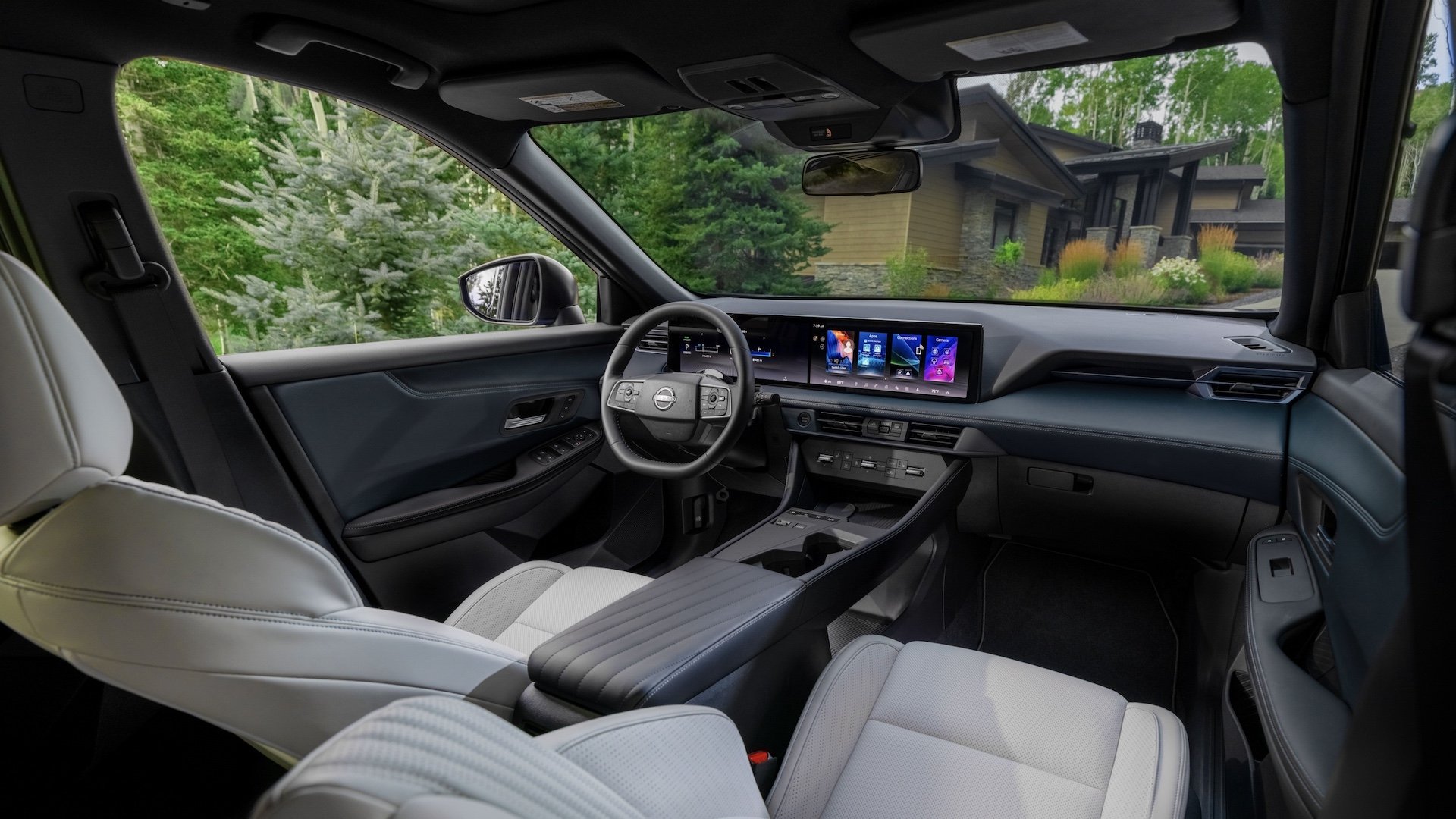
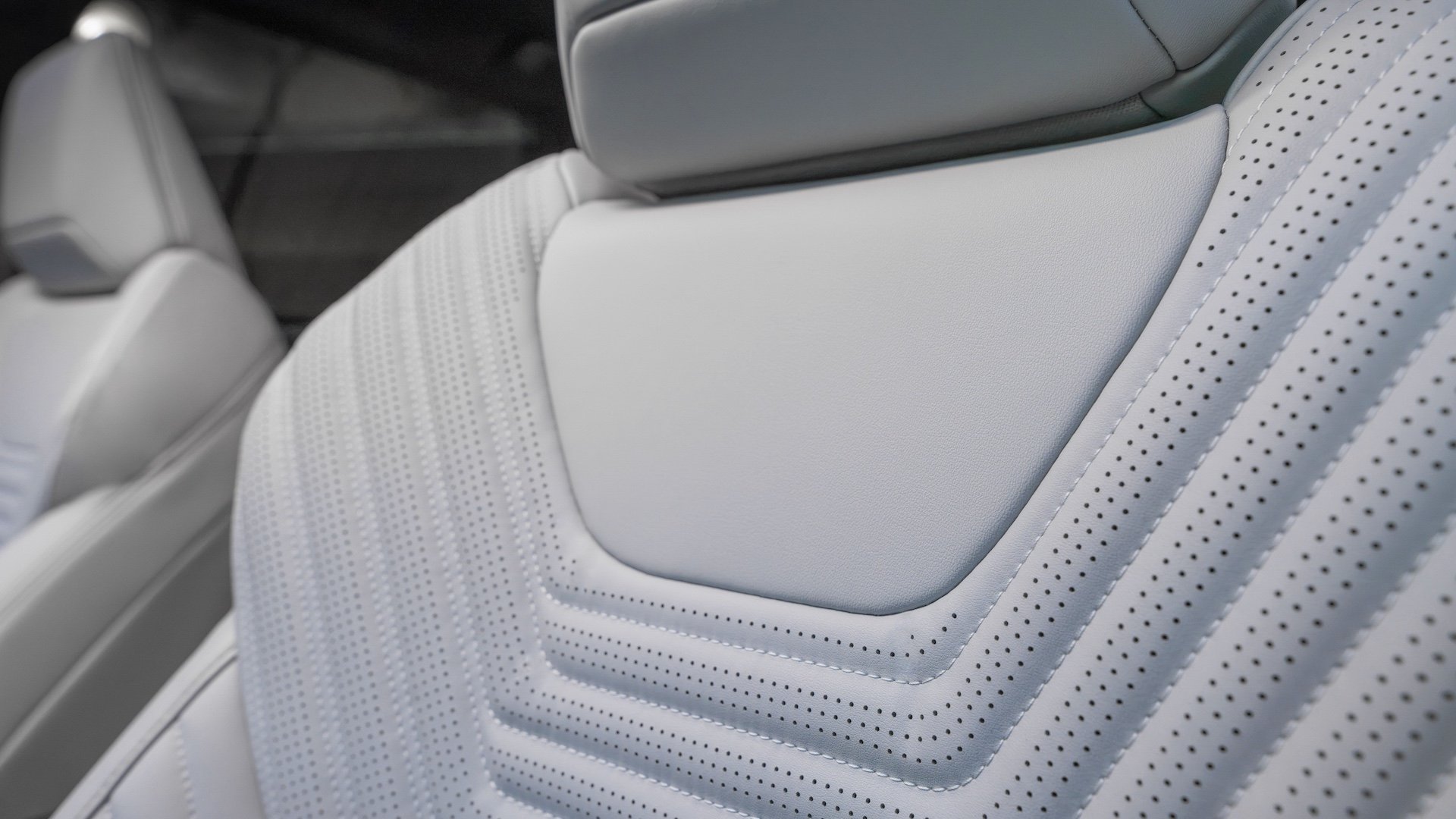
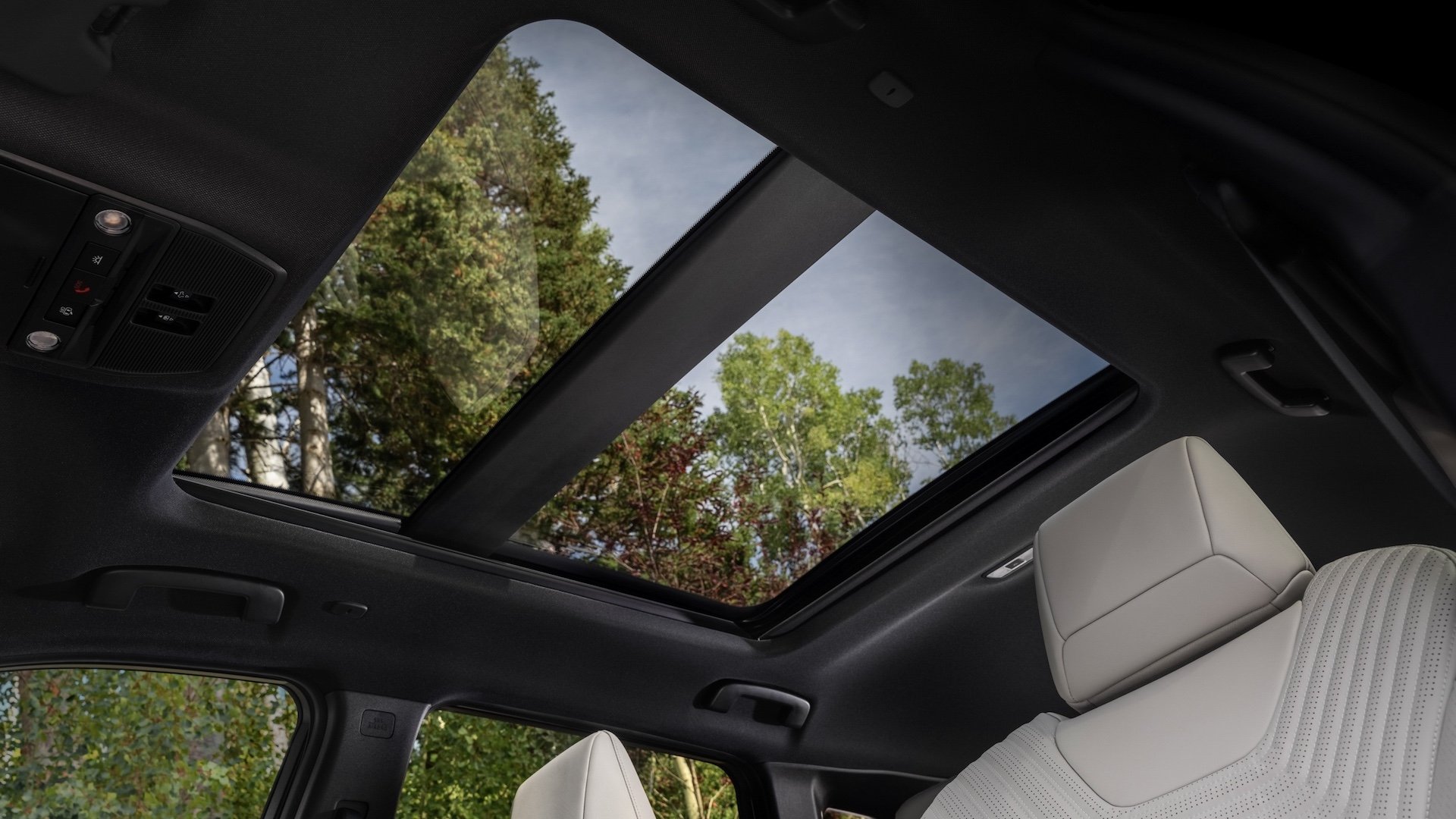
The transition to this new generation also brings a significant modernization of the cabin. The overall presentation is considerably more contemporary, with a bolder design. In the SR and Platinum versions, the cabin takes a more upscale approach, with leather covering much of the seats, doors and dashboard, creating an interior that is both dynamic and elegant.
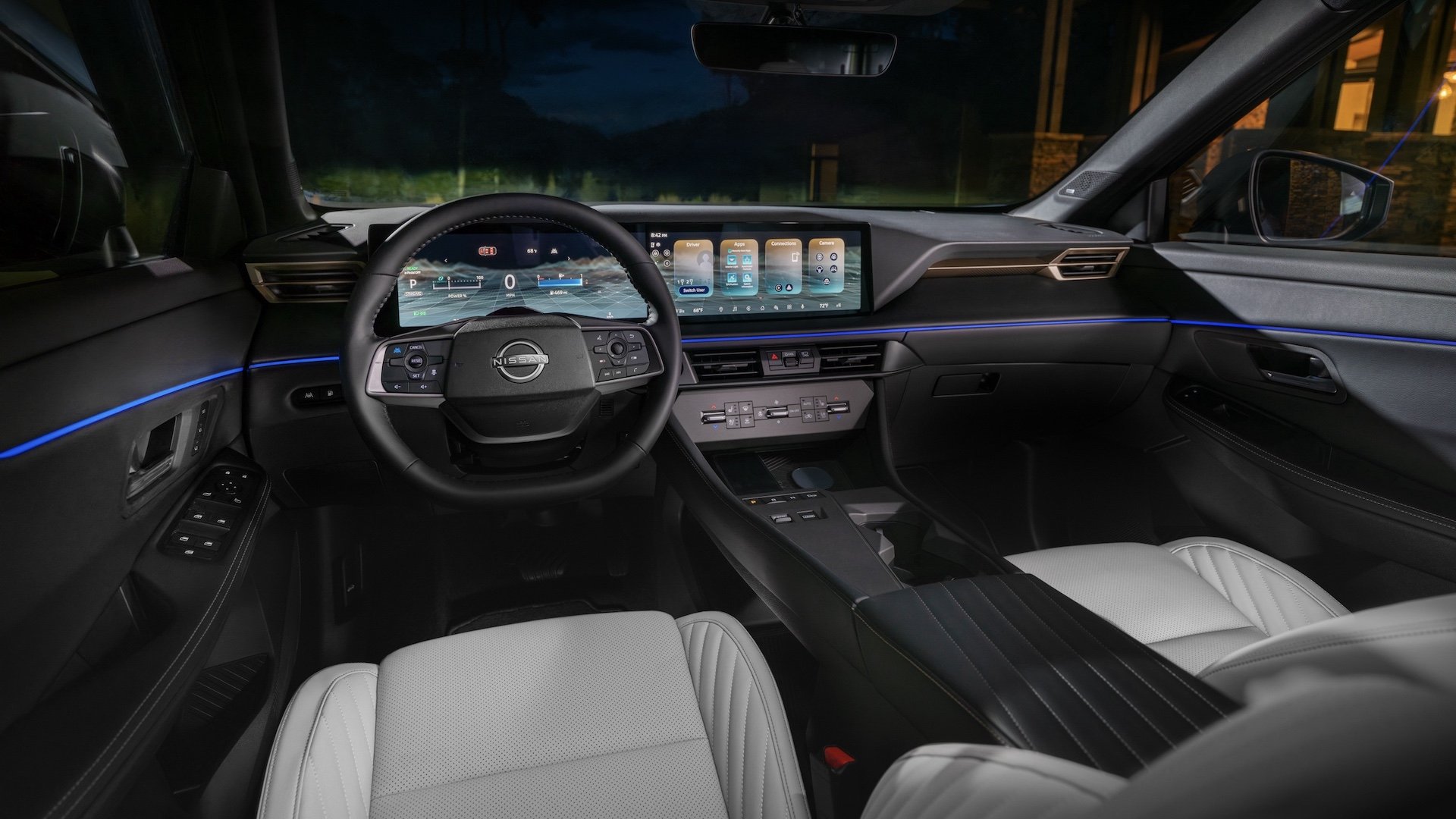 2027 Nissan Rogue Hybrid SR (Picture by Nissan)
A 12.3-inch digital instrument cluster comes standard, along with a touchscreen of the same size. The SR and Platinum upgrade to 14.3-inch displays and add Google built-in, providing access to Google Maps, the Google Play Store and Google Gemini. Wireless Apple CarPlay and Android Auto are also included.
Physical controls for the climate system remain at the base of the dashboard. The Rogue also receives a new 15-watt Qi2 magnetic wireless charger, while the Platinum gets two. A 10-speaker Bose audio system is exclusive to the Platinum. Storage space is also plentiful throughout the cabin.
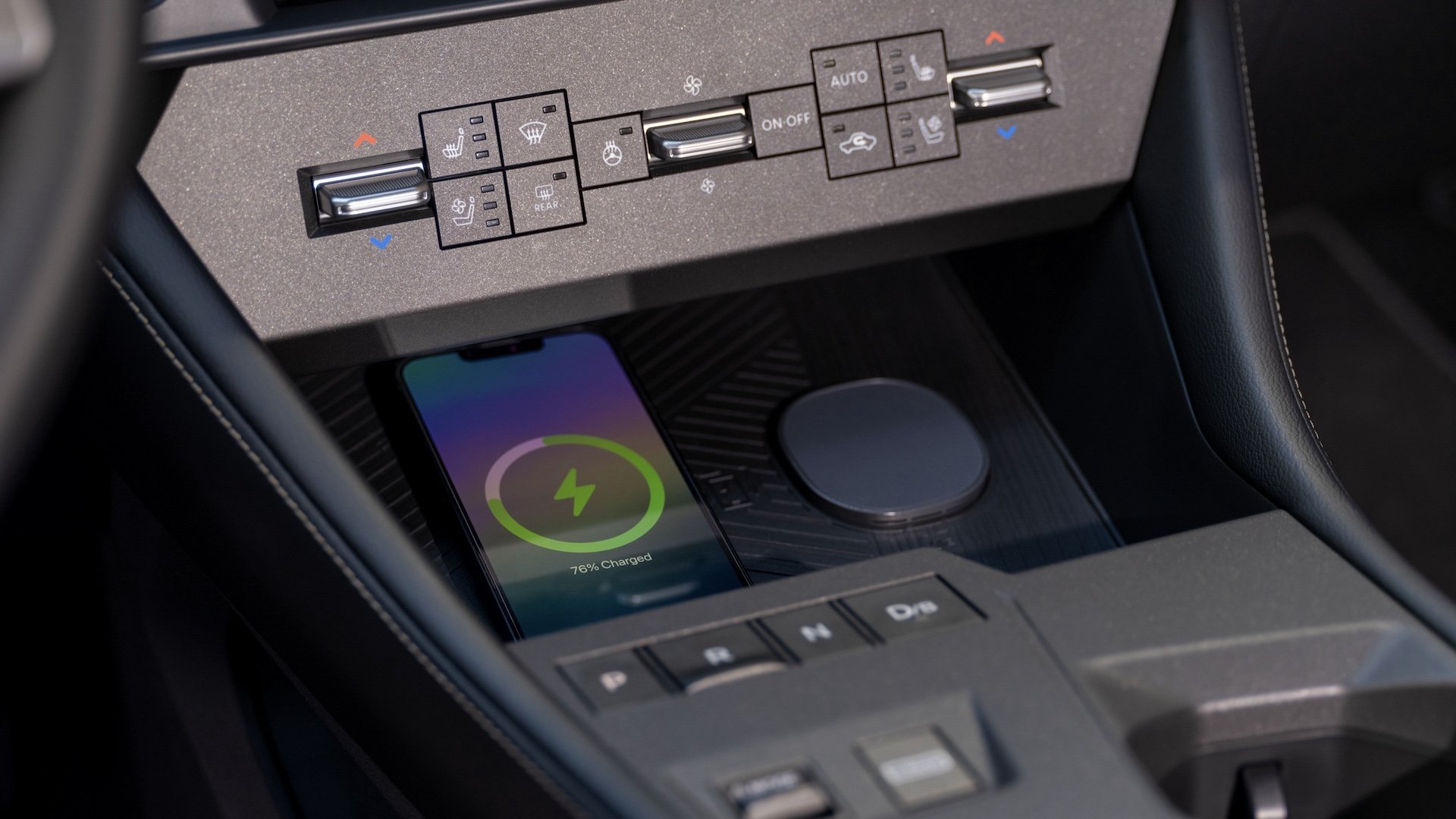 2027 Nissan Rogue Hybrid SR (Picture by Nissan)
Upgraded ProPILOT and New Camera Technology
Nissan is also using the redesign to update ProPILOT Assist. The system receives a new front radar as well as a camera with a 20-percent wider field of view.
The available Intelligent Around View Monitor with 3D functionality adds several new viewing options. One can virtually make the vehicle appear transparent, while Front Wide View improves visibility at intersections. Invisible Hood View provides a virtual look beneath the front of the vehicle, making it easier to position the wheels around obstacles.
Still Designed With Families in Mind
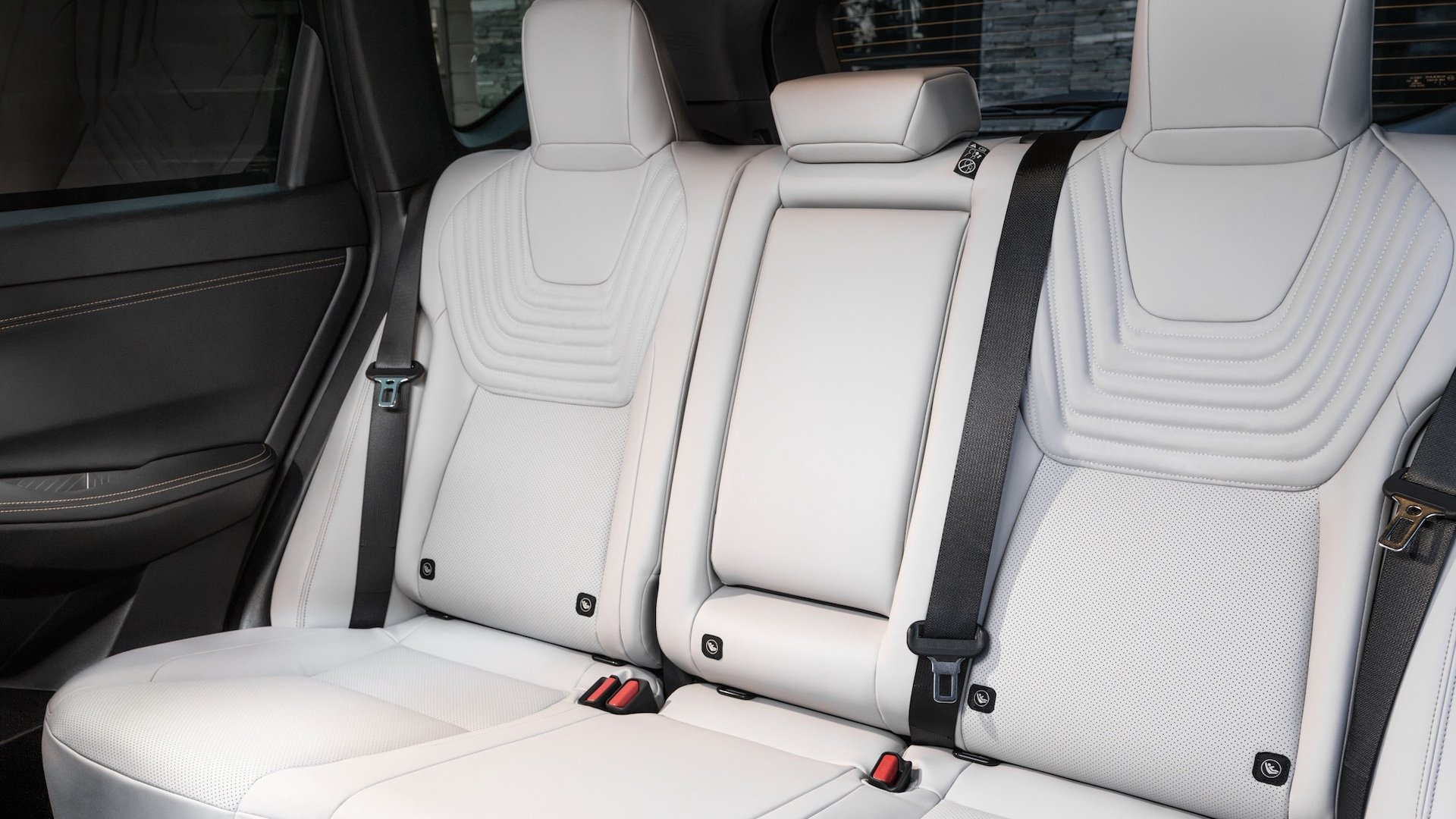
Despite the arrival of a very different powertrain, the Rogue retains its family-oriented character. The rear doors can open to nearly 90 degrees, and Nissan provides five LATCH anchoring points in the rear. The configuration even allows a child seat to be installed in the centre position using LATCH and is designed to make it easier to fit three child seats across the second row.
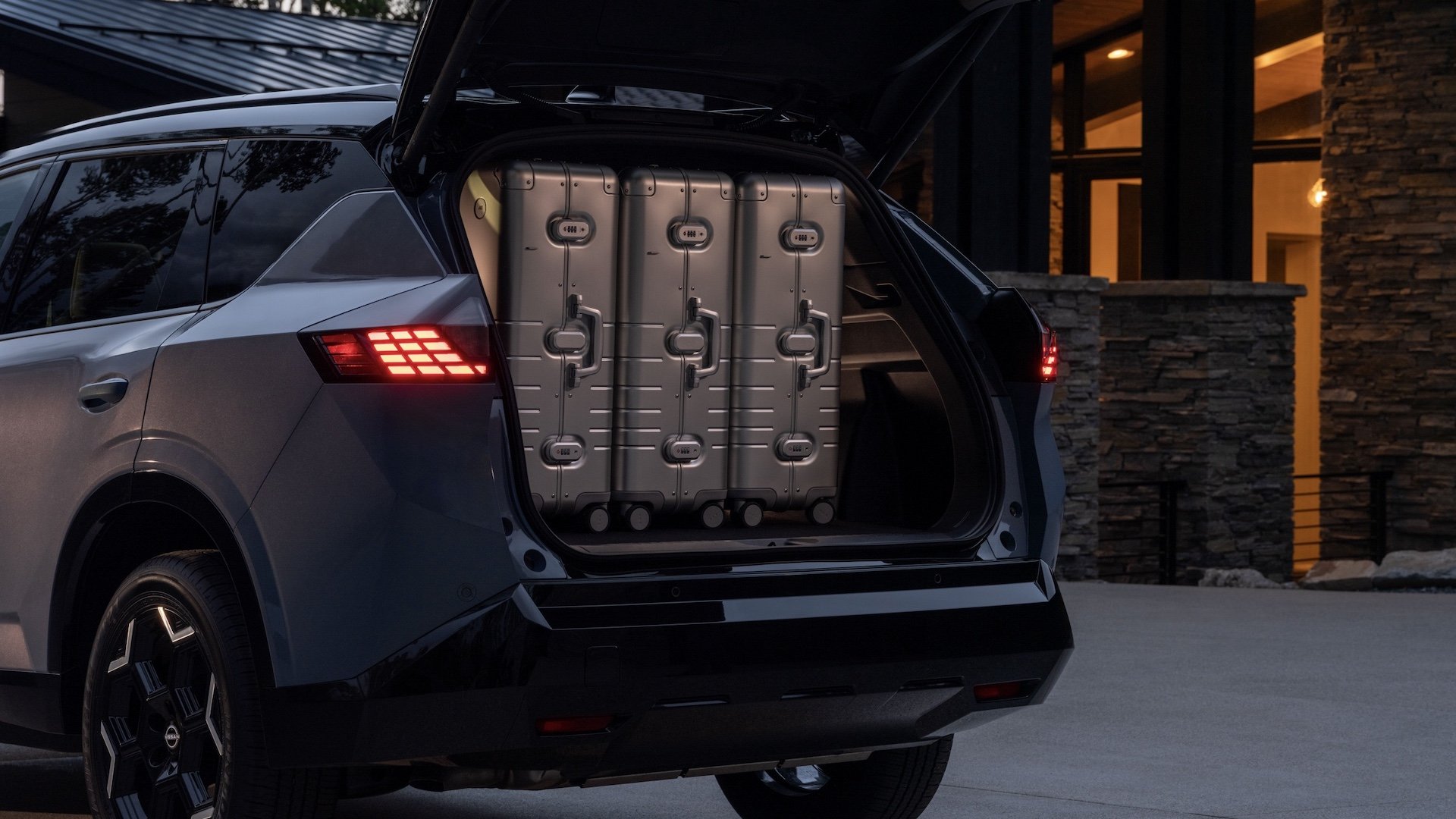 2027 Nissan Rogue Hybrid SR (Picture by Nissan)
Cargo capacity stands at 880.7 litres behind the second row and 1,866.1 litres with the rear seats folded. A thinner liftgate trim panel also adds approximately 44 mm of usable cargo length.
Coming Soon for a Test Drive
We will soon have the opportunity to put the all-new 2027 Nissan Rogue e-POWER Hybrid to the test.
Stay tuned to MotorIllustrated.com for our full driving impressions.