


Public consultations in Canada will soon end on possible tariffs imposed on Chinese-assembled vehicles.
Could BYD build a local factory to avoid financial tariffs.
The Canadian market could see a new car brand added to its long list of established manufacturers. According to a report from Automotive News, Chinese giant BYD (Build Your Dreams) is preparing to enter the Canadian market, after entering Mexico earlier this year.

At this time, no brand of Chinese origin is established on the North American continent, but with a presence north of the US-Canada border, BYD could change all that. Let’s remember that BYD has surpassed Tesla as the world’s leading electric brand late in 2023.
Also, according to AN, a series of lobbyist documents confirms BYD’s desire to establish itself on the local market. BYD has already successfully entered the Canadian market in the electric bus sector, but the next step is to sell personal vehicles to Canadian consumers.
 BYD Shark | Photo: BYD
What remains to be seen is the federal government’s position on this potential arrival of the first Chinese manufacturer. The arrival of a car brand from China could be accompanied by tariffs imposed on the manufacturer, with the aim of protecting the local automotive industry and its thousands of jobs.
For the time being, BYD remains silent on its intentions for Canada. Could BYD invest in a Canadian production plant to avoid the monetary sanctions that are almost inevitable in the current economic climate?
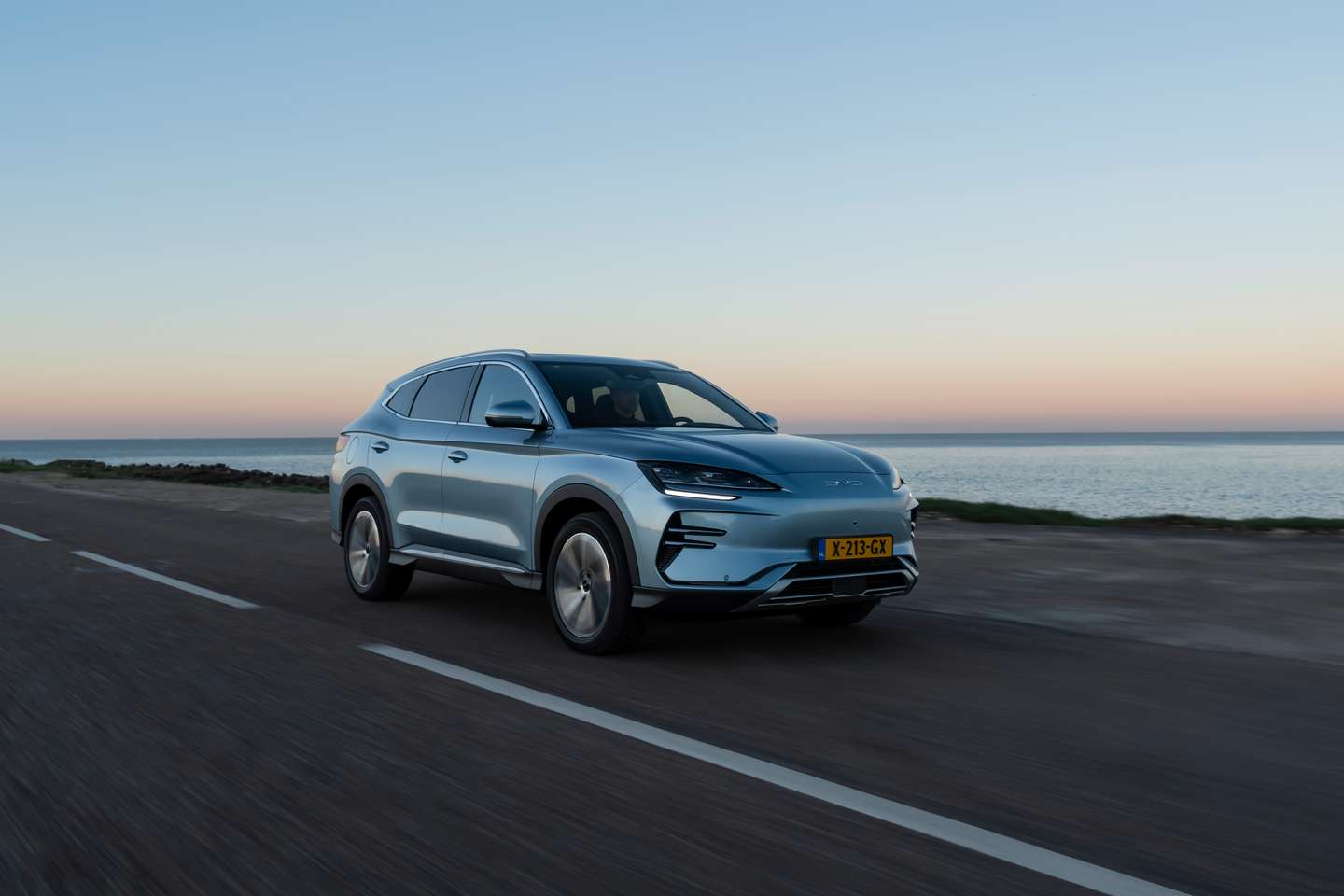 BYD Seal U | Photo: BYD
In fact, this is the strategy planned for the Mexican market, where the Shark plug-in hybrid pickup truck will be assembled. According to an AN source, BYD has already met with Canadian dealerships with a view to establishing itself in the market.
Let’s not forget that Canada is already approaching its next election campaign, due to take place before October 2025. A Conservative Party victory in Ottawa could be detrimental to BYD’s entry into the country, especially if the Republican candidate for the US Presidency, Donald Trump, wins his bet in November in a few weeks’ time.
Let’s not forget that the United States has already indicated that it intends to apply tariffs of 102.5% (instead of 27.5% previously) on electric vehicles assembled in China. This is one of the many reasons why BYD is not immediately targeting the US market. The slowdown in the adoption of EVs south of the border is another reason cited by the manufacturer for delaying its entry into the largest automotive market outside China.
Meanwhile, in a few days’ time, the Canadian authorities will conclude their public consultation period on the possibility of imposing monetary tariffs on vehicles assembled in China.
It will be interesting to follow the process surrounding BYD’s possible integration into Canada, because if it succeeds, the Chinese automotive giant could well pave the way for other brands from the most populous country on Earth.
