10 to 97% charge in nine minutes. Even at ‑30 °C, just three more minutes. The real feat isn’t the speed: it’s achieving it without wearing out the battery. And on that front, BYD hasn’t fully proven itself yet.
- BYD promises 10 to 70% in 5 minutes and 10 to 97% in 9 minutes at ambient temperature: a 10C rate, ten times pack capacity per hour.
- Three levers combat the battery-degrading heat: 1,000 V voltage, reduced-resistance cells, active thermal management.
- A live test measured 76.4 °C at cell surface during a flash charge. The long-term degradation question remains open.
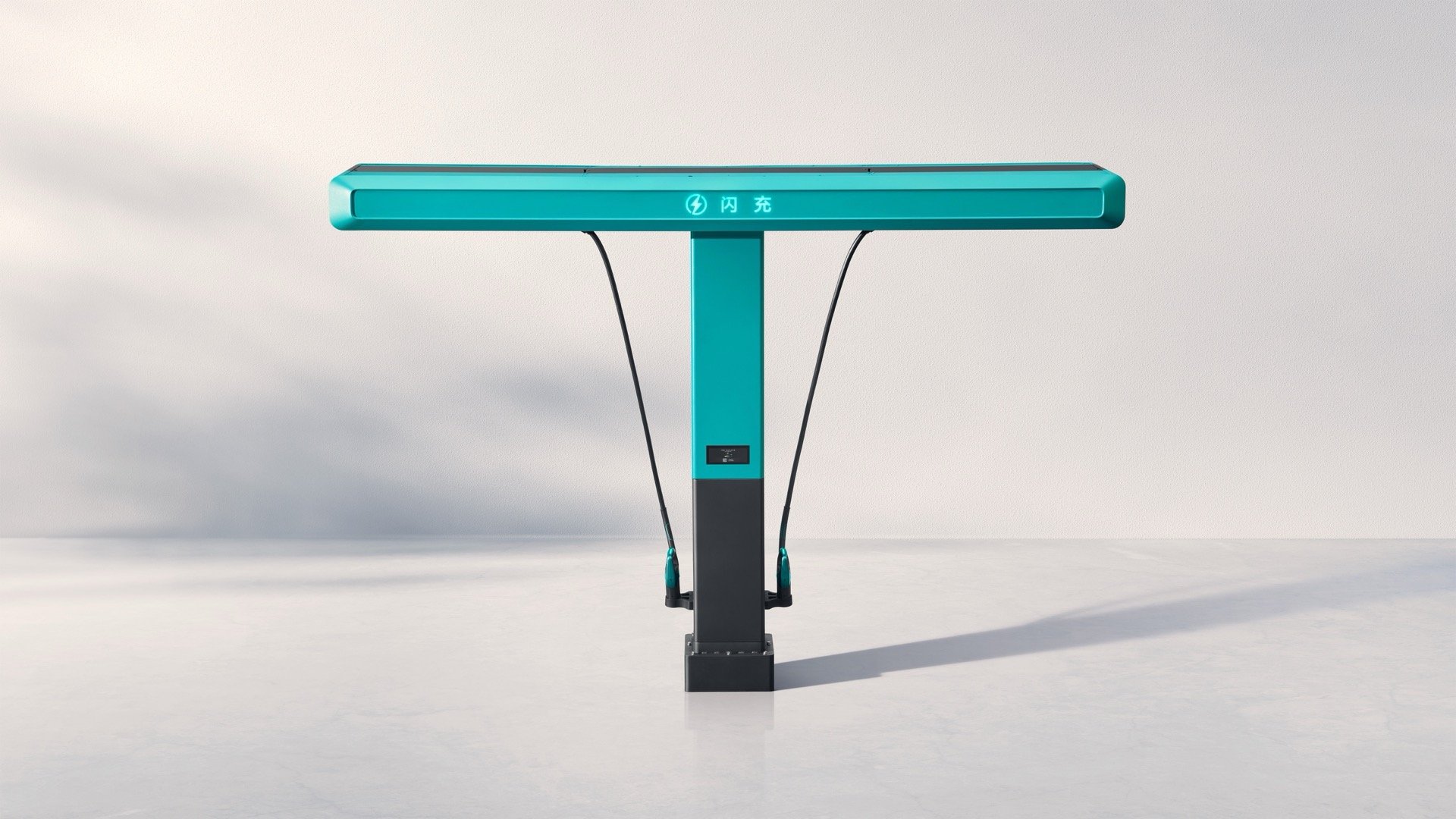
In 2025, BYD unveiled its Super e-Platform and Flash Charging system. The idea: push one megawatt into a battery without burning it. All the marketing revolves around a single figure : 10C, ten times pack capacity per hour. But the neat math “1,000 V × 1,000 A ≈ 1 MW” is a shortcut: the real pack in the first vehicle equipped with this technology holds 83.2 kWh, not 100 kWh.

Fast charging generates heat: electrical losses rise as the square of the current. Beyond a certain threshold, lithium stops intercalating cleanly into the anode and instead deposits on the surface, a phenomenon called plating, which eats into capacity and grows dendrites. The problem worsens in cold weather, exactly when fast charging would be most useful. That risk ; degradation, not speed is what the Super e-Platform attacks on three fronts.
First lever: voltage. At equal power, raising the voltage reduces the required current: one megawatt demands 1,000 A at 1,000 V, versus roughly 2,500 A at 400 V for most current electric vehicles. Less current means less heat to dissipate. BYD unifies battery, motor, and power electronics on this 1,000 V bus.
Second lever: the cell itself. Internal resistance reduced by approximately 50% through redesigned “ionic channels” produces less heat at equal current, and the elongated shape of the Blade cell evacuates it more evenly, limiting hot spots, often the real culprit behind accelerated degradation. An important nuance: the first equipped models run on standard LFP (lithium iron phosphate), and only the Blade Battery 2.0, unveiled in March 2026, introduces a denser LMFP (lithium manganese iron phosphate) cathode. A more recent model remains LFP. LMFP is therefore not yet the standard across the entire lineup.

Third lever, and the one most relevant to Canadian drivers: thermal management. Liquid cooling and active preconditioning (the battery warms up before you even arrive at the charger) prevent the lithium plating that threatens any cold battery charged too fast. Hence the minimal gap, barely three minutes between a temperate charge and one at ‑30 °C. This is exactly what most EVs sold in Canada lack in winter.
But not everything is solved. First, the headline figures are peaks, not sustained rates: an InsideEVs field test measured the summit near 1,000 kW, between 13 and 30% state of charge only; power then drops to 767, 633, then 463 kW toward 60%. Second, these speeds only exist on BYD’s proprietary chargers with compatible vehicles: a closed ecosystem.

Above all, the promise of “no degradation” is far from a verified certainty. In May 2026, a user live-streaming in China measured 76.4 °C at the cell surface, reigniting the debate on accelerated wear. BYD never responded. The ‑30 °C figures come mainly from demonstrations organized by BYD itself: no independent body has yet measured real-world degradation after hundreds of cycles.
On January 16, 2026, Canada replaced its 100% tariff on Chinese EVs with 6.1%, within a quota of 49,000 vehicles. BYD has made no official announcement, but a Canadian launch before end-2026 could be possible, with entry- and mid-range models — unfortunately none equipped with this technology.
A new flagship sedan unveiled July 25 with Flash Charging and over 1,000 km according to China’s CLTC homologation cycle shows this technology spreading through the lineup. The fact remains that the world’s best winter charging is not coming here yet, and even BYD cannot guarantee it truly preserves battery life over the long term.