

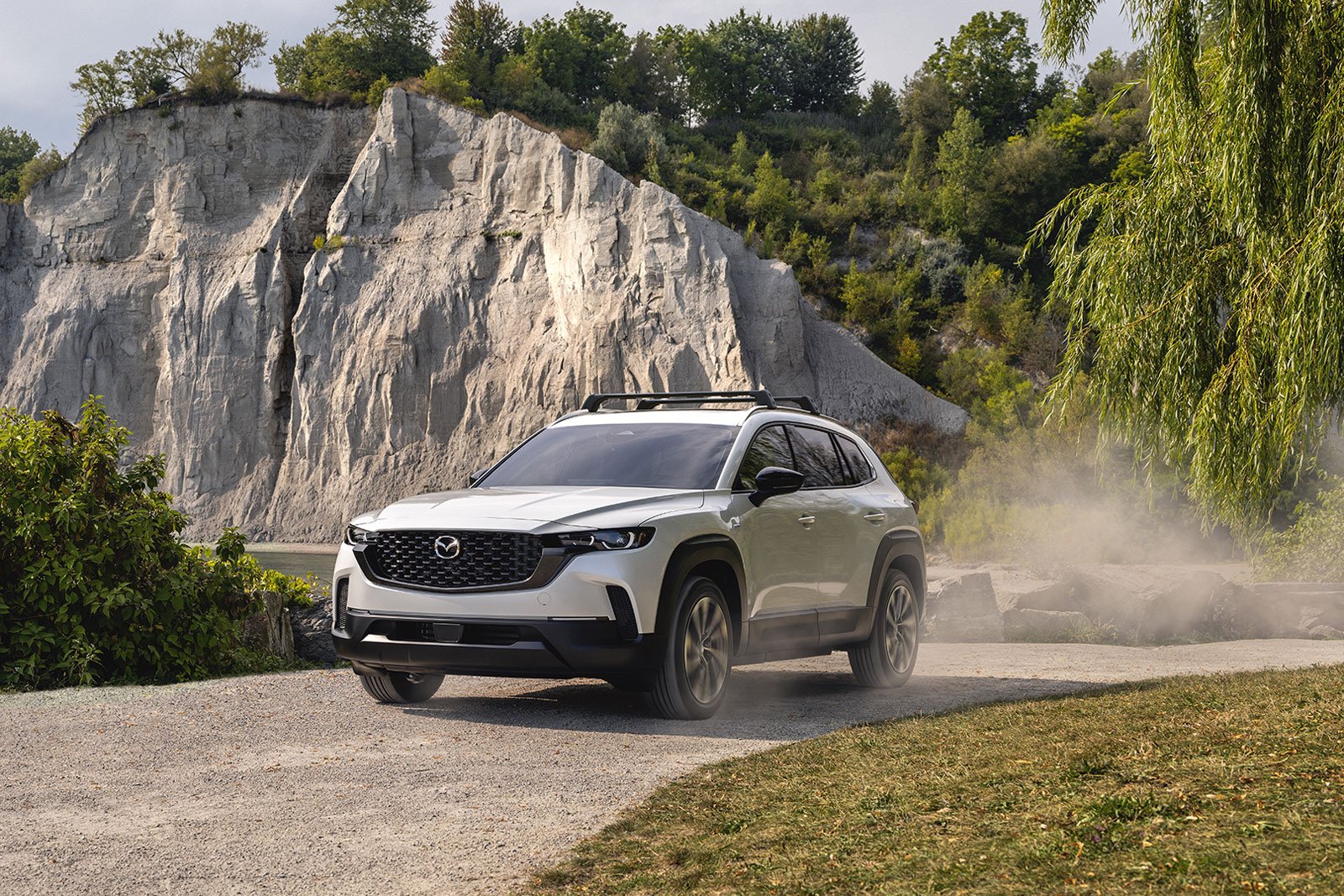
Mazda halted U.S.-built CX-50 production for Canada in April due to 25% Canadian tariff on American-made vehicles.
Federal EV sales mandate paused for 2026; Mazda Canada adjusts with Japan and Mexico-built models.
Fleming to lead electrification strategy with mix of hybrid and EV vehicles targeting 2030 completion.
Mazda Canada’s incoming chief executive officer, Amy Fleming, who takes over on October 1st, is recalibrating the company’s strategy as federal EV sales targets are temporarily postponed and retaliatory auto tariffs continue to disrupt vehicle sourcing and pricing.
On September 13, the federal government announced a 60-day review of its zero-emission vehicle (ZEV) mandate, effectively waiving the requirement for automakers to meet the 20% ZEV sales target for model year 2026. The delay offers short-term relief for companies like Mazda, which has very limited electric offerings in its Canadian lineup.
However, escalating trade tensions with the United States present a more immediate and costly challenge. Canada’s 25 % retaliatory tariff on vehicles assembled in the U.S. forced Mazda to halt production of its CX-50 crossover, which is built at a plant in Alabama and had accounted for 15 % of the company’s sales in 2024.
Mazda Canada responded by shifting focus to vehicles produced in Japan and Mexico, including the CX-5, Mazda3, and CX-30. That strategy contributed to a remarkable 19.5 % year-over-year increase in sales. In July 2025, Mazda3 sales surged 126.7%, and CX-30 sales grew by 18.2% compared to the same month in 2024.
Industry-wide, electric vehicle sales in Canada have declined for five consecutive months. Statistics Canada reported a 35% drop in EV sales in June 2025 compared to a year earlier. ZEVs accounted for just 8.6 % of all new vehicle sales in the second quarter of 2025. Part of the blame for the sales collapse goes to the suspension of federal EV consumer rebates; British Columbia and Quebec have reduced their provincial incentives, capping them at $4,000.
Mazda’s electrified lineup in Canada currently includes plug-in hybrid versions of the CX-70 and CX-90. The company previously offered a battery-electric model, the MX-30, but discontinued it in 2024 due to terrible sales, subpar range of 161 km, and a price point of nearly $43,000 before fees. A number of American, Japanese, and Korean EVs offred Hyundai Kona Electric offered 420 km of range.
Globally, Mazda plans to introduce the EZ-6 electric sedan, developed with Chinese automaker Changan Automobile, in China and Europe. There are no plans to sell the vehicle in Canada due to the country’s 100% tariff on Chinese-made vehicles. Our take is that even if tariffs are significantly reduced, an electric sedan has little hope to succeed in our SUV-obsessed market.
Fleming said Mazda Canada is working on a “multi-solution plan” that includes a mix of mild hybrids, plug-in hybrids, conventional hybrids, and battery-electric vehicles, with the goal of offering a fully electrified lineup by 2030.
“We want to have a multi-solution approach so consumers can choose based on their lifestyle and not have it forced by the government,” she said.
Source: The Globe and Mail
