

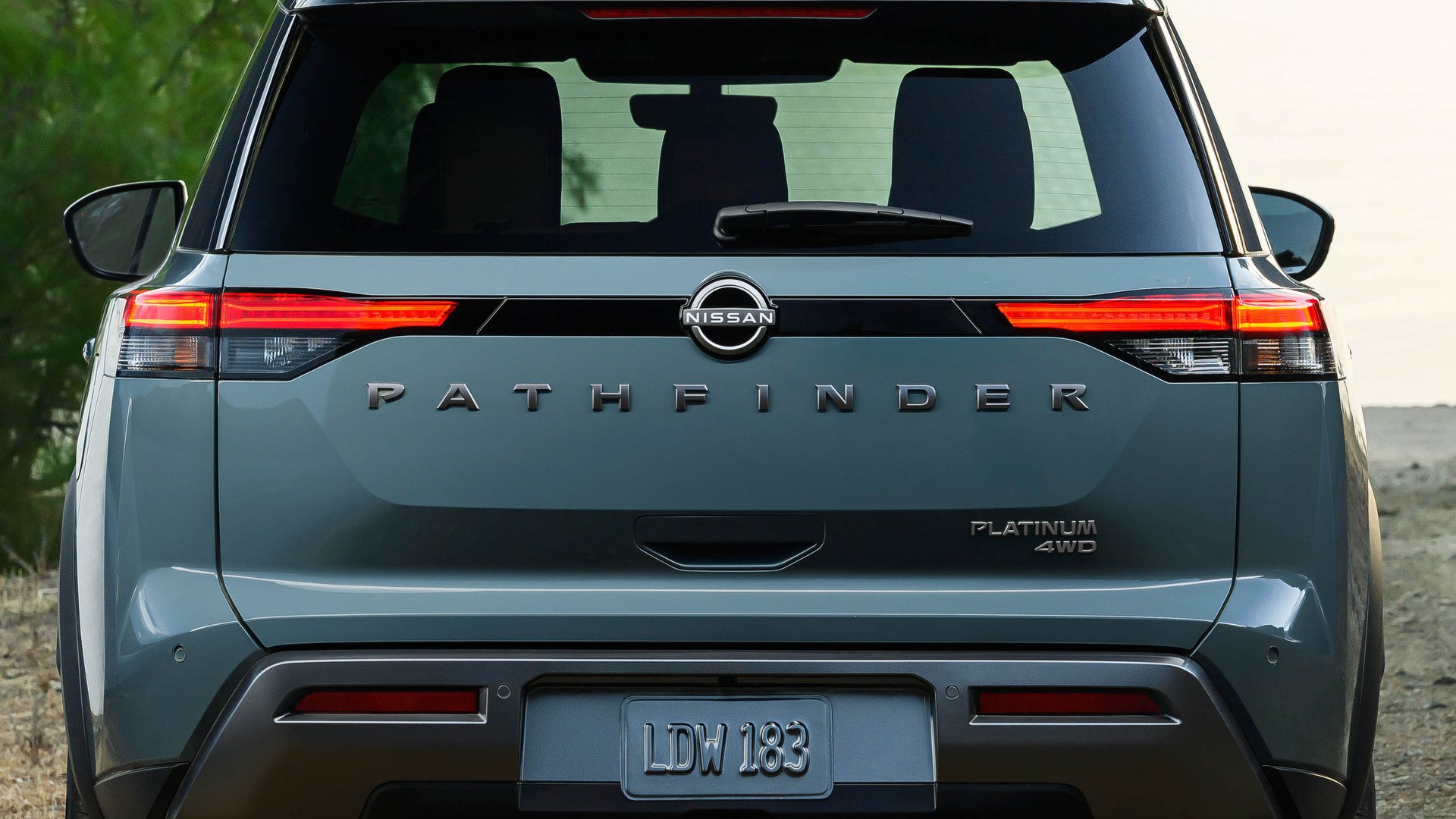
Nissan adding body-on-frame Pathfinder alongside unibody version by 2029.
New truck-based SUV to share platform with Frontier and Xterra.
Strategy targets up to 40% of Toyota’s midsize SUV volume.
Nissan is preparing a two-pronged strategy for its well-liked three-row Pathfinder, aiming to address increasingly divergent buyer priorities in one of North America’s most competitive utility segments. The automaker intends to continue its unibody Pathfinder while adding a separate body-on-frame version as early as mid-2029.
The current 2026 Nissan Pathfinder rides on a unibody architecture and will remain in production with updates expected around 2028 or 2029. That model will continue to rely exclusively on internal combustion power and focus on ride comfort, family practicality, and affordability. This won’t be the first ladder-framed Pathfinder, as the model transitioned to unibody construction in 2012 after previously sharing a truck platform with Frontier.
2026 Nissan Pathfinder First Drive: Small Tweaks, Same Big-SUV Confidence
The new body-on-frame Pathfinder will take a different direction. Built on a truck-based platform, it will be geared towards towing, off-road capability and with a more upright design. It is expected to launch with a gasoline engine, with a hybrid variant added later in its product cycle. Pricing will reflect its heavier-duty hardware and positioning.
Production of the truck-based SUV is planned for Nissan’s Canton, Mississippi, facility. The platform will underpin multiple vehicles, including the revived Nissan Xterra, the next-generation Nissan Frontier and the Infiniti QX60. Sources indicate roughly 70% parts commonality across those models, with major components forward of the B-pillar shared.
The overlap between the two Pathfinders will depend on market performance. Internal estimates suggest more than half of shoppers may consider both versions before deciding.
2028 Nissan Xterra: A Comeback with Body-on-Frame and Hybrid V6 Power
The introduction of “trucks” mirrors Toyota’s SUV portfolio where it balances high-volume unibody entries such as the Toyota Highlander (ICE and hybrid) and Toyota Grand Highlander against more rugged body-on-frame offerings like the Toyota 4Runner and Toyota Land Cruiser. Together, those four nameplates generated 335,760 U.S. sales last year, compared with 101,598 for Pathfinder.
In Canada, sales moved in the opposite direction, falling 54% to 3,267 units last year, largely due to tariffs and Nissan Canada opting to pause imports for that reason.
According to Edmunds, the midsize utility segment represented 16.7% of U.S. industry sales last year, making it the second-largest category after pickups. Edmunds noted that segmentation by seating configuration and electrification can create meaningful differentiation in a large segment.
The dual-Pathfinder plan is a solid and wise attempt to regain ground, we think, by appealing simultaneously to mainstream family buyers and capability-focused SUV customers.
Source: Automotive News
