

While we recently presented an overview of automotive production in Quebec to mark Saint-Jean-Baptiste Day, we are now focusing on automotive production in the rest of Canada for this photo gallery.
Since the beginning of automotive production in Canada closely followed the arrival of the first motorized vehicles in the late 1800s, many companies built small production runs of vehicles on Canadian soil before fading into obscurity.
Nevertheless, it was not until 1904 that the first major manufacturer established a plant in Canada. During the 1910s and 1920s, Canada became a major vehicle exporter due to its membership in the Commonwealth, which allowed it to sell its vehicles across the British Empire under favourable tariff conditions.
The Great Depression of 1929 precipitated the end of this situation, and American protectionist measures preventing imports south of the border forced the Canadian market to turn inward. This gave rise to multiple Canadian quirks, since most cars sold in the country were manufactured locally.
Examples include Canadian Pontiacs sharing their chassis and mechanical components with Chevrolets, as well as Meteors, which allowed Ford dealers to offer models equivalent to American Mercurys.
The signing of the Auto Pact in 1965 allowed new vehicles to cross the border in both directions without tariffs. While this allowed already established manufacturers to expand the market for their Canadian production, it also meant they no longer needed to open a local plant to sell in Canada tariff-free.
The late 1980s marked the arrival of Japanese automotive production in Canada as well as the North American Free Trade Agreement, which further facilitated the integration of the automotive industry on a continental scale.
While the Canadian automotive industry has fared relatively well over time, it currently finds itself in a difficult position due to the Trump administration’s hostile trade policies toward Canadian production, leading to the closure of two plants and a slowdown in production speed over recent months.
The following galleries present the manufacturers that operated an automotive assembly plant on Canadian soil, in alphabetical order.
American Motors Corporation (AMC), 1954-1987


The fourth-largest American automaker operated several plants in Canada during its 33-year existence. Indeed, the corporation inherited two Canadian plants upon its creation in 1954 through the merger of Hudson and Nash. While the Tilbury, Ontario plant, operated by Hudson since 1932, was closed immediately, the company kept the former Nash plant in Danforth, a suburb of Toronto. In 1962, AMC moved production to a new plant built at the corner of Steeles and Kennedy roads in Brampton. This plant would produce more than 1.2 million AMC and Jeep vehicles before being shut down in 1992, after Chrysler had bought American Motors Corporation five years earlier. Chrysler also inherited a second AMC plant in Brampton during this buyout: the Bramalea complex, which had been built in 1986 to host production of the Eagle Premier, a sedan developed jointly by AMC and Renault. The Danforth plant still exists, having been converted into a shopping center shortly after its closure in the 1960s, while the former Brampton plant was demolished in the early 2000s to make way for big-box stores. The Bramalea plant remains the property of Stellantis (owner of Chrysler), which changed its name to the Brampton plant after the previous one was closed.
Bricklin Canada Ltd. (1974-1976)


Although few people remember the Bricklin SV-1, an unconventional and colorful sports car that would become a commercial failure, its story nonetheless remains one of the best-known regarding Canadian automotive assembly. Indeed, this two-seat coupe, intended to be both a Corvette rival and a symbol of automotive safety, was created by American businessman Malcolm Bricklin, who had previously founded Subaru of America, marking the Japanese brand’s first presence in North America. Building on this success with Subaru and proposing an ambitious project with the SV-1, Bricklin convinced the government of New Brunswick to invest 23 million dollars in public funds to open a plant in Saint John. After the production of about 3,000 vehicles, the company folded due to engine supply problems—initially from AMC and later from Ford—as well as excessively high production costs. New Brunswick, which had hoped to create an economic hub around the Bricklin plant, suffered a heavy financial loss. The plant itself still exists, and though it has been converted to the production of fire hydrants, its exterior appearance has changed very little since the 1970s.
Brockville-Atlas Auto Co., 1911-1914


While American Motors found success with its Canadian plants, the same cannot be said for the Brockville-Atlas Auto Co., which only produced vehicles in its eponymous town for four years around the time of the First World War. These cars were equipped with Atlas engines imported from Indiana and bodies built locally. The company went bankrupt in 1914 due to supply difficulties and weak sales caused by the war.
Brooks Steam Motors Ltd., 1923-1926


Since vehicles powered by internal combustion engines quickly became dominant at the beginning of the 20th century, we sometimes forget that gasoline was not the only form of energy used by early motor vehicles. Indeed, electricity and steam enjoyed a certain amount of success until the 1920s. Brooks Steam Motors Ltd., established in Stratford in 1923 by an American entrepreneur, focused on the production of luxury steam cars, as its name indicates. Although Brooks was second behind Stanley in terms of steam vehicle production, with around 300 units produced, the company decided to move to Buffalo, New York in 1926 due to a decline in the popularity of steam vehicles.
Canadian Briscoe Motor Co., 1916-1921


The Canadian subsidiary of Briscoe, an American company, also chose to open a plant in Brockville, east of Kingston, on the banks of the St. Lawrence River. Unfortunately, this venture would not enjoy long-term success either, being forced to cease operations in 1921 after its factory burned down and its American parent company went bankrupt.
Chrysler Canada, 1928-present


Although Chrysler is historically the third-largest American automaker in terms of sales volume, its Canadian division currently surpasses its rivals Ford and General Motors in production. Indeed, the Windsor plant, which currently produces the gasoline and electric versions of the Dodge Charger as well as the Chrysler Pacifica and Grand Caravan minivans, produces enough vehicles to lift Stellantis (owner of Chrysler since 2021) to third place among Canada’s largest automakers, behind Toyota and Honda. This Windsor plant opened its doors in 1928, just four years after the creation of the Chrysler brand. Since then, a host of products, including full-size Plymouth, Dodge, and DeSoto sedans, the compact Plymouth Valiant, and the Chrysler Cordoba and Dodge Charger SE, have been built there. In 1983, the plant was converted to minivan production, a role it still holds today with the Chrysler Grand Caravan and Pacifica. The current plant is not the only one Chrysler operated in Windsor, as from 1925 to 1978, the company also built trucks in another plant located a bit further west. This plant was actually the former factory built in 1916 by Maxwell-Chalmers, two companies that would merge to become the Chrysler Corporation. After a few years of shutdown, this facility returned to service between 1981 and 1983 to act as a quality control center for the assembly of the Imperial luxury coupe. A third Chrysler plant in the city of Windsor also existed, as the company assembled full-size Dodge Ram Van passenger and cargo vans on Pilette Road from 1974 to 2003. The truck plant as well as the Pilette Road plant have now been demolished. Of course, Chrysler also has the Brampton plant, currently in limbo. As mentioned earlier, this plant opened in 1986 under the Bramalea name, which had been built by American Motors and Renault to assemble the Eagle Premier. In 1992, Chrysler renovated this plant to produce the majority of the LH-series sedans (Intrepid, Concorde, Eagle Vision, LHS, New Yorker, 300M), which were themselves derived from the Premier platform. Brampton would also produce the LX models that followed the LH cars, namely the 300C, Charger, Challenger, and Magnum. The end of production for this platform in 2023 marked a shutdown for this plant, which was supposed to be retooled to assemble the next-generation Jeep Compass. Due to pressure from the Trump administration, Stellantis chose to transfer this future production to the United States, leaving the fate of the Brampton plant uncertain.
Derby Motor Cars Ltd., 1924-1927
 Davis (Derby)
Although Ontario has always been the heart of automotive production in Canada, the Prairies also had a share of the pie, as evidenced by Derby Motor Cars Ltd. Indeed, this small company occupied a former tractor factory in Saskatoon, Saskatchewan, from 1924 to 1927. The brevity of this venture, which reportedly saw the production of only 31 cars, is explained by the fact that Derby Motor Cars did not produce its own cars, but rather assembled copies of the American Davis from parts imported from the United States. This allowed for reduced customs duties, but did not grant control over the product itself, which struggled to compete with more modern vehicles.
Dominion Motors Limited (Durant, REO, and Kaiser), 1921-1951


Dominion Motors Limited remains to this day the last Canadian-owned automaker to have been active. Although the company’s shareholders were local businessmen, the vehicles it produced were developed in the United States. Indeed, Dominion Motors Limited took over the Canadian facilities of the American company Durant in 1931, which had been established in Leaside, a suburb of Toronto, ten years earlier. Founded by William Durant, founder and former president of General Motors, this company went bankrupt in 1932, pushing Dominion to turn to DeVaux, another American company, to provide the design and engineering for the vehicles it assembled. DeVaux was bought by Continental Motors in 1932, and Dominion Motors sold a large part of its plant to REO in 1934, which would assemble trucks there until 1951. During its last two years of operations, the Leaside plant also manufactured Kaiser sedans for the Canadian market. The facilities were then occupied by various companies working outside the automotive sector until the mid-1990s, when they were demolished. The former administration building of Durant and Dominion Motors, built right across from the factory, survived until 2021.
Ford Canada, 1904-present


Of the Big Three American automakers, Ford was the first to settle in Canada, even before the launch of its famous Model T. Indeed, the American company established its Canadian branch in 1904 with the opening of a plant in Walkerville (now Windsor). This facility initially assembled the Model C before producing the Model T and later a wide range of products, including the exclusively Canadian Meteor, as well as military trucks during the Second World War. Production ended at this plant in 1954, one year after the opening of the Oakville plant, which still exists and has also become the headquarters of Ford Canada. A host of models have been built there, including the Ford Falcon, Tempo, Maverick, Flex, F-150, Super Duty, Mercury Comet, Topaz, Monarch, Lincoln MKX, and MKT, in addition to the Edsel lineup in the late 1950s. The Oakville plant was also the production site for Ford’s front-wheel-drive minivans, the Windstar and Freestar. The facility was idled for nearly 2 years after production of the Ford Edge and Lincoln Nautilus ended in May 2024. This delay was due to the fact that Ford intended to produce future electric models in Oakville, which have since been cancelled or delayed indefinitely. Finally, the assembly line restarted in the first half of 2026 with the production of the Ford Super Duty. Walkerville and Oakville are far from the only two plants operated by Ford in Canada. Indeed, the second-largest American automaker also had assembly lines in Winnipeg (1915-1941), Vancouver (1919-1938), Burnaby (1938-1968), as well as two factories in Toronto, on Dupont Street from 1910 to 1927 and on Danforth Avenue from 1922 to 1946. The second would be bought out by Nash and then American Motors. Let’s not forget the St. Thomas, Ontario plant (1967-2011) either, where Ford assembled models such as the Pinto, Fairmont, and Escort EXP, before becoming the sole production site for the Crown Victoria, Mercury Grand Marquis, and Lincoln Town Car.
General Motors Canada (1908-present)


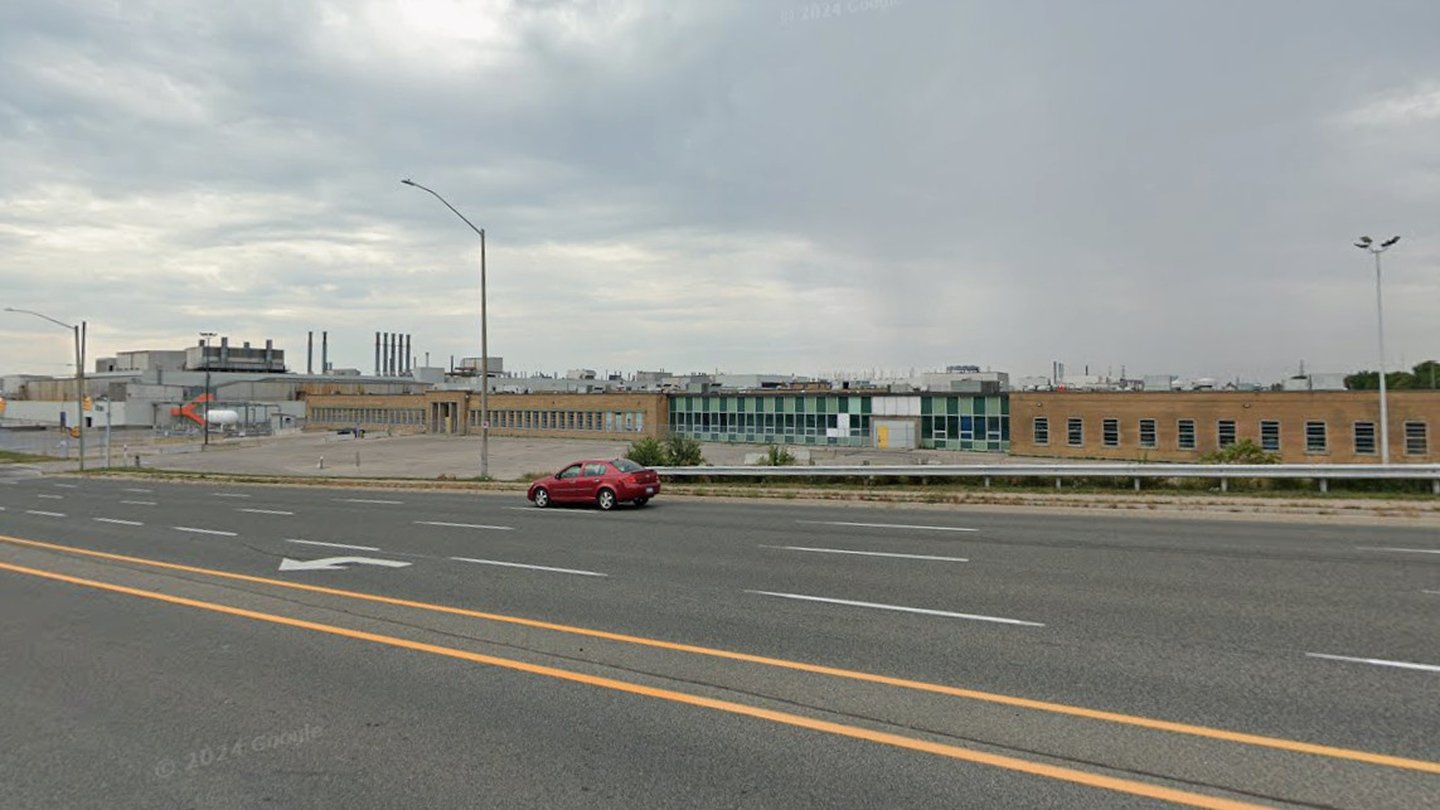
Unsurprisingly, the largest American automaker has also had a significant presence in Canada since the early 20th century. Indeed, the roots of General Motors of Canada date back to 1907, when the McLaughlin Motor Car Company produced Buick models under license in Oshawa. Since then, this city located about 50 kilometers east of Toronto has remained the epicenter of GM’s automotive production in the country. In fact, the Oshawa plant has remained in operation ever since, except for a two-year hiatus between late 2019 and late 2021. A vast array of vehicles have been produced in Oshawa, including the Chevrolet Superior, Master, Equinox, Impala, Lumina, Monte Carlo, Caprice, and Corvair; the Buick Skylark, LeSabre, Regal, LaCrosse, and Wildcat; as well as certain Pontiac, Oldsmobile, and Cadillac models. Currently, General Motors assembles the Chevrolet Silverado 1500 and HD at this location. Beyond Oshawa, GM was also present in Regina, Saskatchewan, from 1928 to 1941, as well as in Scarborough from 1973 to 1993, where its full-size vans were assembled. Similarly, General Motors still owns the CAMI plant in Ingersoll, which opened in 1989 in partnership with Suzuki to manufacture the Swift and Sidekick, as well as the Geo Metro and Tracker. Due to its difficult financial situation, Suzuki withdrew from the partnership in 2009, leaving GM as the sole owner. Since then, CAMI assembled the Chevrolet Equinox and GMC Terrain before being converted to the production of BrightDrop electric vans. Citing insufficient sales, GM discontinued production at the CAMI plant in October 2025, and the future of this facility remains uncertain.
Graham-Paige Motors Canada, 1931-1935


Graham-Paige was one of many small and mid-sized American automakers that operated a plant in Canada during the 1930s. Indeed, this company produced vehicles in two different factories in Walkerville (Windsor) until 1935, when the Canadian division went bankrupt. The Great Depression also got the better of Graham-Paige in the United States, as the brand abandoned automobile production in 1940.
Gray-Dort Motors, 1915-1925
 Gray-Dort 1917
Gray-Dort Motors was a Canadian company that produced approximately 26,000 vehicles at its Chatham, Ontario plant during its ten years of existence. Although the company was local, its product design was not, since Gray-Dort Motors built the American Dort under license. Following the death of Dort’s founder, the Canadian subsidiary’s access to American parts became so restricted that production had to cease.
Honda Canada, 1986-present


The 1970s and 1980s saw the popularity of Japanese cars skyrocket due to high fuel costs and superior reliability compared to American models. Honda was the first to capitalize on this popularity in Canada by opening its Alliston, Ontario plant. While production began in 1986 with the Accord, the plant currently produces the Civic, in addition to being the source of the majority of CR-Vs sold worldwide. This factory also assembled a few Acura models over the years, including the MDX and the first generation of the ZDX.
Le Roy Manufacturing Co. (1899-1904)
 Oldsmobile Curved Dash (Le Roy)
The very first plant to assemble cars in Canada was that of the Le Roy Manufacturing Co., which opened its doors in 1899 in Berlin (now Kitchener), Ontario. Production did not begin until 1902, with a single-cylinder car heavily inspired by the Oldsmobile Curved Dash. The venture came to an end in 1904 due to the high cost of this model and the arrival of more modern competing vehicles.
Nova Scotia Carriage & Motor, 1911-1915
 McKay
Several decades before Bricklin set up there, the Maritimes saw the production of the McKay Penn “30” and McKay Torpedo Roadster between 1911 and 1915 through the Nova Scotia Carriage & Motor, located in Kentville and later in Amherst. Despite good racing success, production stopped after only 125 units were produced.
Packard Motor Company, 1931-1939


Just like Graham-Paige, Packard was among the manufacturers that operated a Canadian plant during the 1930s. Indeed, the American luxury car manufacturer located part of its production in Windsor between 1931 and 1939, notably that of the Packard Six and 120, models that were smaller and more affordable than its “senior” series. Like most manufacturing facilities in Canada, the Packard plant was converted to military production in 1939, after which automobile production did not resume.
Redpath Motor Vehicle Co., 1902-1907
 Redpath Messenger
Another automotive pioneer in Canada was the Redpath Motor Vehicle Co. of Kitchener, Ontario, which began production of the Messenger in 1902. This rudimentary car with a wooden body was powered by an engine derived from De Dion-Bouton and featured the first tilting steering column. Production was moved to Toronto, where a major fire put an end to operations in 1907.
Russell Motor Car Co., 1904-1916


One of the most successful Canadian automakers of the early 20th century was the Russell Motor Car Co. of Toronto, which began assembling high-quality vehicles in 1904. Despite obtaining an exclusive license for the Knight sleeve-valve engine across the British Empire, as well as an aggressive marketing strategy, the Russell Motor Car Co. was forced to sell its automotive business to Willys-Overland in 1916.
Studebaker Canada, 1910-1936 and 1948-1966


Studebaker, founded in South Bend, Indiana, as a carriage manufacturer in the 1850s, built vehicles in Canada during two distinct periods. Indeed, the American company acquired the E-M-F Company in 1910, thereby obtaining its plant in Walkerville (Windsor). After producing cars and trucks on Canadian soil for about twenty years, Studebaker closed the plant in 1936. This halt in Canadian manufacturing was short-lived, as the company bought the old Otis Elevators facilities in 1947. This Hamilton, Ontario plant had been converted to the production of anti-aircraft guns during the Second World War. While Studebaker’s sales in the United States declined during the 1960s and the company was losing money, its Canadian operations remained profitable. This led Studebaker to close its main South Bend plant in December 1963, keeping only the Hamilton plant for all of its production. This strategy did not work as well as expected, explaining why Studebaker withdrew from automobile production in March 1966. The Canadian plant was then sold back to Otis Elevators, which used it until 1987. After being occupied by several other tenants since then, the facilities were demolished in 2012 to make way for a new industrial park, leaving only the administration building, which is expected to be restored.
Tate Electric Ltd, 1912-1915
 Tate Electric 1913
Like steam cars, electric vehicles were quite popular at the beginning of the 20th century, before the internal combustion engine had been fully refined. Thus, Tate Electric Limited assembled a range of electric models, including trucks, in Walkerville (now Windsor) from 1912 to 1915. Unlike most electric vehicles of the era, Tate models were quite similar in appearance to contemporary gasoline vehicles thanks to their front hood. The arrival of the electric starter, making gasoline vehicles much easier to use, marked the end of electric cars’ popularity for the next hundred years. After production ended, Tate sold its plant to the Chalmers Motor Car Co. in 1916.
Toyota Canada, 1967 to 1975 and 1988-present


The production of Japanese cars in Canada began in December 1967 on a former military base in Point Edward, near Sydney, Nova Scotia. Indeed, a total of 585 Isuzu Belletts were built there by Canadian Motor Industries, a partnership between Isuzu and Toyota, from parts and bodies imported from Japan. Although success was not really on the horizon and Isuzu ended its Canadian production after only one year, the small factory remained active thanks to Toyota, which assembled the Corolla there between 1969 and 1975. As with Isuzu, Toyota used the complete knock-down kit manufacturing process, which resulted in high production costs. The location of this factory also contributed to its lack of success, since Toyota had to ship the kits and loose parts from Japan to the other side of Canada, before redistributing the assembled vehicles across the country. Although this first experience was not the most conclusive, with only 9,000 Corollas produced in Nova Scotia over six years, Toyota did not abandon the idea of assembling vehicles in Canada, opening a new plant in Cambridge, Ontario, in November 1988 to produce, once again, the Corolla. This time, success followed, and the manufacturer added a second adjacent plant in 1998 to include production of the Camry Solara. In 2003, the Cambridge plant added production of the Lexus RX, the first model from the luxury brand to be assembled outside of Japan. In 2008, a third factory was added in Woodstock, Ontario, for the production of the RAV4. Today, Toyota is the largest automaker in Canada in terms of production volume.
Tudhope Motor Co., 1908-1914


Based in Orillia, Ontario, the Tudhope Motor Co. was formed in 1908 as a division of the Tudhope Carriage Company, a large carriage manufacturer established in 1854. The motor vehicles produced by this company were initially combinations of locally produced bodies and powertrains from the W. H. McIntyre Company of Auburn, Indiana, before becoming copies of the Everitt 30 from the Metzger Motor Car Company of Detroit after the Orillia plant fell victim to a fire in 1909. Low sales led to the sale of Tudhope’s automotive division in 1913 to Fisher, which continued production for about a year, until the start of the First World War. Automotive production did not resume in Orillia after the conflict, and carriage manufacturing there was also halted in the late 1920s.
Volvo Cars Canada, 1962-1998


Outside of the Maritimes, few Canadians remember that Volvo once assembled vehicles in Canada, even though the Swedish company was the first European manufacturer to establish itself in North America for more than a few years. Furthermore, the Halifax (Dartmouth) plant, established in a former sugar refinery in 1963, was Volvo’s first outside its native Sweden. As with several Canadian auto plants, the Volvos produced in Halifax were in the form of imported kits. Surprisingly, Volvo’s Canadian operations did not use a conventional assembly line, favouring a process in which a team of workers built a vehicle at a single station. Because the initial facilities quickly became too small, the manufacturer moved to the Port of Halifax in 1967 for the arrival of the 140 Series, which would replace the 120 Series (Amazon) a few years later. Volvo moved a second time in 1987 to a brand-new factory built in the Bayers Lake industrial park to assemble the 740. Upon its closure in December 1998, Volvo had produced more than 300,000 vehicles in Halifax for the Canadian market and the eastern United States, including the 120, 140, 240, 740, 850, 940, and S70 models. The first and last Canadian Volvos, a 1963 122 B18 and a 1999 S70 GLT, now belong to the Museum of Industry of Nova Scotia.
