

Battery degradation is an important factor to consider when looking at a pre-owned electric vehicle, at it dictates how much of its advertised range a vehicle retains after years on the road. Numerous factors affect how fast and how much a battery degrades, including extreme temperatures and the number of charging and depleting cycles it has gone through.
Earlier this month, EV diagnostic company Aviloo released the results of a study it conducted on the British market that shows which models retain the largest share of their original battery capacity after 50,000 km, 100,000 km, and 150,000 km.
For this gallery, we ranked each tested EV that is available on the Canadian market according to the median of the capacity they have retained after 150,000 km.
Here are the results:
10 – Tesla Model Y

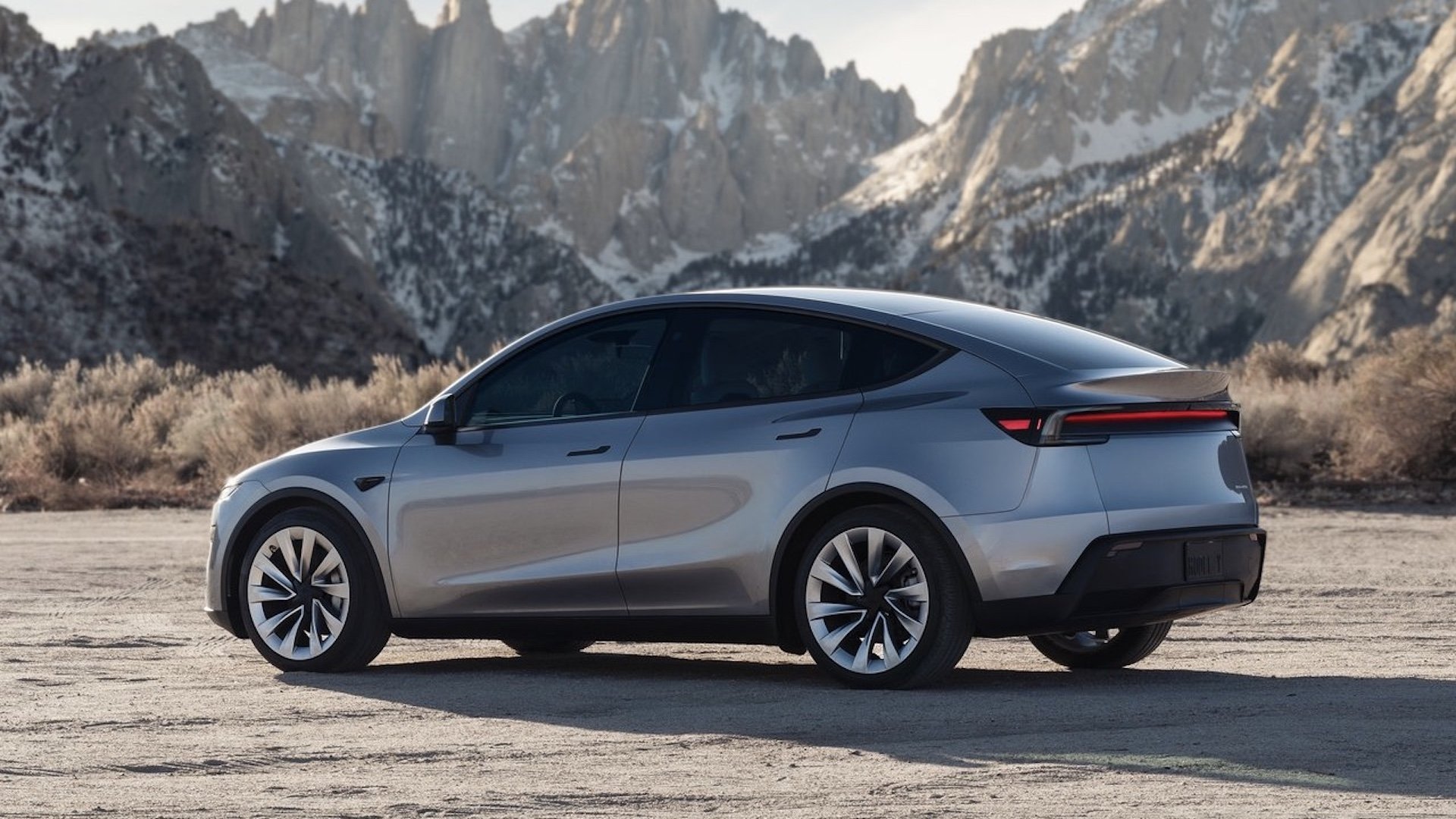


Despite Tesla’s reputation for making durable batteries, the Model Y, the most popular electric vehicle globally, can do no better than 10th place, with a median state of health (SoH) of 90.32% after 150,000 km (results ranging from 82.90% to 94.94%). After 50,000 km, the American crossover showed a median SoH of 94.42%, exemplifying the typical curve of degradation for all EVs, which slows down considerably after the first percentage points are lost. The Model Y is available in Canada in either RWD or AWD configurations with either a Lithium Nickel Cobalt Aluminum (NCA) or Lithium Iron Phosphate (LFP) battery, depending on the model.
9- Audi Q4 e-tron


Audi’s Q4 e-tron is a compact luxury crossover sharing the Volkswagen Group MEB architecture. Canadian models feature either a single motor rear wheel drive or a dual-motor Quattro AWD setup, both powered by an 82 kWh gross (77 kWh usable) liquid-cooled lithium-ion pack. At 150,000 km, it landed in ninth place with a 90.62% median SoH (ranging from 83.23% to 94.87%). At 50,000 km, the Q4 e-tron registered a 95.04% median SoH, representing a 4.42 percentage point median decline between the two mileage checkpoints.
8- Volkswagen ID.4


Like the Audi Q4 e-Tron, the Volkswagen ID.4 is a compact electric crossover built on the modular MEB platform. Therefore, it isn’t surprising to see these two models behaving similarly in terms of degradation. In Canada, it is offered in single-motor rear-wheel-drive or dual-motor AWD layouts, paired with 62 kWh or 82 kWh liquid-cooled battery packs. At 150,000 km, the ID.4 secured eighth place with a 90.75% median SoH (ranging from 83.40% to 94.91%). When compared to its 50,000 km milestone of 95.24% median SoH, its usable battery capacity decreased by 4.49 percentage points over that 100,000 km interval.
7- Audi Q8 e-tron


Also hailing from the Volkswagen Group, but mechanically different, the Audi Q8 e-tron (formerly badged only as the e-tron) is an executive midsize luxury crossover riding on the modified MLB evo platform. Equipped with dual-motor or tri-motor Quattro all-wheel drive, it houses a large 95 kWh or 114 kWh liquid-cooled battery with extensive thermal management. At 150,000 km, it achieved seventh place with a 91.27% median SoH (83.68% to 95.87% band). At 50,000 km, it posted a 95.71% median SoH, reflecting a 4.44 percentage point drop over the next 100,000 km.
6- Polestar 2


The Polestar 2 is a performance-oriented five-door fastback sharing Volvo’s CMA platform. It is sold in single-motor RWD/FWD and dual-motor AWD setups using liquid-cooled 69 kWh or 78 kWh battery packs. After 150,000 km, it placed sixth with a median SoH of 92.46% (85.90% to 96.30% range). At the 50,000 km checkpoint, the Polestar 2 recorded a 94.96% median SoH, displaying a very gradual degradation slope with a loss of just 2.50 percentage points over the subsequent 100,000 km.
5- Ford Mustang Mach-E


The Ford Mustang Mach-E is a midsize crossover offering single-motor RWD or dual-motor eAWD configurations, fitted with liquid-cooled Standard Range (70–72 kWh usable) or Extended Range (91 kWh usable) battery packs. At 150,000 km, it captured fifth place with a median SoH of 92.53% (spanning 85.32% to 96.14%). At 50,000 km, the Mach-E demonstrated consistent cell longevity with a 95.09% median SoH, shedding just 2.56 percentage points of median usable capacity over the intervening 100,000 km.
4- Volvo XC40 Recharge


As it shares its architecture and powertrain with the Polestar 2, Volvo’s XC40 Recharge (now rebranded as the EX40) shows a similar performance to the Swedish liftback sedan. This premium compact crossover uses a liquid-cooled 75 kWh usable battery pack driving either a single-motor rear-wheel-drive or a punchy 402 hp dual-motor AWD powertrain. At 150,000 km, it earned fourth place with a 92.79% median SoH (ranging from 86.32% to 96.44%). Earlier at 50,000 km, it logged a 95.15% median SoH, amounting to a minimal degradation difference of only 2.36 percentage points between the two milestones.
3- Hyundai Kona Electric


The Hyundai Kona Electric is a popular subcompact crossover featuring a front-mounted electric motor delivering 201 hp and 290 lb-ft of torque, energized by a 64 kWh liquid-cooled lithium-ion battery pack. At 150,000 km, it ranks third among models available in Canada with an impressive 92.95% median SoH (86.10% to 97.53% band). At the 50,000 km mark, the Kona EV stood at a 96.27% median SoH, exhibiting strong stability with a loss of just 3.32 percentage points over the additional 100,000 km of driving.
2- BMW i4


The BMW i4 is an all-electric four-door gran coupe built on the brand’s flexible CLAR architecture. Driven by BMW’s fifth-generation eDrive system, it is sold in single-motor RWD (eDrive35, eDrive40) and dual-motor xDrive/M50 configurations with 66 kWh or 81.5 kWh net liquid-cooled battery packs. At 150,000 km, the i4 takes second place with a 93.62% median SoH (ranging from 87.48% to 96.90%). Compared to its 95.60% median SoH at 50,000 km, it experienced just 1.98 percentage points of additional degradation over the subsequent 100,000 km.
1- Hyundai Ioniq 5


The Hyundai Ioniq 5 is a midsize electric crossover underpinned by the dedicated 800V E-GMP platform. Available in rear-wheel-drive single-motor and dual-motor AWD layouts, models offer 58 kWh or 77.4 kWh liquid-cooled battery packs capable of 350 kW DC fast charging. It leads this Canadian-market ranking at 150,000 km with a median state of health (SoH) of 93.79% (spanning 86.72% to 97.81%). At 50,000 km, it recorded a study-leading 97.13% median SoH, reflecting an exceptionally modest degradation drop of only 3.34 percentage points across that 100,000 km span.
Honourable mention: Mercedes-Benz EQA


Not sold in North America, this electric version of the GLA premium subcompact crossover slightly edged out the Hyundai IONIQ 5 in the 150,000 km test with a median SoH of 93.97% (ranging from 87.43% to 97.12%), making it the overall winner of the study. At 50,000 km, the crossover’s 66.5 kWh battery retained a median of 96.56% of its capacity, losing only 2.59% over the next 100,000 km.
Dishonourable mention: The original Nissan Leaf


At the other end of the spectrum, the original Nissan Leaf performed the worst of the 20 cars tested, along with the closely related Renault Zoe. This is undoubtedly the result of the first and second-generation Leaf’s air-cooled battery, which is exposed to more extreme temperatures than its rival’s liquid cooled units, both cold (winter driving) and hot (DC fast charging). In addition, the Leaf’s small 40 or 62 kWh batteries need to be charged more often over 150,000 km, which further reduces the pack’s useful life. In actual numbers, this means a still fairly respectable median SoH of 86.67% after 150,000 km, but with a very wide range from car to car, recorded between 77.82 % and 93.09%. After 50,000 km, the Leaf already shows its disadvantage in terms of battery degradation, with a median SoH of 91.23%. Since these figures were collected from cars that lived in the relatively mild climate of the United Kingdom, Canadian Leafs are likely to exhibit even lower residual battery capacities at the same mileages.
Source: Aviloo via InsideEVs
