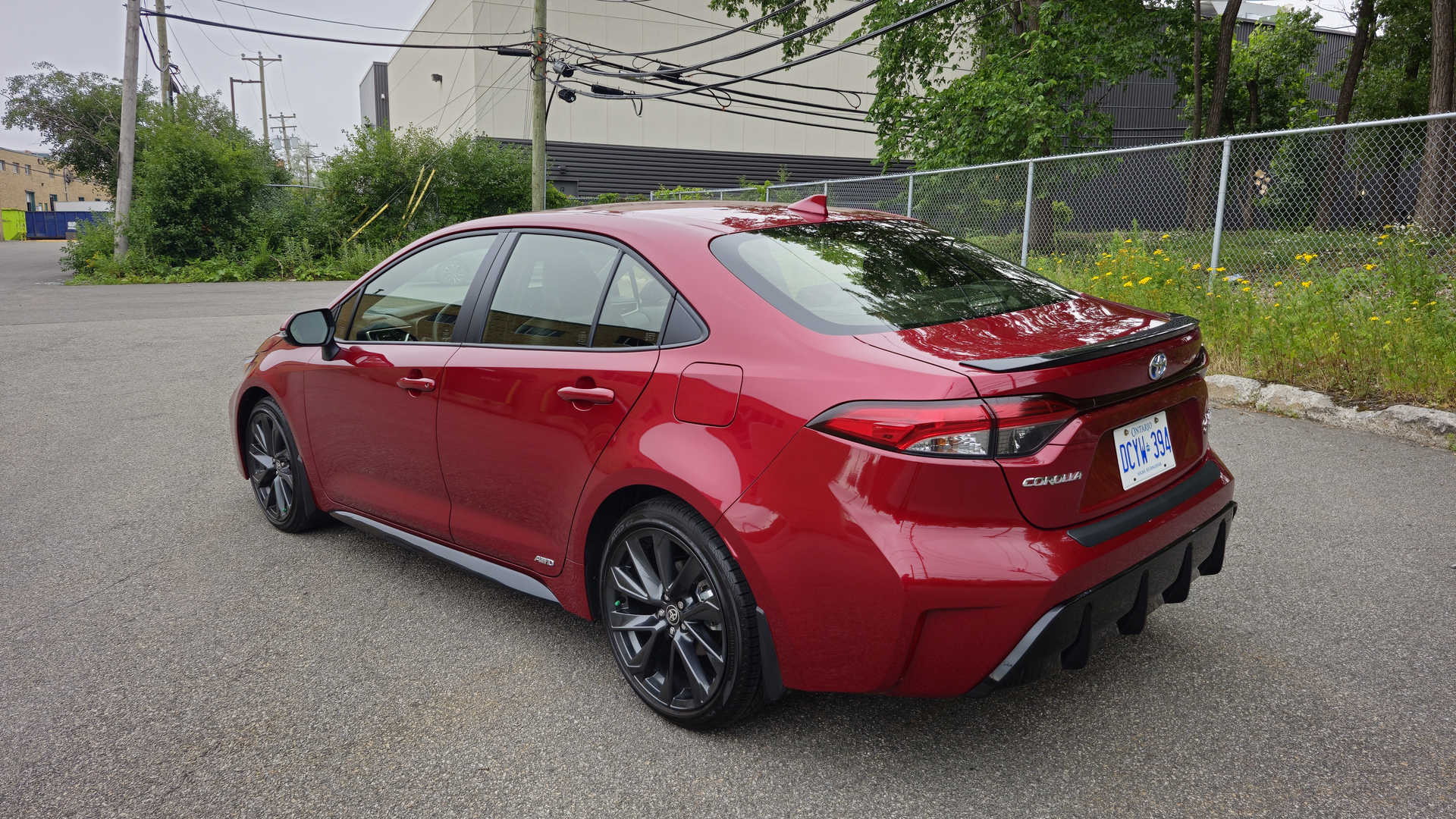
Not so long ago, sedans ruled the North American market. Pickups aside, the Toyota Corolla and Camry, along with the Honda Civic and Accord, grabbed a huge share of sales year after year. Then SUVs came along and swept everything in their path. Yet 2026 has delivered an unexpected plot twist, as several sedans are staging a strong comeback in the United States. Are buyers rediscovering the appeal of the traditional car, or are they simply looking to stretch the time between fill-ups?
Honda Accord sales have jumped nearly 33% since the start of the year
Hybrid versions account for a good chunk of that growth
SUVs and pickups nonetheless remain the kings of the market
The question almost answers itself. With gas prices soaring after the U.S. attack on Iran, fuel economy is once again a top purchase criterion. And on that front, a hybrid sedan is tough to beat. The Honda Civic and Accord hybrids return about 5 L/100 km combined. With the Toyota Corolla, averages of 4.6 L/100 km are easily within reach.
The Numbers Speak for Themselves
Over the first nine months of the year, Toyota sold 260,684 Camrys, up 11.2% from the same period last year. The Corolla followed with 195,141 units, up 8.4%. In the third quarter, electrified models made up more than half of the brand’s sales, at 363,367 out of 633,223 vehicles.
At Honda, the Accord posted the biggest gain, up 32.7% to 145,520 units. In September, hybrid versions accounted for 44% of its sales, while the Civic’s hybrid mix reached 35%. One figure is even more telling: the brand’s car sales climbed 15.6% in the third quarter, compared to a mere 0.3% for its SUVs and pickup.
Not Just Toyota and Honda
The trend reaches well beyond those two brands. Mazda3 sales have soared 42.3% since January, even though it’s considered an aging model across the industry. Hyundai Elantra sales are up about 18%, even as the current generation also nears retirement. The luxury side is following suit, with gains of roughly 51% for both the BMW 3 Series and the Lexus IS.
Not every brand is riding the wave. At Nissan, the new Sentra is struggling to gain traction. Could its uninspired front-end styling be to blame?
Price obviously plays a role. A sedan still costs less than an SUV, often by several thousand dollars. Add to that the savings at the pump. Even if a RAV4 can get by on 6 L/100 km, the Camry sedan will do better. The same goes for Honda’s CR-V versus the Accord.
SUVs aren’t under threat by any means, but one thing is clear: when gas gets expensive, thriftier vehicles come back into fashion, whatever their shape.