Several vehicles offer semi-autonomous driving systems, but few can drive us for several dozen kilometres without any need to intervene. Ford is among them with its BlueCruise technology, which gains new capabilities for 2027. Even so, the company trails the competition, a gap it intends to close.
The system is billed as “hands-free,” but it requires drivers to keep their eyes on the road
It only works on mapped highway sections known as Blue Zones
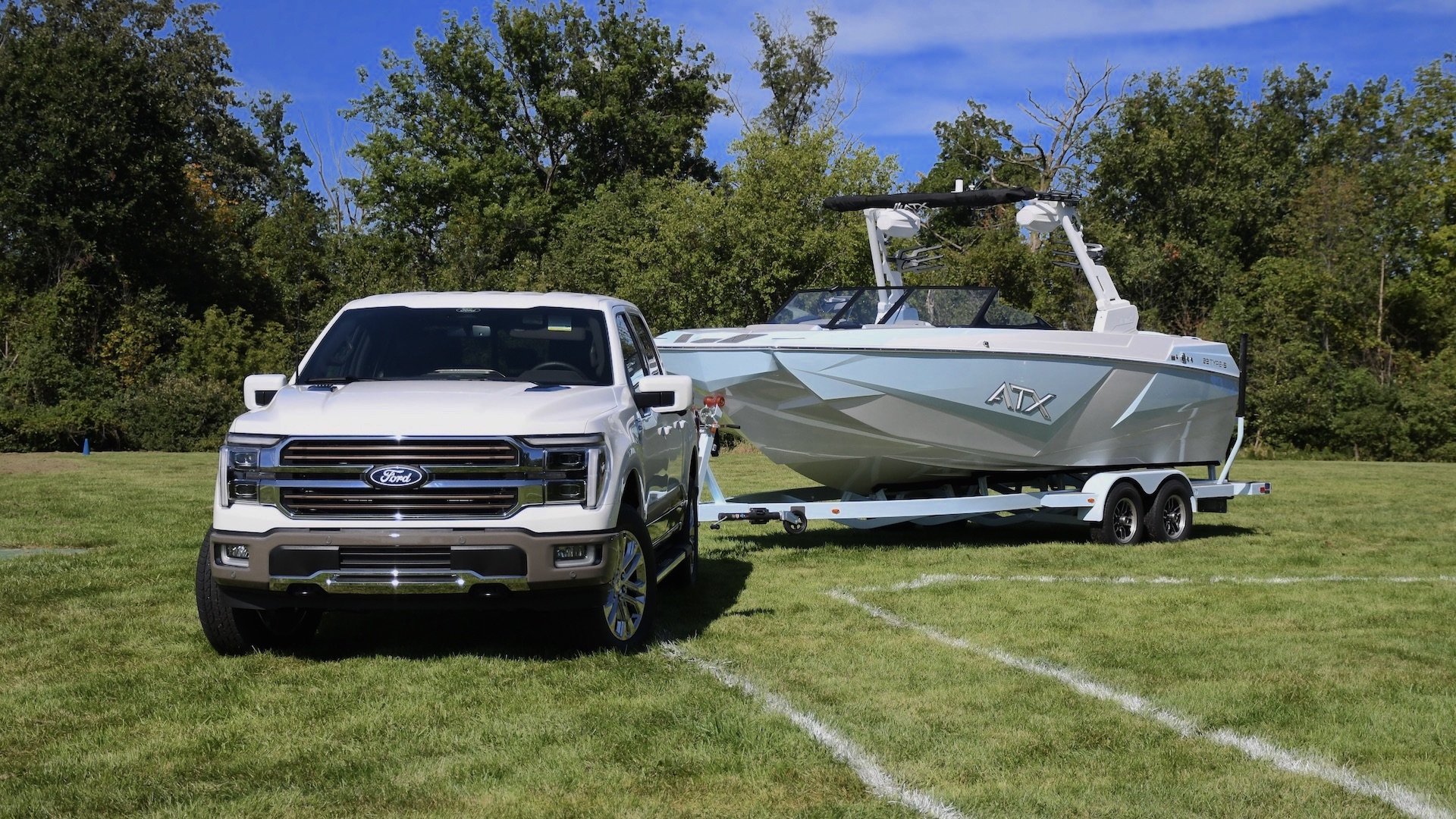
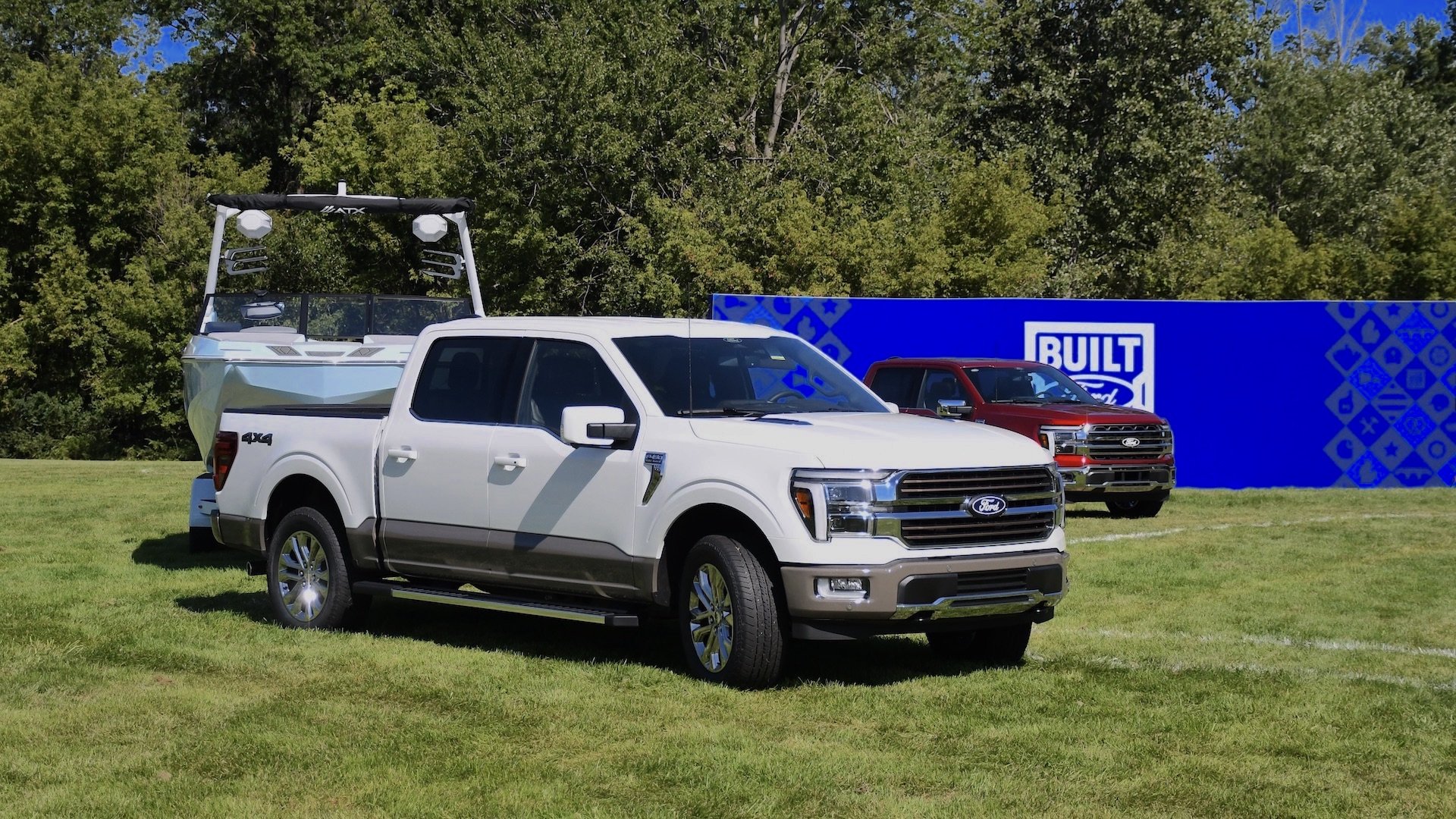
Hands-free towing is finally arriving with the 2027 F-150
Hands-Free, but Not Unsupervised
The BlueCruise system combines three elements: adaptive cruise control, lane-centring and a camera that monitors the driver’s level of attention. It can engage within Blue Zones, highway sections pre-qualified by Ford, where road surface condition and lane markings allow for reliable operation.
When you enter such a zone, the information appears on the instrument cluster display. At that point, and only then, you can take your hands off the wheel, but the system makes sure you keep your eyes on the road. This is what is known as a Level 2 autonomous driving system, in which responsibility rests entirely with you.
Why Is Ford Behind?
The system is effective. However, Ford is behind its big rival, General Motors (GM), which launched its version, Super Cruise, in 2017 on the Cadillac CT6. BlueCruise, for its part, debuted in 2021 on the Mustang Mach-E.
That four-year gap shows up first on the map. Ford’s Blue Zones cover roughly 210,000 km of roads in Canada and the United States, exclusively on divided highways. At General Motors, the figure is about 1.2 million kilometres, on both highways and secondary roads.
In actual use, however, the gap is reportedly smaller: BlueCruise is used nearly as much as Super Cruise.
Towing: A Notable Addition for 2027
At GM, the Super Cruise system has allowed hands-free towing for several years. Ford is filling that gap: with the 2027 F-150 pickup, drivers can use the system while towing (10,000-lb capacity).
The need was real: according to Ford, 76% of American F-150 owners use their vehicle for towing. The company promises greater effectiveness and safety, backed by thousands of miles of testing.
To use the system while towing, the driver must first create a trailer profile with exact dimensions so that BlueCruise can account for the hitched load. The system can operate at speeds up to 120 km/h. Otherwise, it deactivates and repositions the vehicle in its lane while prompting the driver to take back control. If the trailer begins to sway because of excessive speed, the system will slow the vehicle down. BlueCruise will not activate if the authorized weight is exceeded or if the tire pressure warning light is on.
In short, Ford is doing everything it can to offer a system that will stand out for its effectiveness. It remains to be seen whether it will eventually close the gap with GM’s Super Cruise system.