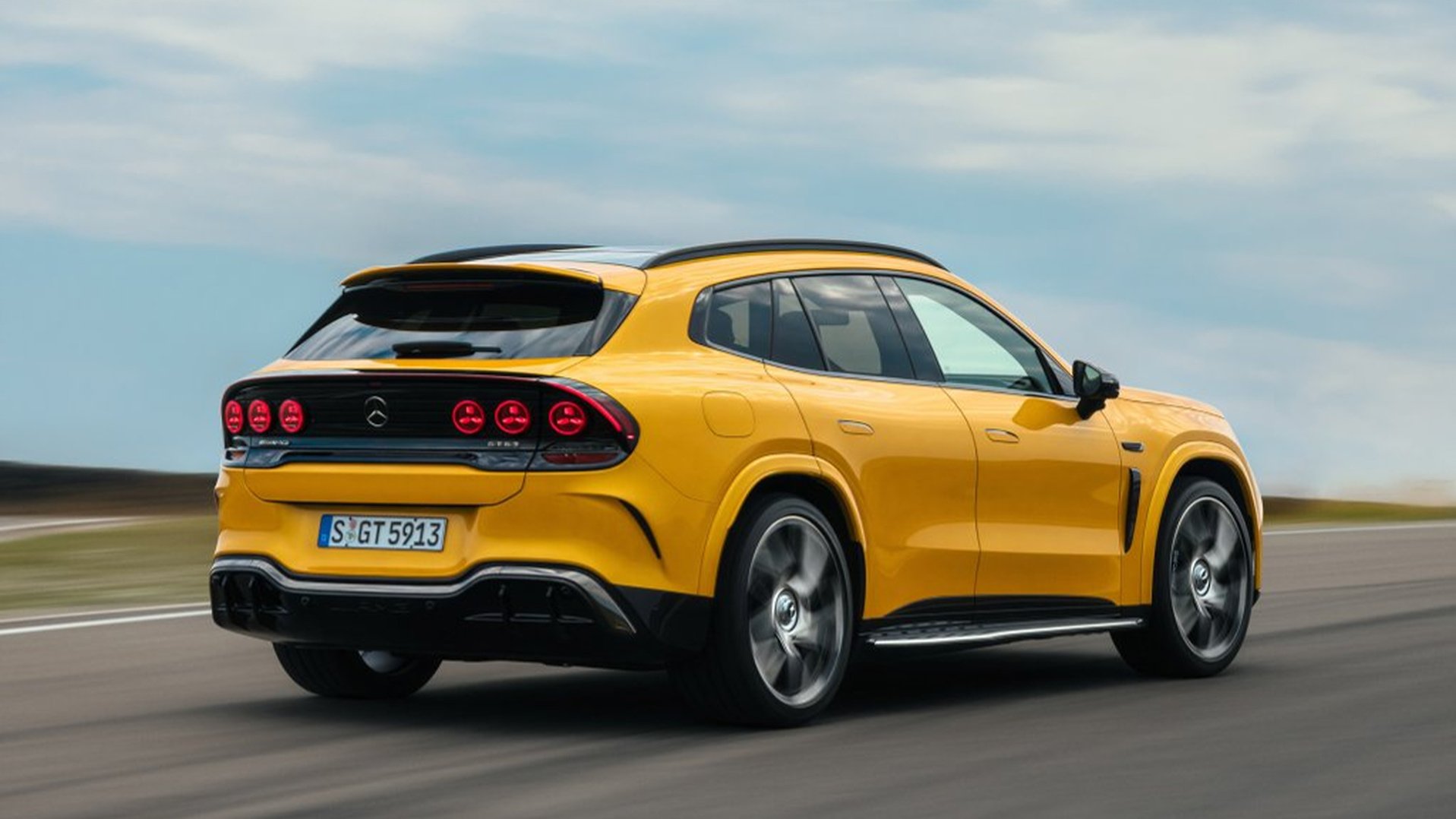
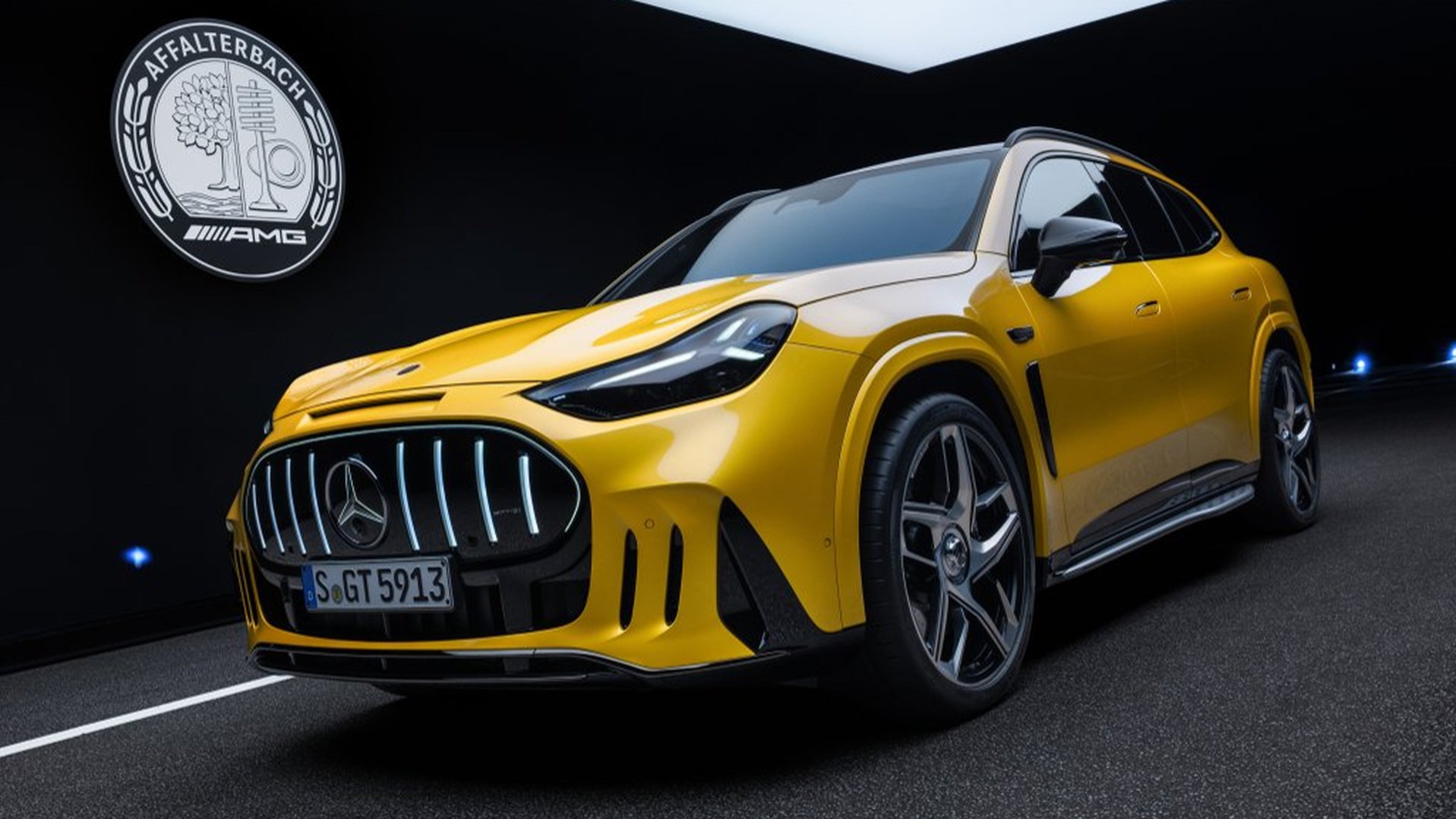
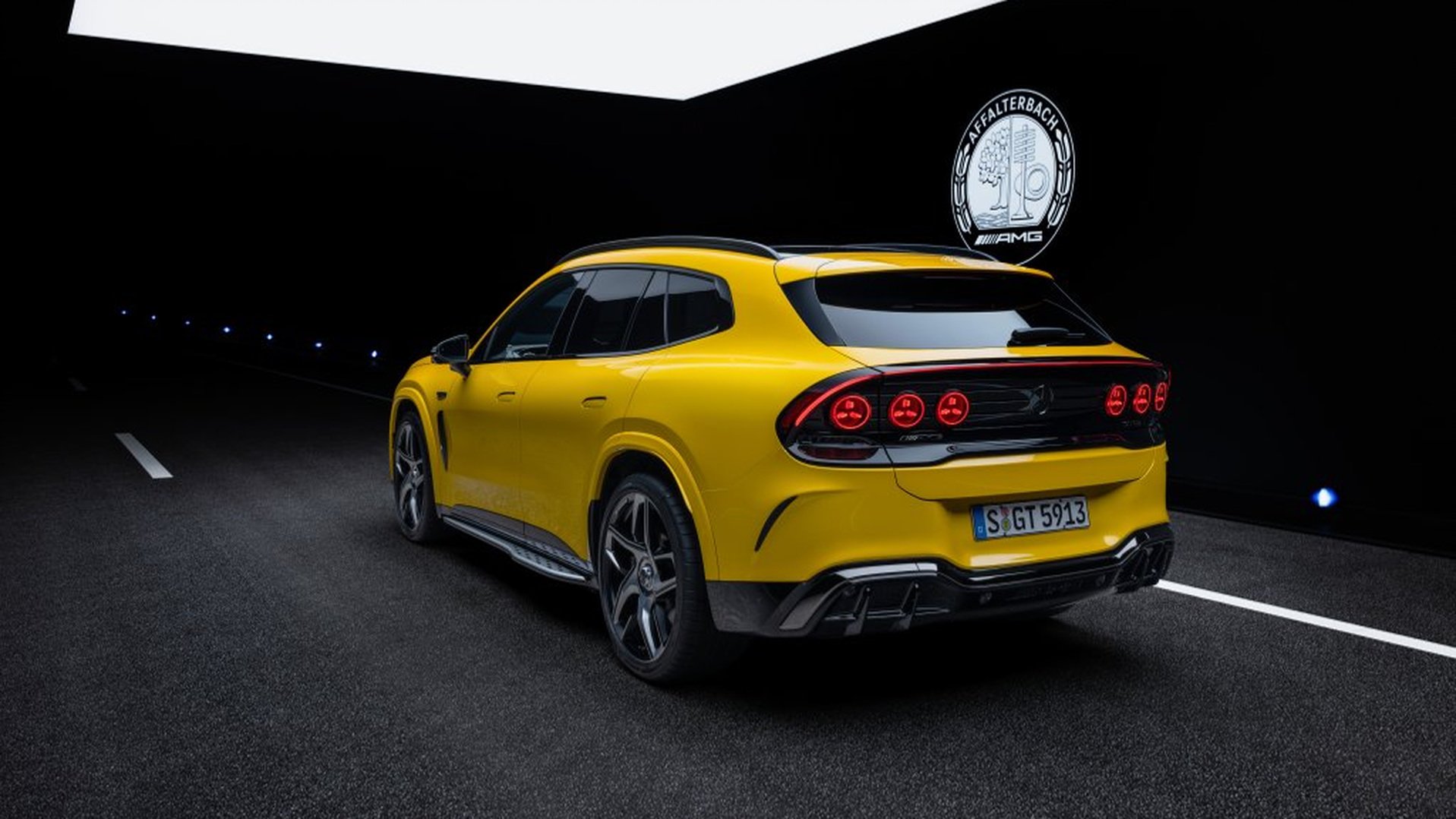
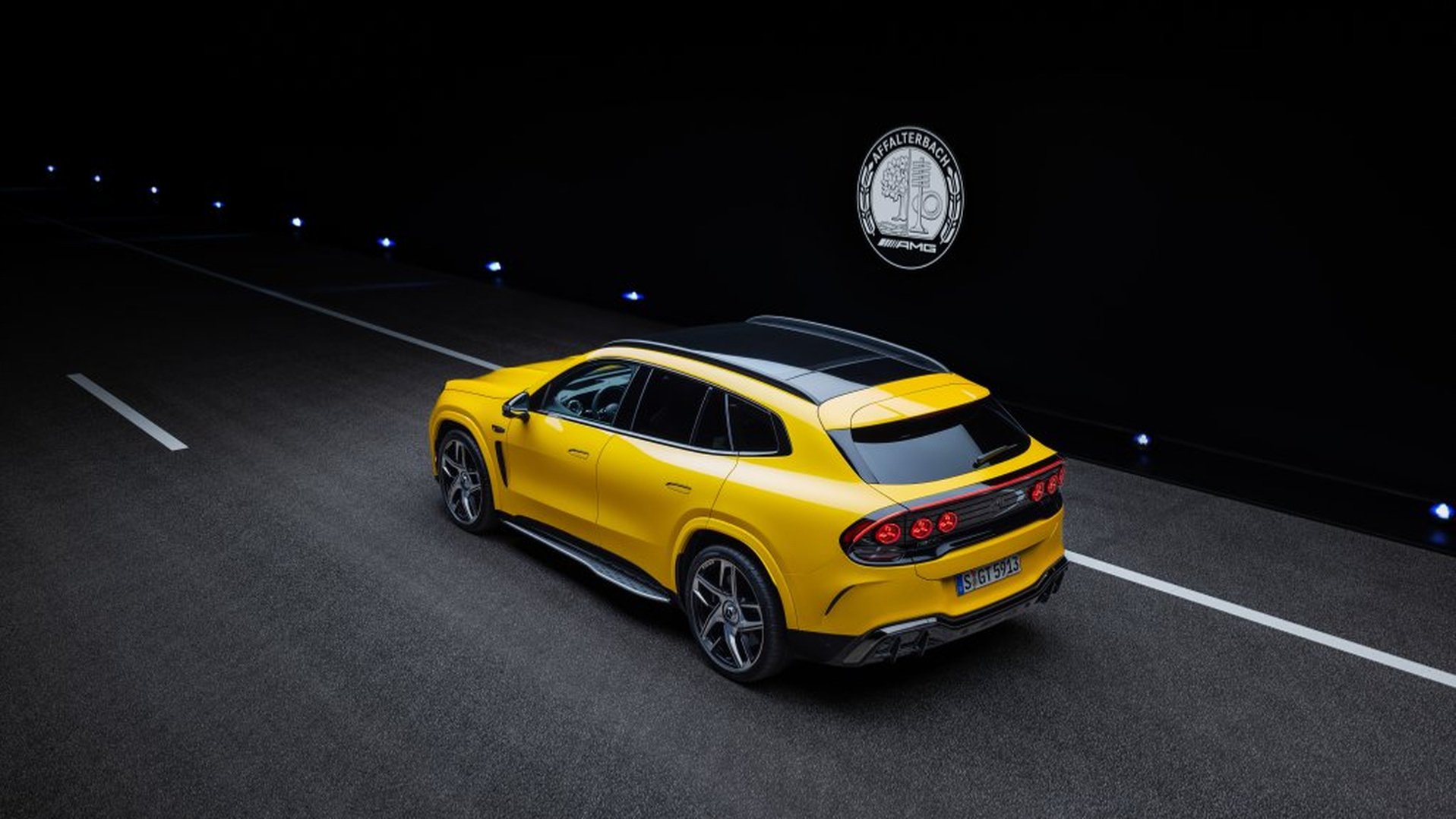
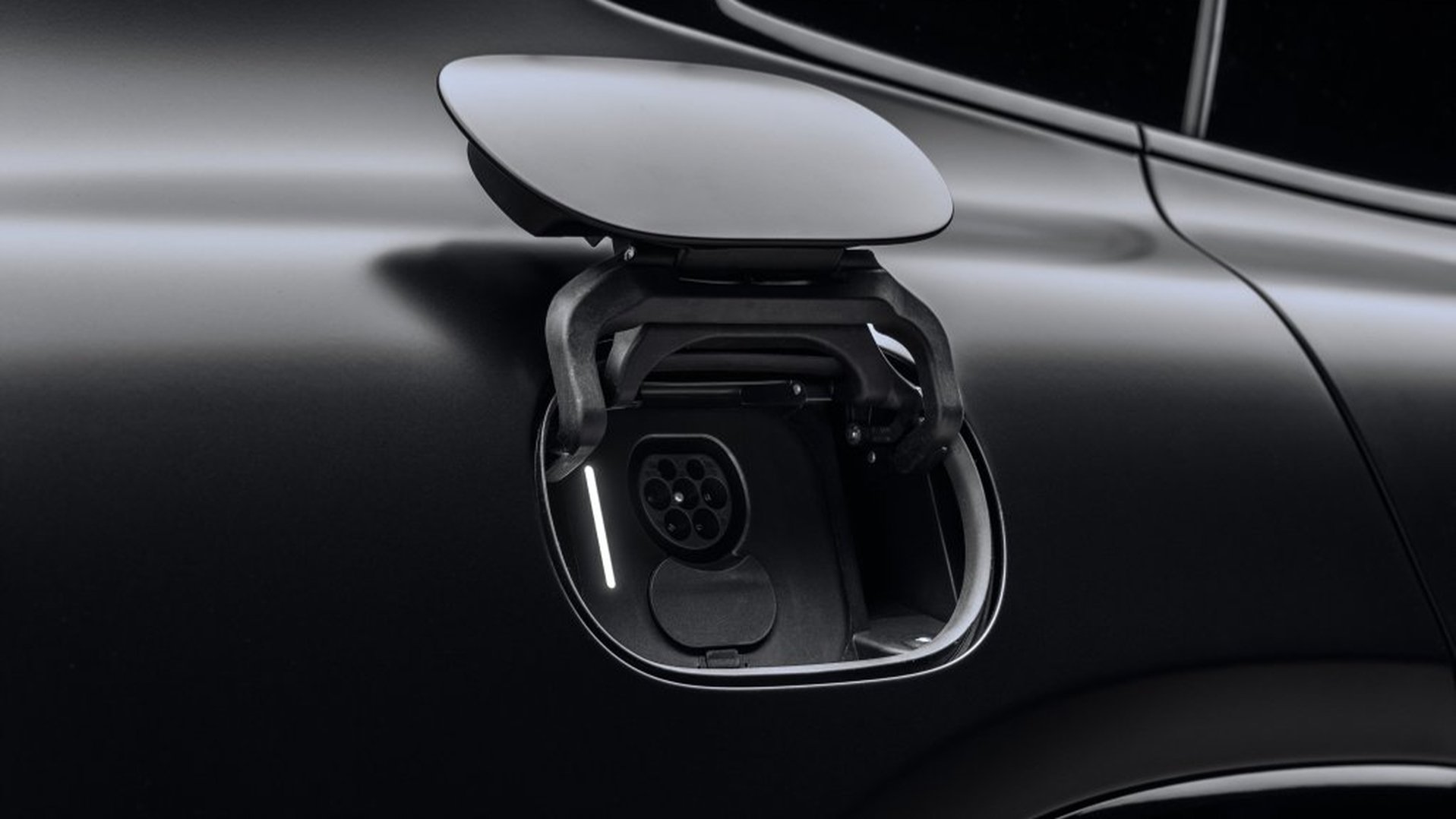
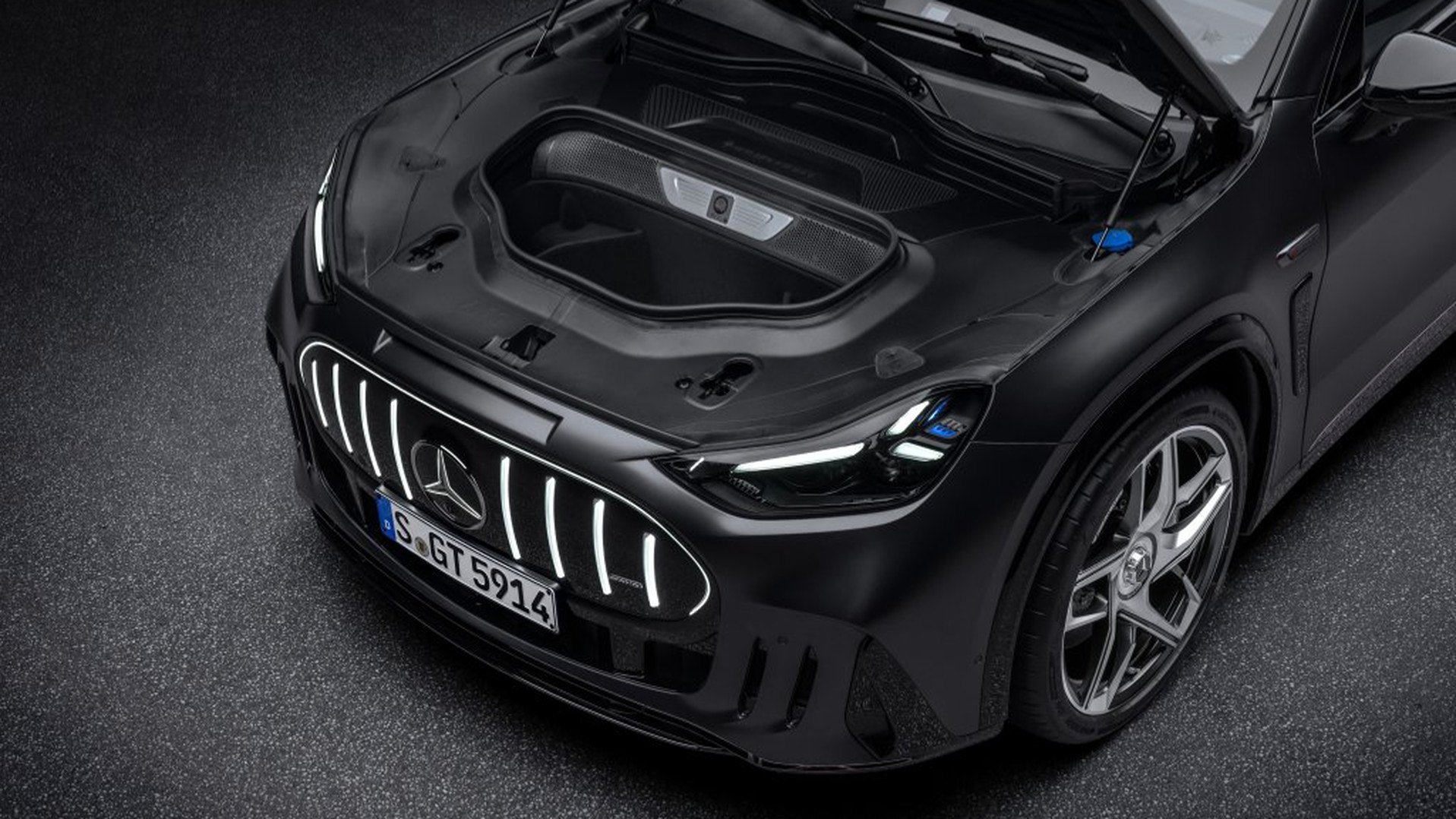
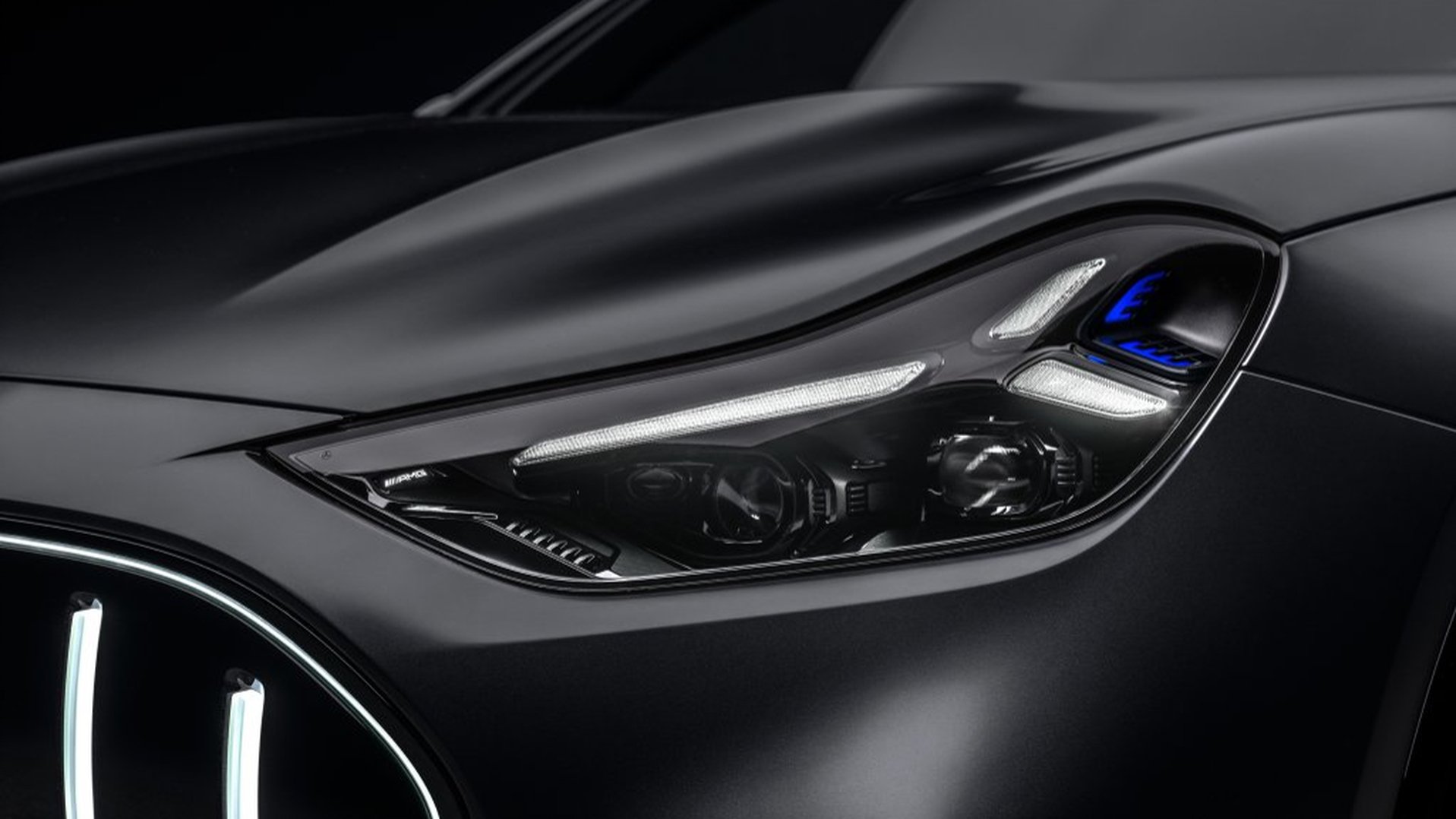
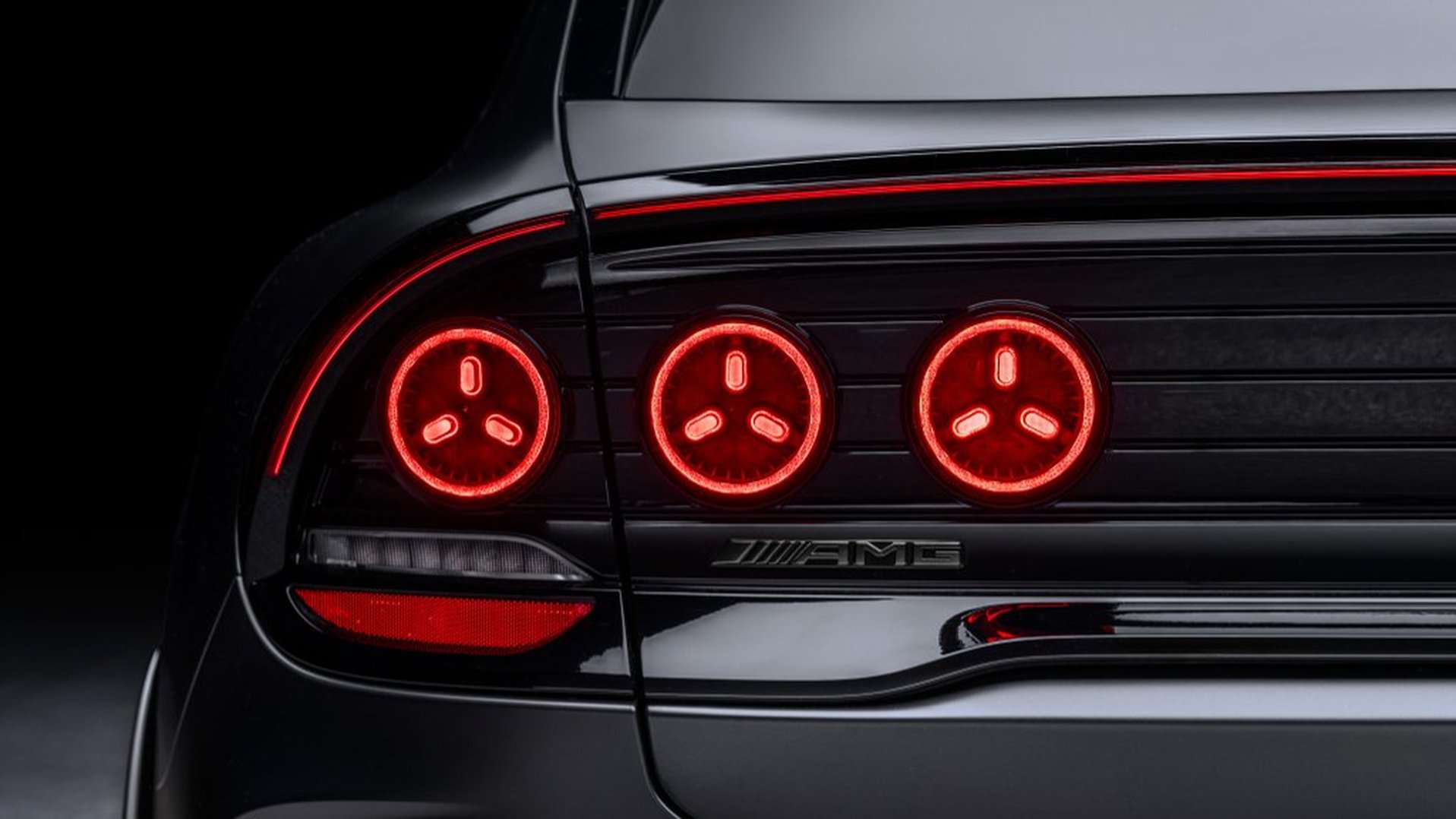
Mercedes-AMG GT SUV | Photo: Mercedes-Benz
About five months after it revealed the AMG GT 4-door coupe, its first electric model built on the dedicated AMG.EA platform, Mercedes-AMG adds an SUV based on the same architecture.
Indeed, the German automaker unveiled earlier today the AMG GT SUV, a compact to mid-size electric performance SUV aimed at rivalling the Porsche Cayenne Electric.
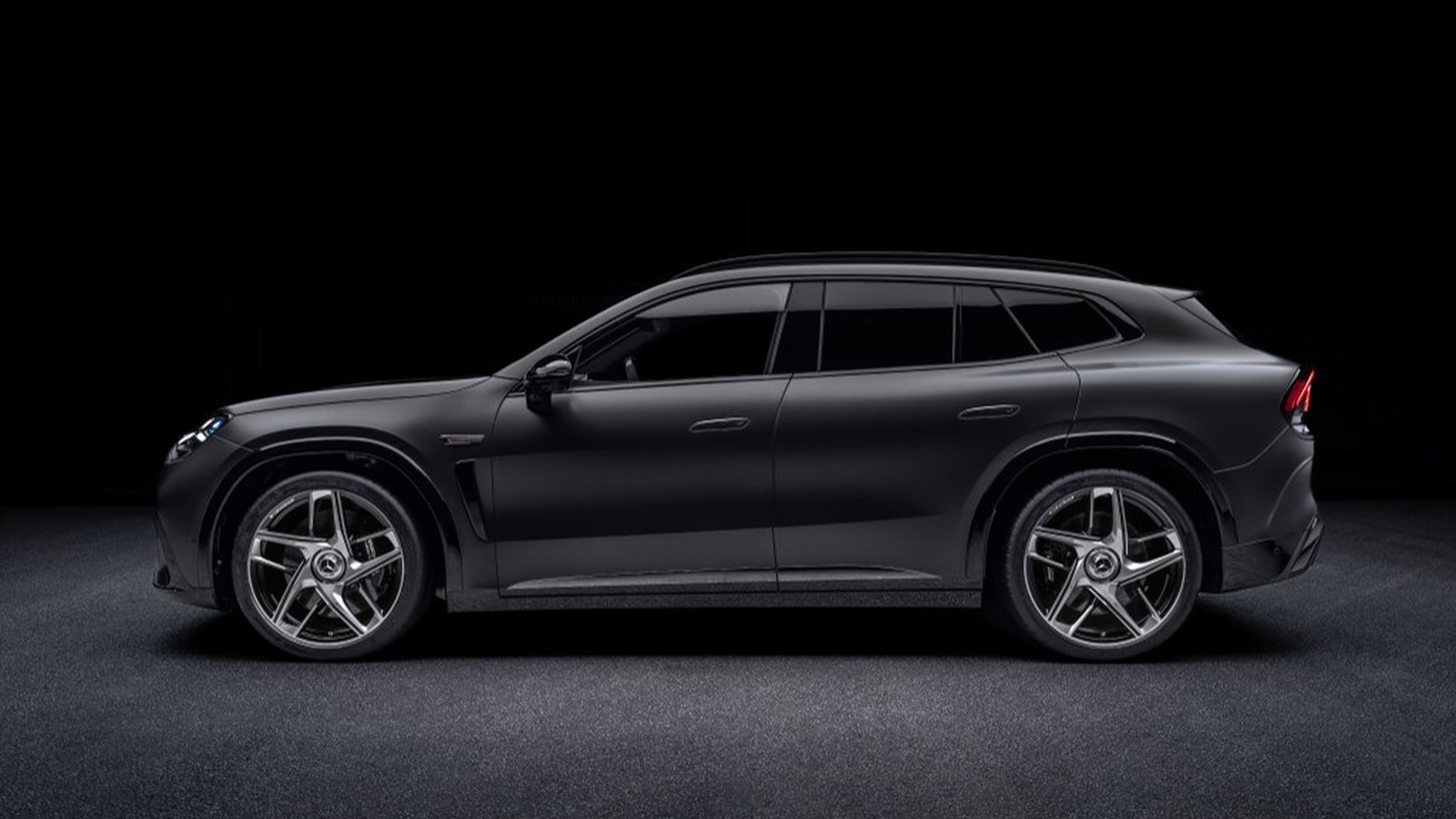
Sized somewhere between the electric GLC and gas-powered GLE, but longer than both, this model is an entirely new SUV built on the bones of the 4-door coupe rather than a spicier version of one of Mercedes’ existing models.
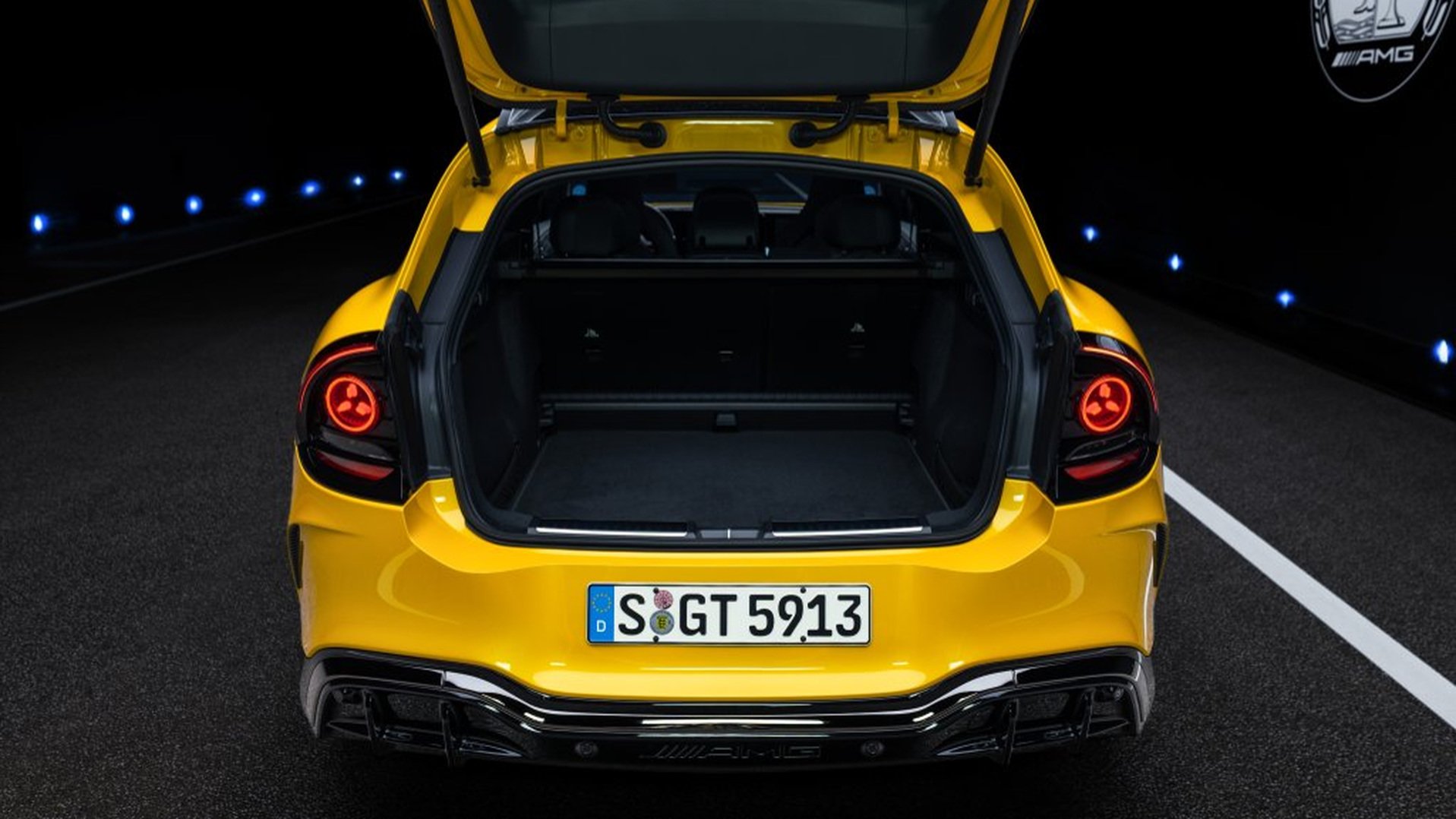
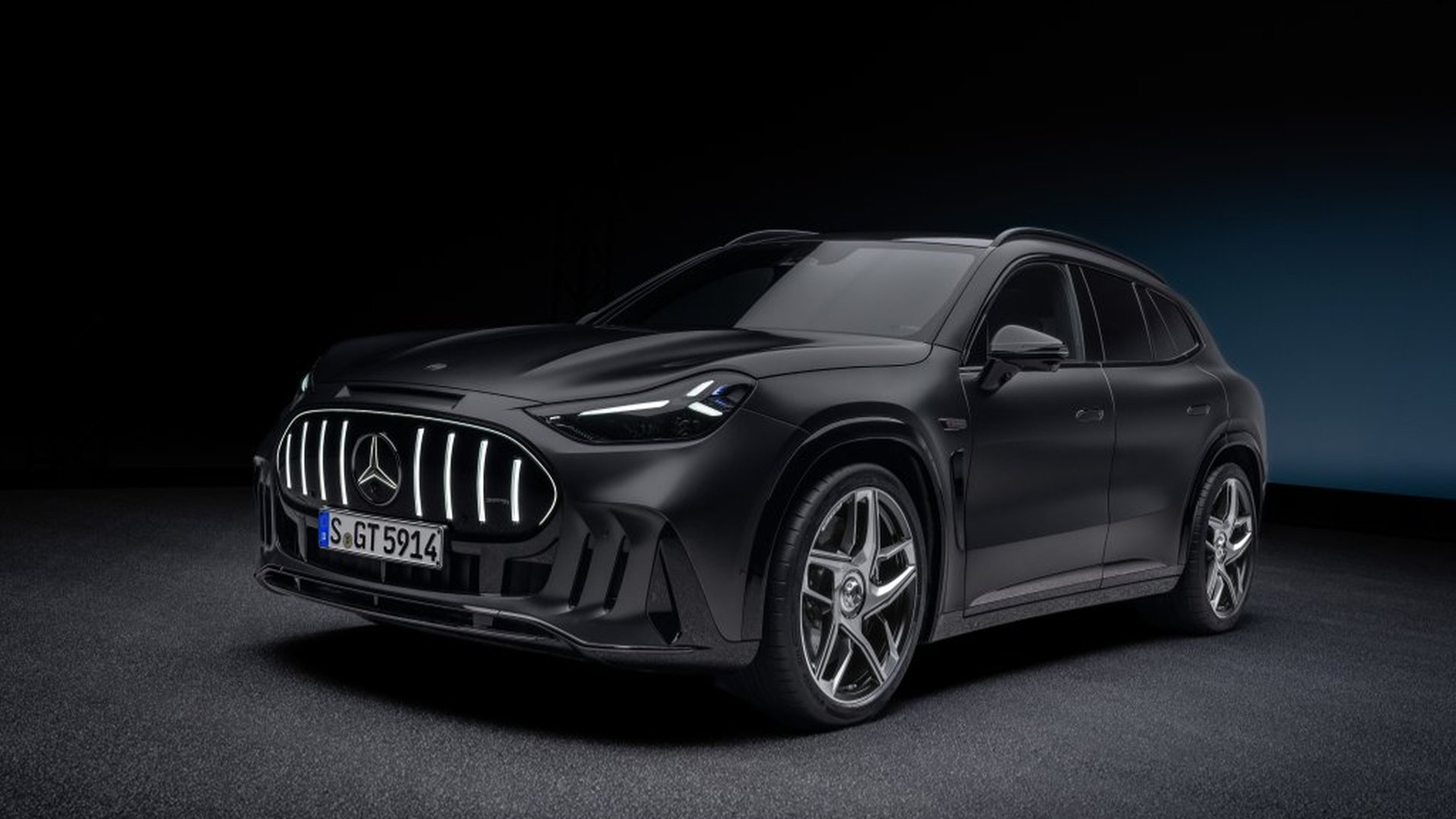
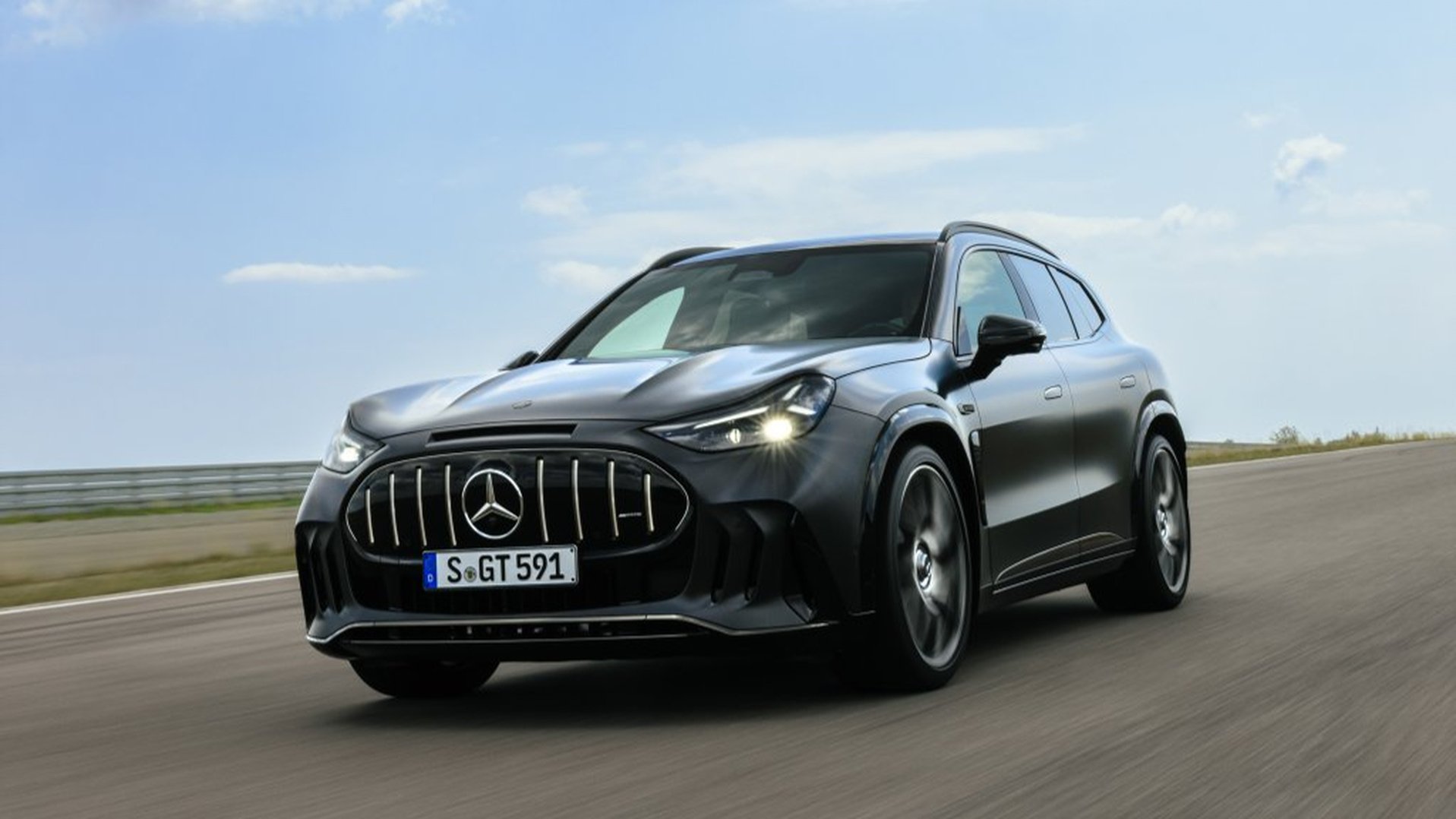
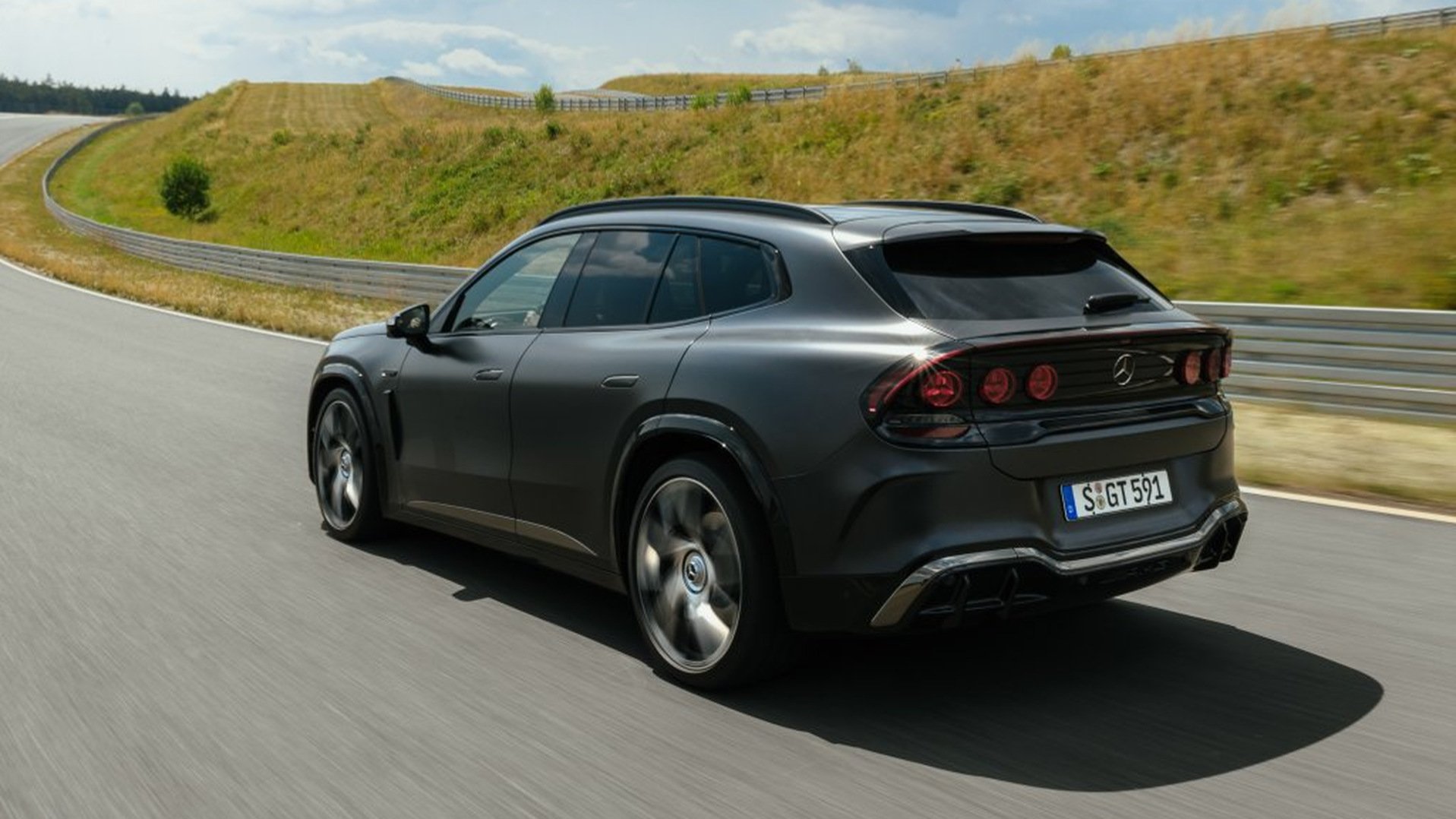
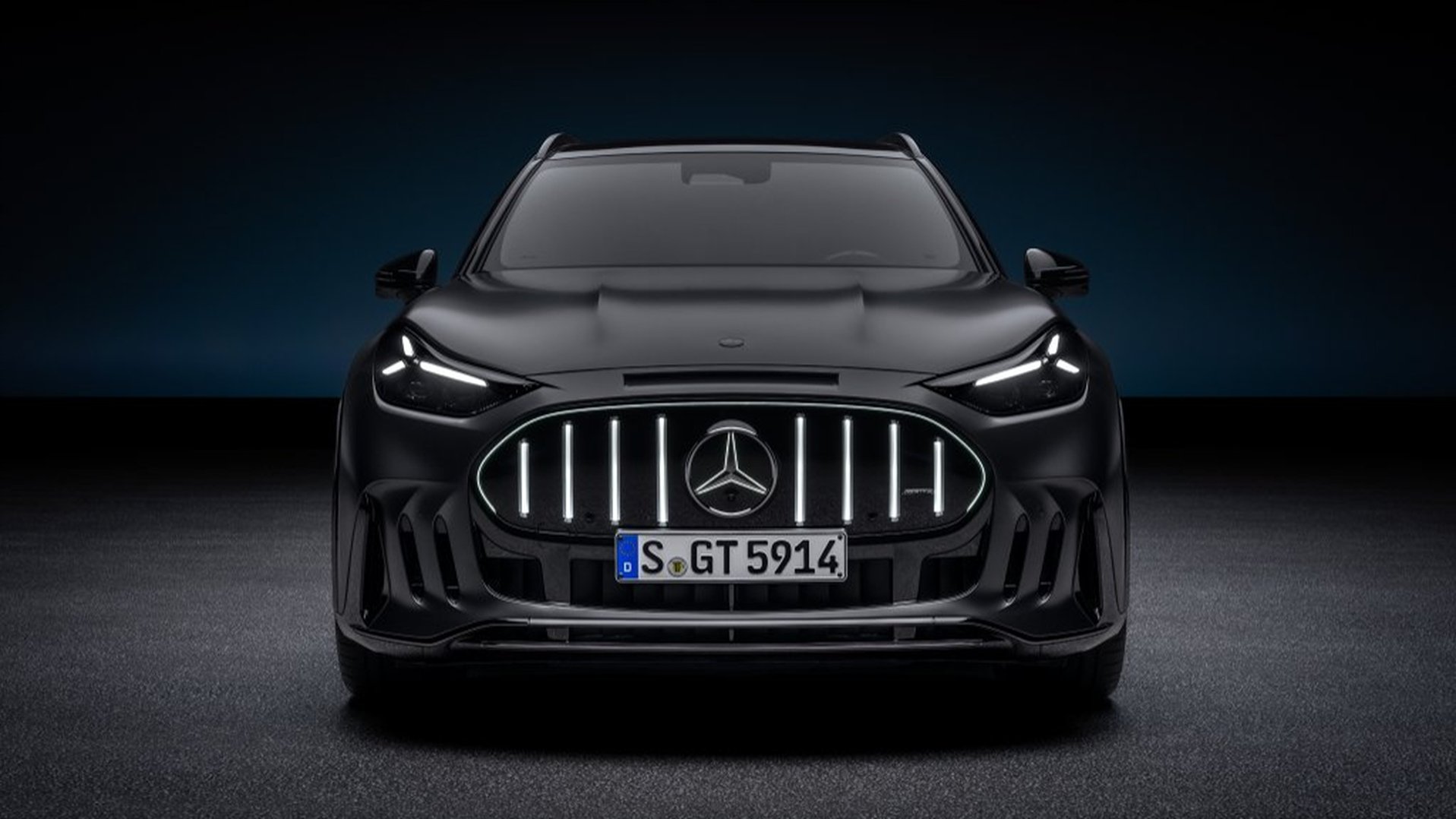
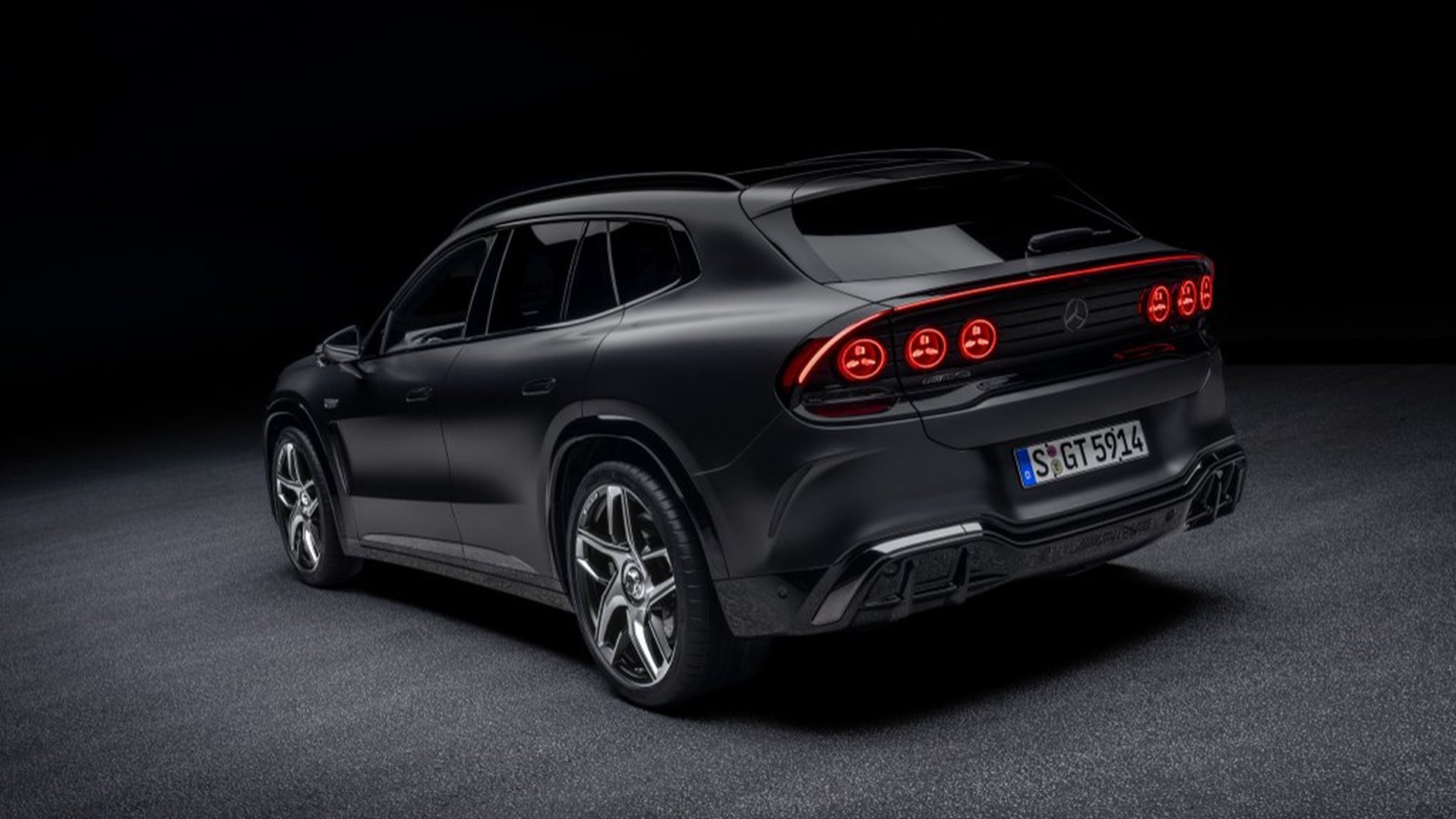
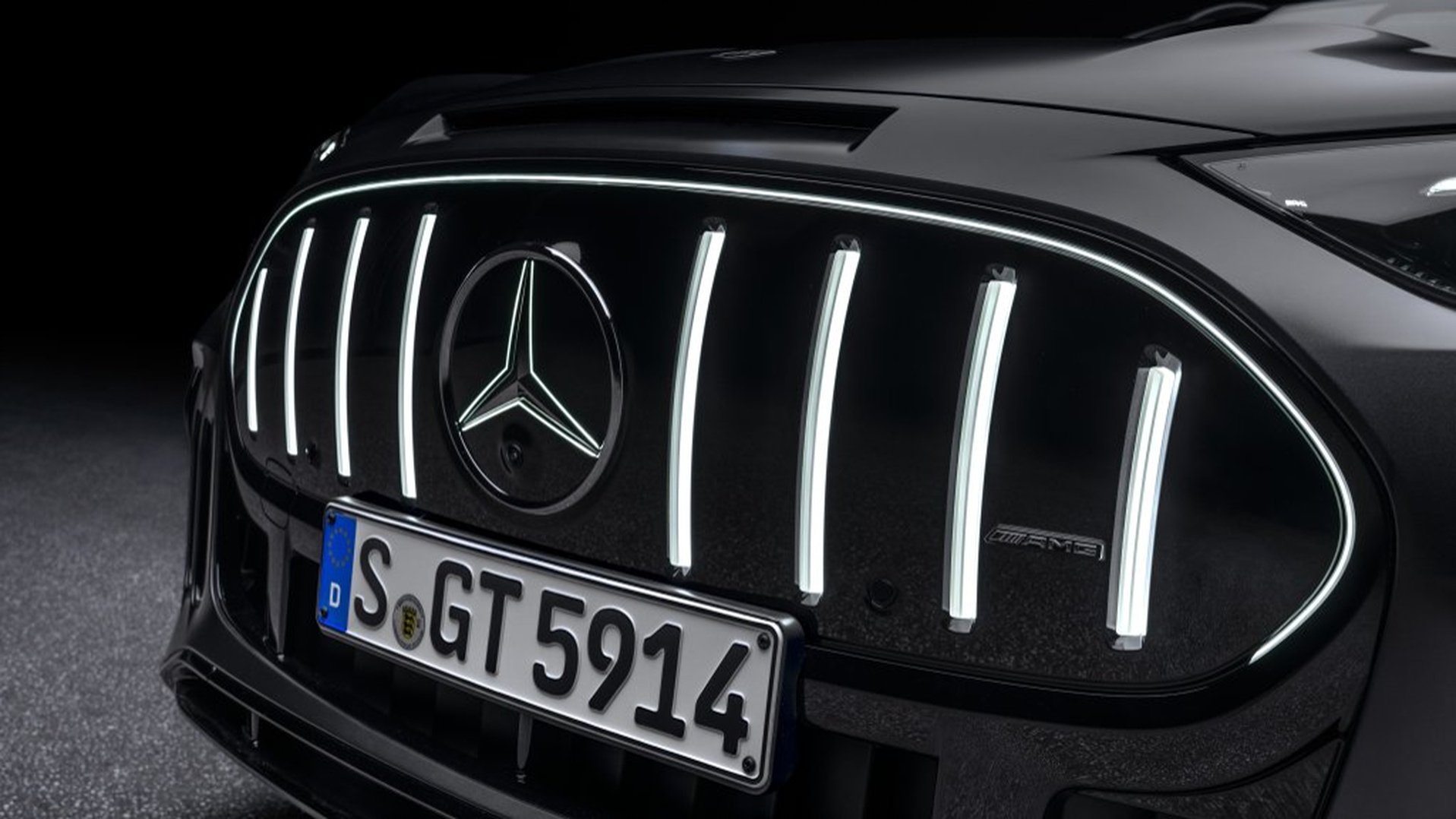
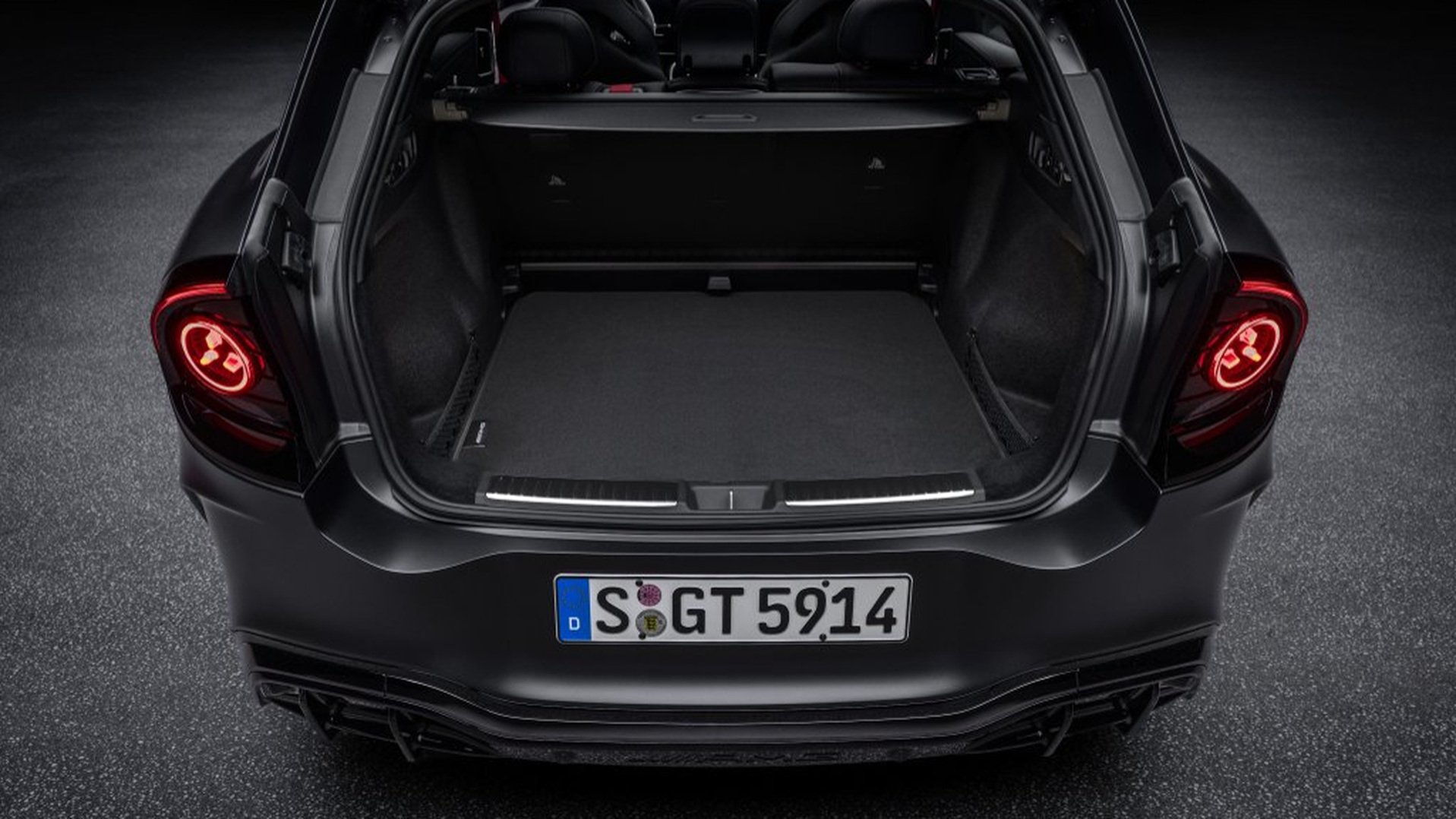
This extends to the design of the AMG GT SUV, which takes many cues from the sports car, including the shape of the headlamps, the oval grille panel with illuminated vertical lines, and the black panel that houses six round taillamps at the rear.
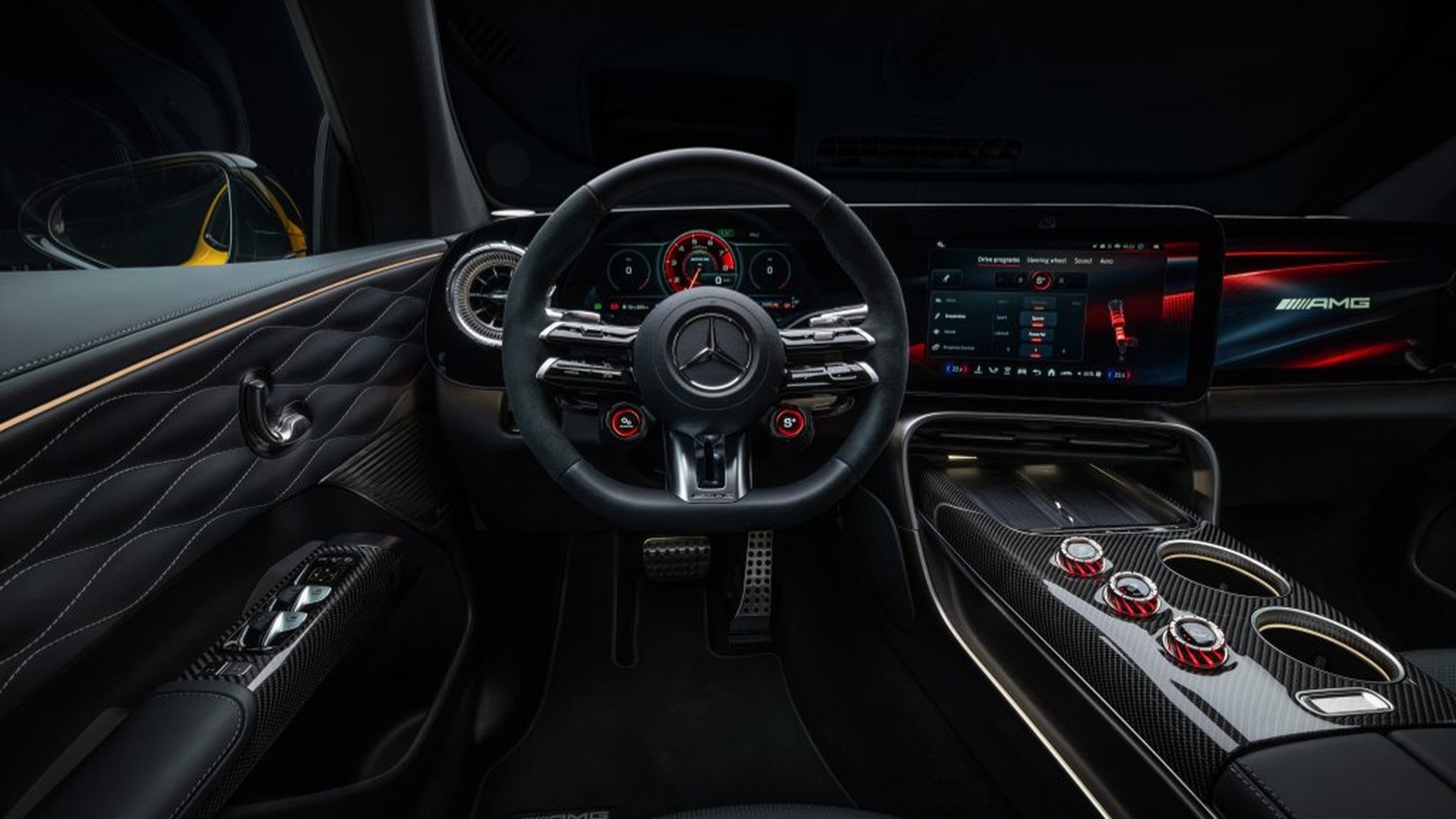
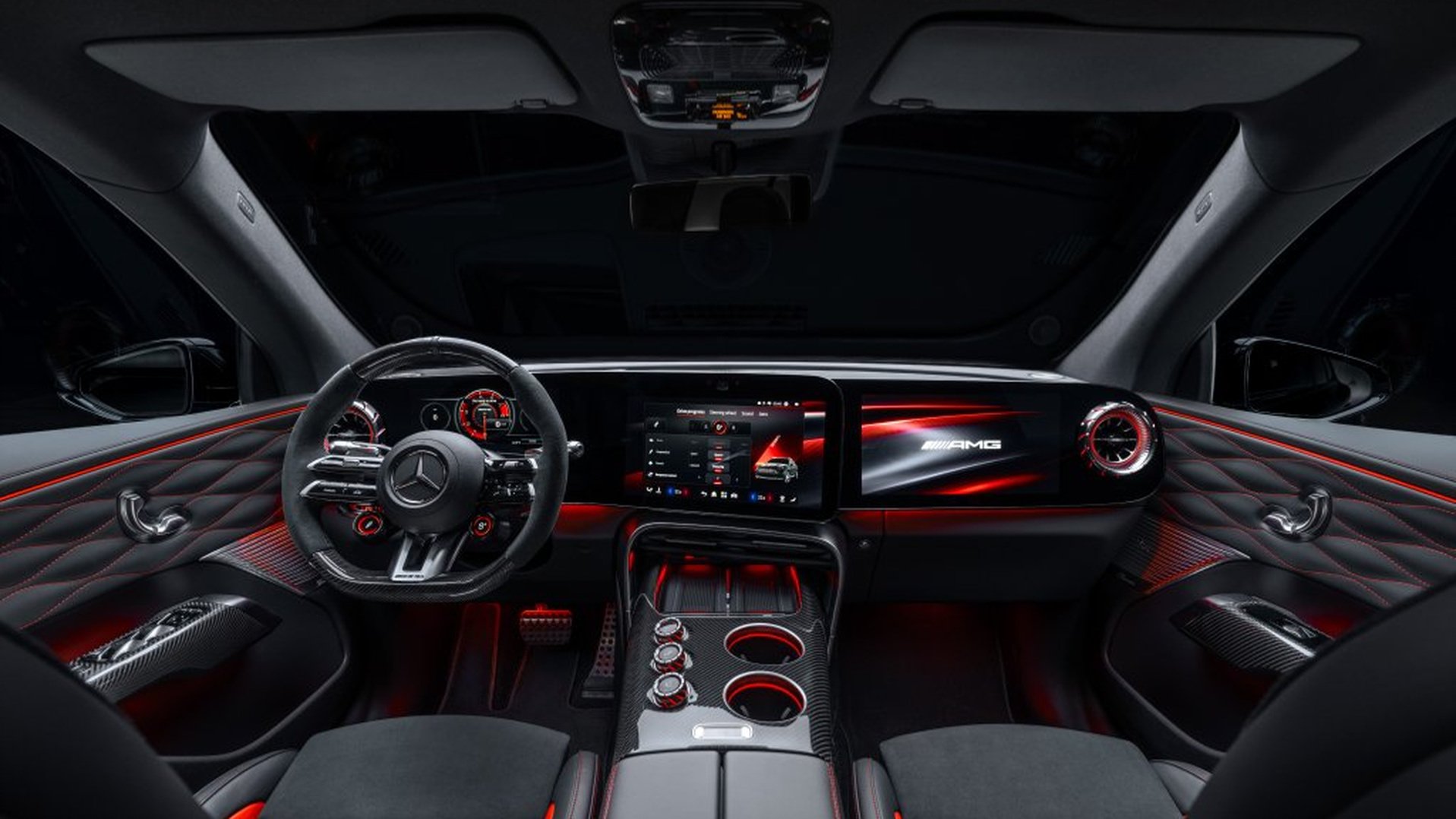
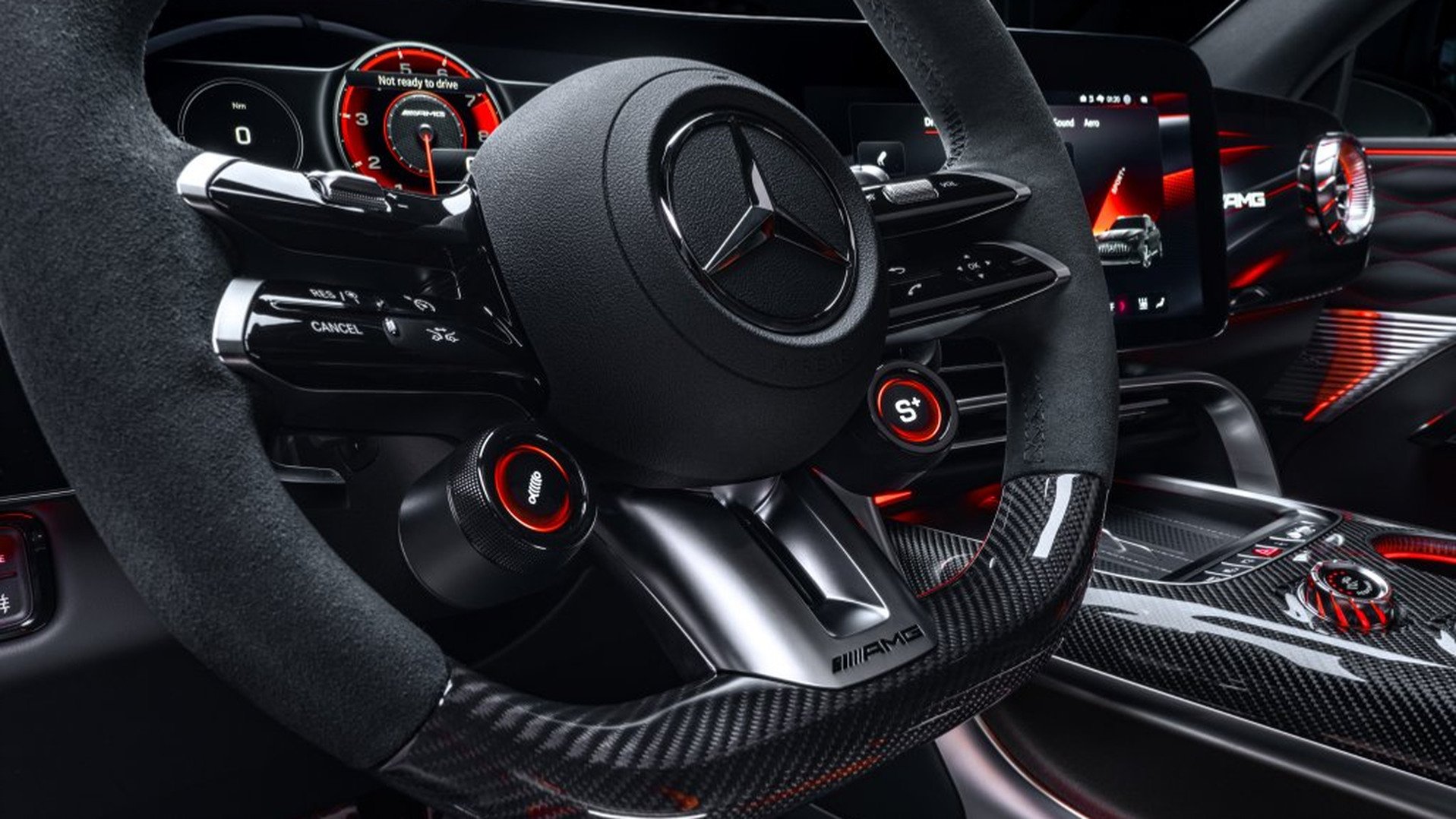
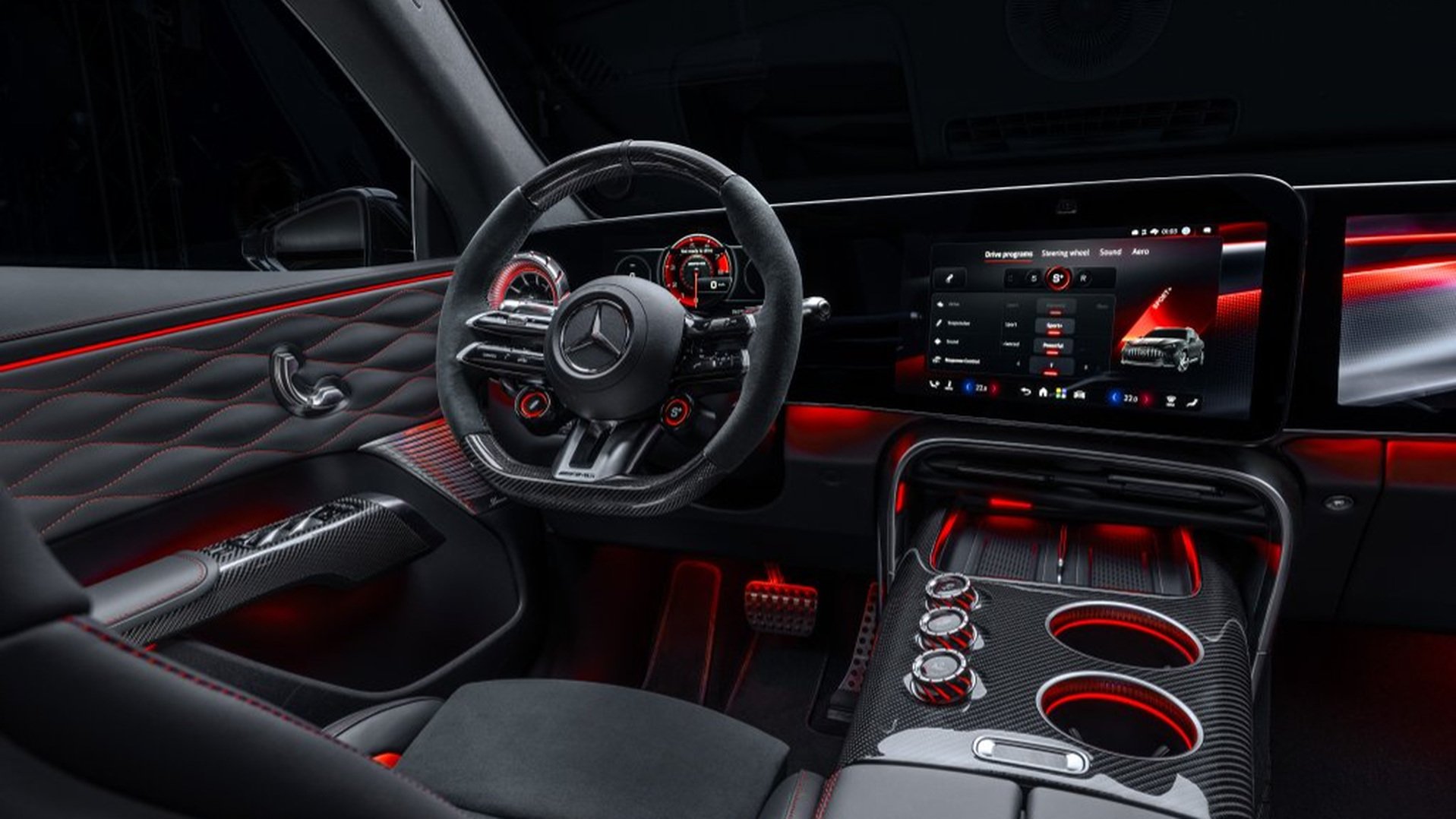
Inside, things are even more similar, since the SUV adopts a very similar dashboard to that of the GT 4-door coupe. That is to say that drivers of the SUV will be faced by a multifunction steering wheel that includes dials to control the vehicle’s dynamics and a digital instrument cluster. The infotainment screen is curved toward the driver to provide more of a cockpit feel, while the front passenger is faced with their own screen.
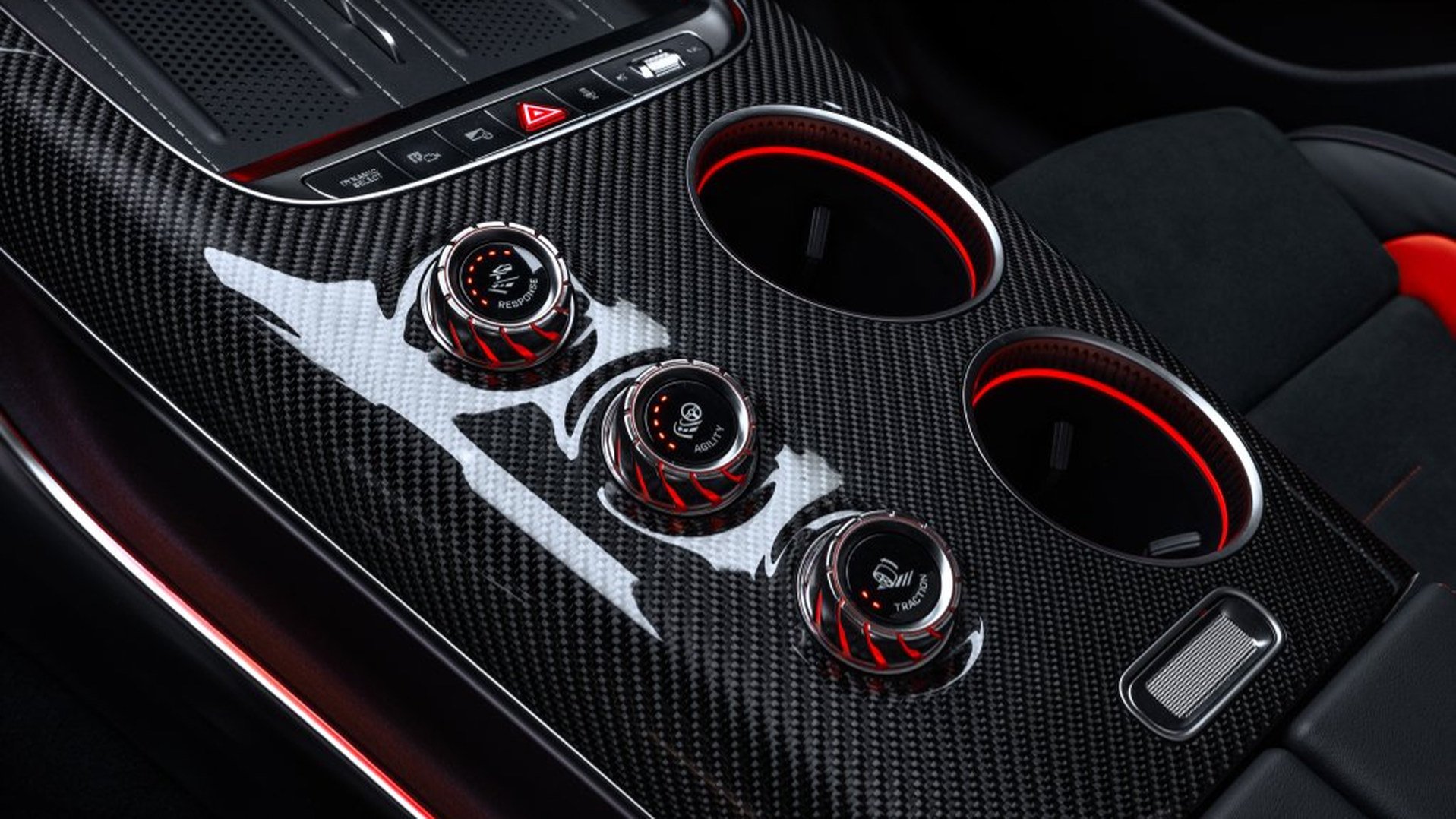
The center console also houses two wireless phone chargers and three dials that can fine-tune the powertrain’s response, the suspension firmness and steering feel, as well as the behaviour of the all-wheel drive and traction control systems.
As it shares its platform with the GT 4-door coupe, the SUV is available with two powertrain configurations in three trim levels, with the standard GT 53 relying on two electric motors and the GT 55 and GT 63 benefiting from three axial flux motors, two at the rear and one up front.
The GT 53 is powered by a 106-kWh battery while the other two use a 128-kWh unit. All three benefit from an 800-Volt electrical architecture that enables charging at rates up to 600 kW for the GT 53 and 710 kW for the GT 55 and GT 63. Mercedes says that this can mean a 10 to 80% charge in as little as 11 minutes for the GT 53 and 12 minutes for the GT 55 and GT 63.
The GT 53 is rated at a peak output of 536 horsepower and a continuous figure of 362 horsepower, with torque pegged at 590 lb-ft. The maximum output can be accessed for 53 seconds at a time.
This configuration is said to give the entry-level AMG GT SUV an electronically limited top speed of 230 km/h and a 0-100 km/h sprint of 4.2 seconds. Reaching 200 km/h from a stop is possible in 14.6 seconds.
Range for the GT 53 is rated at up to 668 km according to the WLTP test cycle, which should equate to somewhere around 570 km using the North American EPA standard.
The GT 55, thanks to its tri-motor setup, can deliver 805 horsepower for up to 55 seconds and 711 horsepower continuously, with a peak torque output of 1,372 lb-ft. This is sufficient for an electronically limited top speed of up to 270 km/h, a 0-100 km/h sprint of 3.1 seconds and a 0-200 km/h sprint of 9.9 seconds.
Range for this model is rated at up to 700 km WLTP thanks to the larger battery, which should give an EPA figure of about 600 kilometres.
Finally, the AMG GT 63 extracts even more performance from the same mechanical elements, with a peak output of 1,153 horsepower that can be accessed for 63 seconds and 1,475 lb-ft of torque. The continuous power rating for this model remains the same as the GT 55, at 711 horsepower.
With this boost in output, the GT 63 is capable of reaching 100 km/h in just 2.7 seconds and 200 km/h in 7.2 seconds, with top speed again limited at 270 km/h.
Range for this variant of the AMG SUV is rated the same as the GT 55.
To keep all of this power in check, the AMG SUV relies on an AMG ACTIVE RIDE CONTROL+ adaptive air suspension that can control the vehicle’s pitch and roll over bumps and during spirited cornering, along with active rear axle steering and beefy brakes.
The GT 53 and GT 55 use steel disks as standard, but the GT 55 can be optioned with carbon-ceramic units front and rear. This setup is included on the GT 63.
This is not overkill considering the weight these brakes will have to bring to a stop repeatedly from high speeds, with the lightest GT 53 weighing in at 2,525 kg (5,567 lb). The GT 55 weighs 2,715 kg (5,986 lb), and the GT 63 weighs 2,695 kg (5,941 lb).
For comparison, the heaviest AMG GT 4-door coupe tips the scales at 2,460 kg (5,423 lb).
Pricing information hasn’t been announced yet for this new model, and we don’t know either when to expect it in Canadian Mercedes-Benz showrooms. These details should be revealed in the coming weeks or months.
Eleven pickups and a converted ProMaster gathered in Uxbridge offered a look at how many…
Every year, Wards Auto publishes its list of the 10 best powertrains available in a…
In a segment as competitive as the compact crossover one, in which there’s an abundance…
Volvo is reportedly producing about 200 EX60s weekly against a 2,000-unit target. Megacasting and cell-to-body…
Stellantis is exploring Canadian exports of two electrified Jeeps built in Wuhan. Brampton sale talks…
Toronto could become the first Canadian city to offer Waymo's fully autonomous taxi service. The…