Two paths
Volkswagen and Tesla are cutting watts. They are not doing it for the same reason. The Mission Efficiency is a technical demonstration. How far can an ID. Polo‘s range go without a bigger battery? The Tesla Cybercab, a two-seat autonomous taxi in service in Austin, Texas, is chasing the lowest operating cost possible. To get there, efficiency comes first. It comes down to air, mass, and watts.
Beyond about 80 km/h, the largest share of a vehicle’s on-road energy budget is aerodynamic drag. Often more than 45%. More as you go faster. Picture a pie chart. Tires and inertia have their share. Air takes the biggest. Volkswagen quotes a drag coefficient, Cd, of 0.158, and a frontal area of 2.08 m². Cd tells you how much the shape grabs the air. A Cd of zero is a needle. A Cd of 1.00 is a barn. At 0.158, the Mission Efficiency is highly aerodynamic!

Volkswagen, range as a demonstration
Volkswagen frames the project as a showcase, not an exotic: “Technology for the masses, not just for a privileged few,” says Thomas Schäfer, head of the Volkswagen brand.
Three cooling flaps at the front open in stages. They let through only the air that is needed. The front wheel arches are tight. The underbody is faired. The rear wheels, largely faired, stretch the teardrop.
The wheels weigh heavily in the equation. Volkswagen estimates that the wheels account for 25 to 30% of aerodynamic drag. Deflectors inside the rims and flat covers keep air from pouring in. The rear axle, a torsion beam, has been narrowed by 170 mm versus the ID. Polo. The track tightens. Air flows better under the body.
Another choice that could have tempted Volkswagen: camera mirrors. They stay conventional here; in the wind tunnel, the gain would have been almost nil, for too high a cost premium in production.
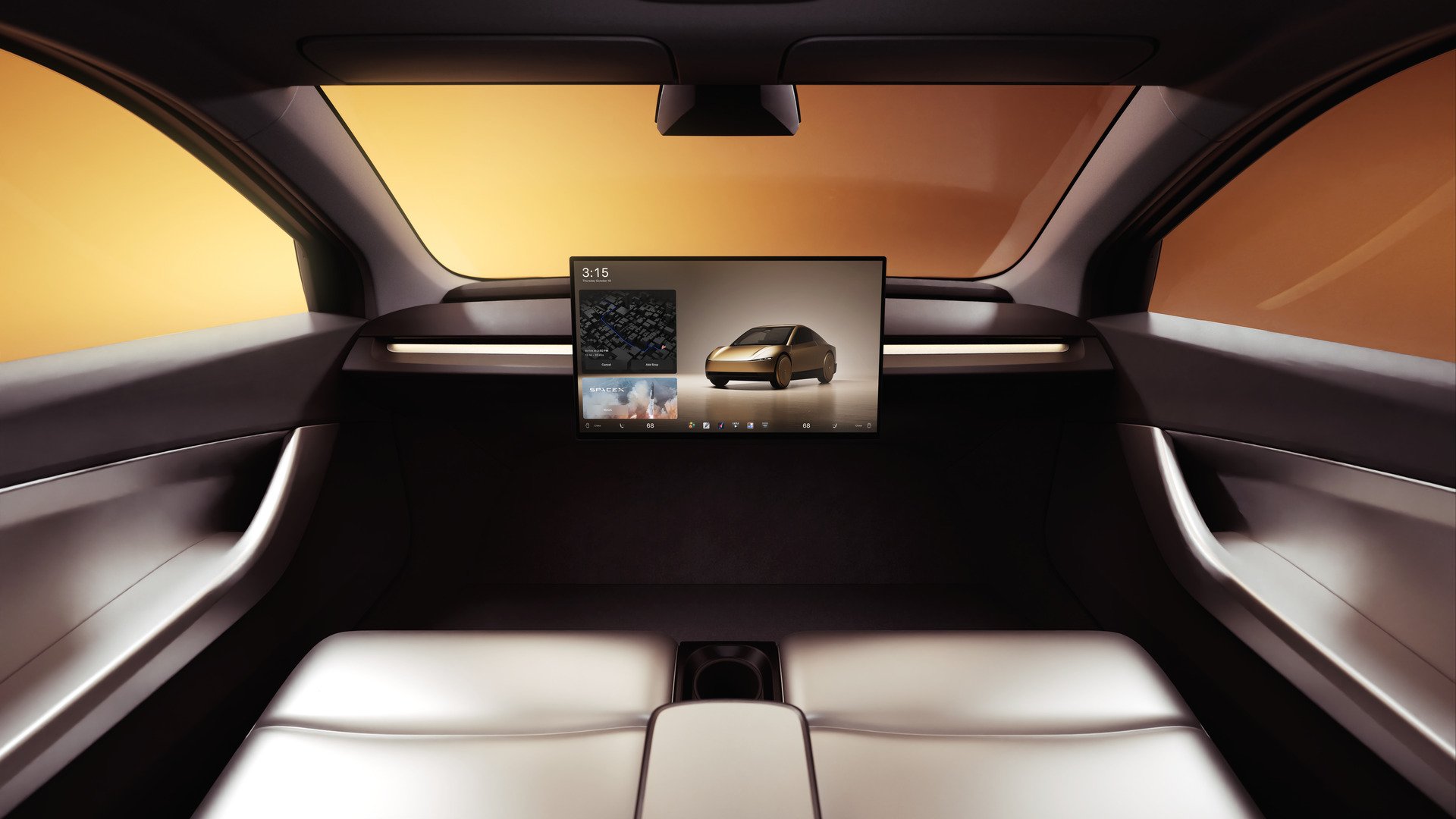
 Mission Efficiency interior | VW Canada
The brakes eat watts, too. Up front, Volkswagen keeps the Polo’s hydraulic brakes. At the rear, like the Tesla Cybercab, a small electric motor clamps the pads. When you don’t need them, they barely rub. No more lines or fluid on that side. What does that get you? On lift-off, the pads no longer drag on the disc. The car coasts farther on the same energy. Under braking, the motor recovers more, because it isn’t fighting parasitic friction.
Under the floor, the Mission Efficiency keeps a front-wheel-drive layout, on the electric platform of the ID. Polo. The APP290 permanent-magnet synchronous motor weighs 75 kg. It delivers 99 kW and 264 Nm. A heat pump reduces the heating bill in cold weather.
Volkswagen assembles the cells directly in the battery housing to form the pack, with no intermediate modules. 54.9 kWh net. The trunk also stiffens the body. Doors, hood, hatch and fenders are composite as well, to shave a little more mass.
 VW Mission Efficiency rear three-quarter | VW Canada
Above 80 km/h, Volkswagen says consumption drops more than 30% versus the ID. Polo. At 140 km/h, the Mission Efficiency would draw about as much as a Polo at 100 km/h. Aero makes the difference, not a bigger battery.
Even the accessories have a budget. A 370 W solar roof feeds the 12 V onboard network. It does not charge the traction battery. A few kilometres a day in summer: more to flatter the ego than the range.
Tesla, the cheapest kilometre
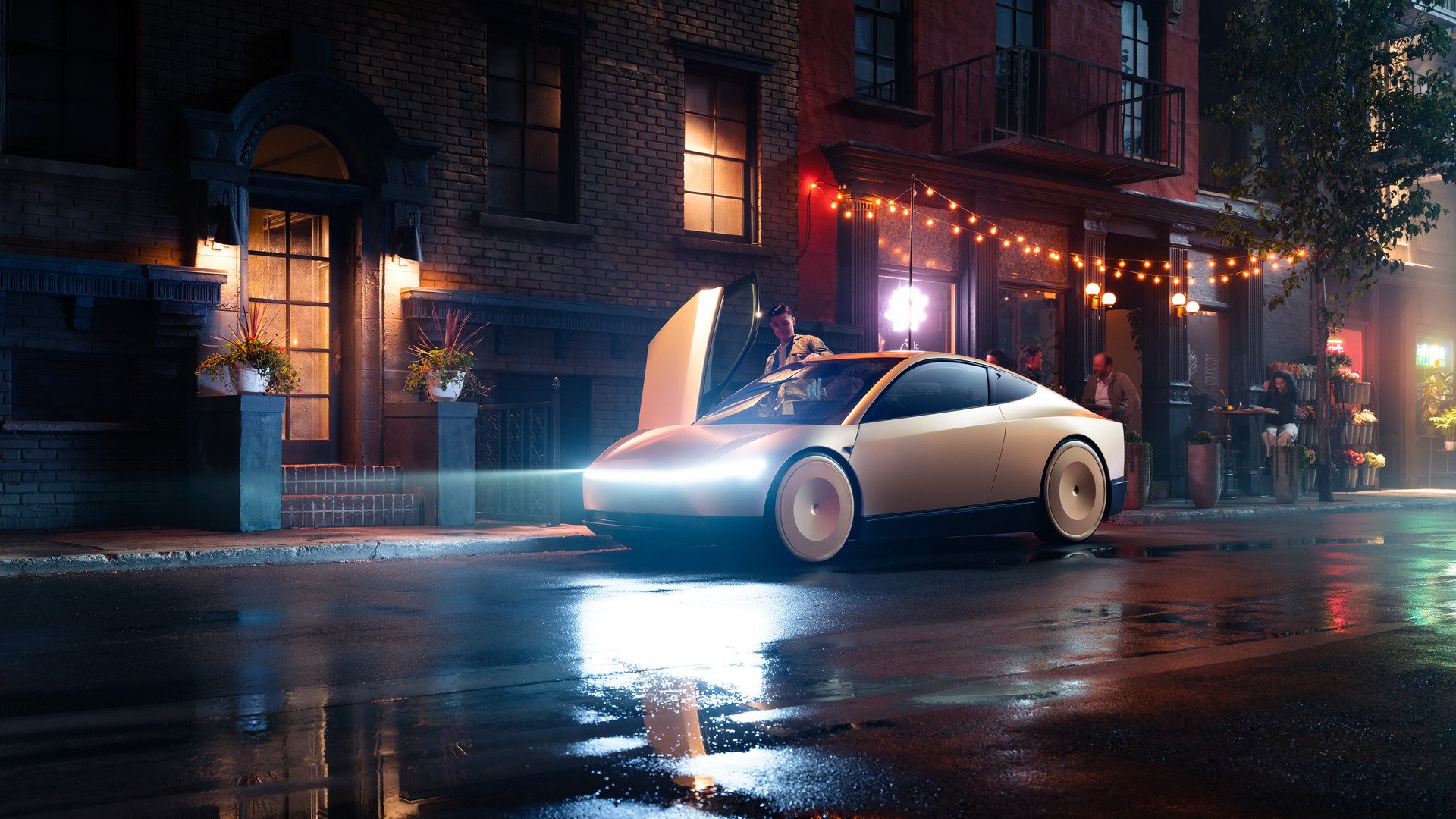
The Cybercab is a showcase for range. But unusual engineering choices let it run cheap kilometres. Efficiency is not the stated goal. It is the means. Two seats, a narrow face, a teardrop silhouette, full wheel covers. Tesla claims a Cd under 0.20. That is not a measured 0.158 like Volkswagen’s, but it is still excellent: Tesla also put aero first. Less air to push aside, fewer watts, fewer dollars.
 Tesla Cybercab | Tesla Canada
Mass follows. EPA filings put curb weight at 1,412 kg. A Volkswagen engineer puts the Mission Efficiency around 1.6 tonnes. About 190 kg of difference. The Cybercab also carries less battery: about 48 kWh, versus 54.9 kWh net on the Volkswagen.
The EPA rates the Cybercab at 165 Wh/mi, or about 10.3 kWh/100 km. That is an American cycle. The German concept’s 8.4 kWh/100 km is a European WLTP figure, more lenient: WLTP typically reads 10 to 15% better than the EPA for the same vehicle, a gap that comes from the test method, not the product. You don’t compare apples with oranges.
To keep kilometres cheap, Tesla cut again. A single front motor, 163 kW, rare-earth-free according to Tesla, about 18% smaller and 25% lighter than a conventional motor. Dry electromechanical braking at all four wheels: one actuator per caliper, no fluid, no hoses, no master cylinder. The body is built from reaction-injection-moulded plastic panels, coloured throughout, assembled as parallel modules (front, rear, battery floor) joined at the very end of the line, no stamped steel sheet. That efficiency does not stop at the road: fewer parts to assemble and less line time also make it cheaper to build, which feeds straight into the cost per kilometre.
Volkswagen treats range as an engineering exercise. Tesla cuts the cost per kilometre. Aero is the real battleground: the chemist who squeezes extra kWh does not win; the engineer who reshapes a wheel does.