


Tesla’s brand loyalty dropped 9.4 percentage points year-over-year, placing it second, behind Ford.
The company’s U.S. sales also dropped by 8.3 percent through July 2025.
About 30% of former Tesla owners did not buy another EV in the second quarter.
According to a report published by S & P Global Mobility, Tesla has lost Brand Loyalty year-over-year during the second quarter of 2025.
Indeed, fewer Tesla owners bought another of the brand’s vehicle when trading in their current car than last year.
The American EV maker had long been at the top of the brand loyalty lists, with a percentage of returning buyers consistently in the mid to high 60s.
In the most recent data, Tesla dropped 9.4 percentage points to 58.1 %, placing it behind Ford (59.6 %) and just in front of Chevrolet (58 %). Only Dodge did worse, with a drop of 12.7 percent over the same time period.
There are a few reasons that can explain why more buyers are moving away from Tesla, such as the brand’s aging lineup and more competitive EVs from legacy brands, but the main factor is likely CEO Elon Musk’s political involvement, as sales and loyalty rates show a sharp decline since the start of 2025.
Interestingly, while a large majority of former Tesla owners (70%) chose another electric vehicle during the first half of the year, 30 % of them decided to go back to combustion or hybrid power.
Indeed, even if there are now electric vehicles in almost all market segments, buyers of certain types of vehicles, such as pickup trucks and large SUVs, have fewer options that aren’t powered by gasoline.
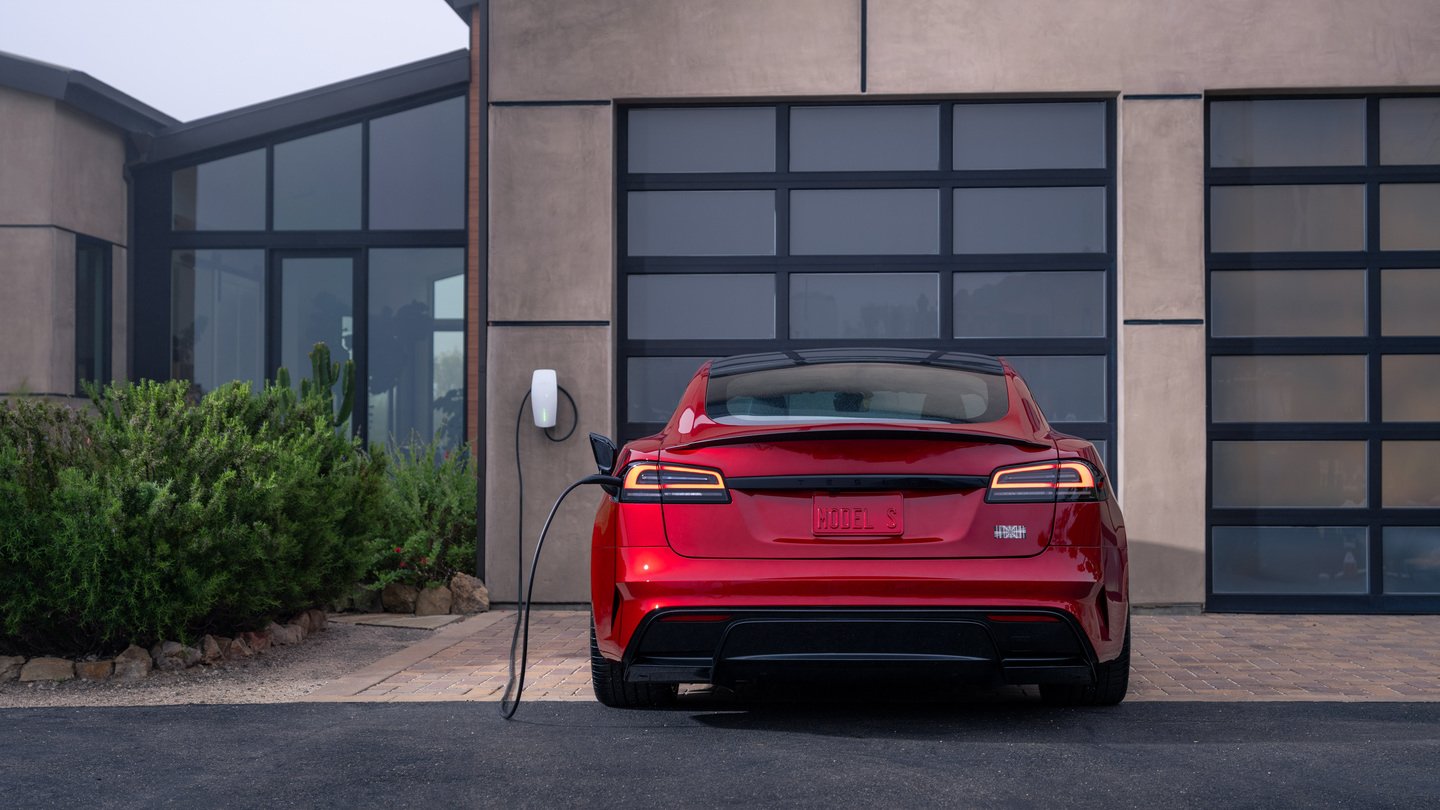 2026 Tesla Model S | Photo: Tesla
Looking only at Tesla owners who replaced their car with a Chevrolet vehicle, 55% chose a gas-powered model and almost 8 % went with a diesel engine, leaving about 37% who bought a Chevrolet EV.
Things are similar at Ford, with 50% of Tesla converts choosing a gas-powered model, 5% choosing a diesel, and 29% going with one of the brand’s three EVs. 13% of the remaining former Tesla owners chose a hybrid or plug-in hybrid Ford.
In the case of former Tesla owners who replaced it with a Hyundai, 41 % stayed with an electric model, 37 % went for a gas-powered vehicle, and 22% chose a hybrid or plug-in hybrid.
Finally, of those who moved from Tesla to BMW, 47 % choose gasoline, 42 % stayed with electricity, and 11 % picked a hybrid model.
Things are not yet catastrophic for Tesla, who continued to attract more buyers from most legacy brands than these same companies managed to pry away from Tesla, but a downward trend is evident.
For example, almost twice as many buyers abandoned Chevrolet in favour of Tesla than those who did the opposite (a ratio of 2-1), which sounds good until you look at last year’s data, at which time the ratio was 4-1 in Tesla’s favour.
A similar, albeit less drastic, situation is taking place when comparing Tesla to Ford, as the ratio between conquests and defections stood at 2.4-1 last year and is now only 1.9-1.
When looking back even further, we can see that five years ago, Tesla used to attract 9 buyers from BMW for every 1 buyer the German company managed to snag from the EV maker. In the second quarter of 2025, this ratio is down to only 1.5-1.
More concerning are the comparisons in which Tesla is now losing out in favour of other premium brands, such as Porsche, where the ratio is now 0.9-1, and Cadillac, where the ratio is 0.7-1.
Interestingly, about 75% of buyers who replaced their Tesla with a Cadillac chose another electric vehicle.
With numbers like these, it is not surprising to learn that the EV maker is also experiencing a reduction in sales and overall market share in the United States, where the company now occupies 3.3 % of the market, down from 3.8 % in 2024. Overall sales from January to July in the United States amounted to 320,824 vehicles, an 8.3 % drop over the same period in 2024.
Tesla aims to reverse this situation with a more affordable version of its still popular Model Y crossover slated to launch later this year, along with a shift toward ride hailing services with a yet to be unveiled robo-taxi.
Source: Automotive News
