Almost one hundred and twenty years ago, on September 27, 1906, a man named Charles Rolls lined up fourth on the starting grid of a motor race on the Isle of Man. He crossed the finish line first — with just over half a litre of fuel remaining in his Rolls-Royce 20 HP. That razor-thin margin was no accident. It spoke to an absolute command of mechanics, pace and fuel management in a race that demanded as much calculation as it did courage.
- Charles Rolls won the 1906 Isle of Man Tourist Trophy on skill and fuel discipline alone, crossing the finish line with barely a drop left in the tank
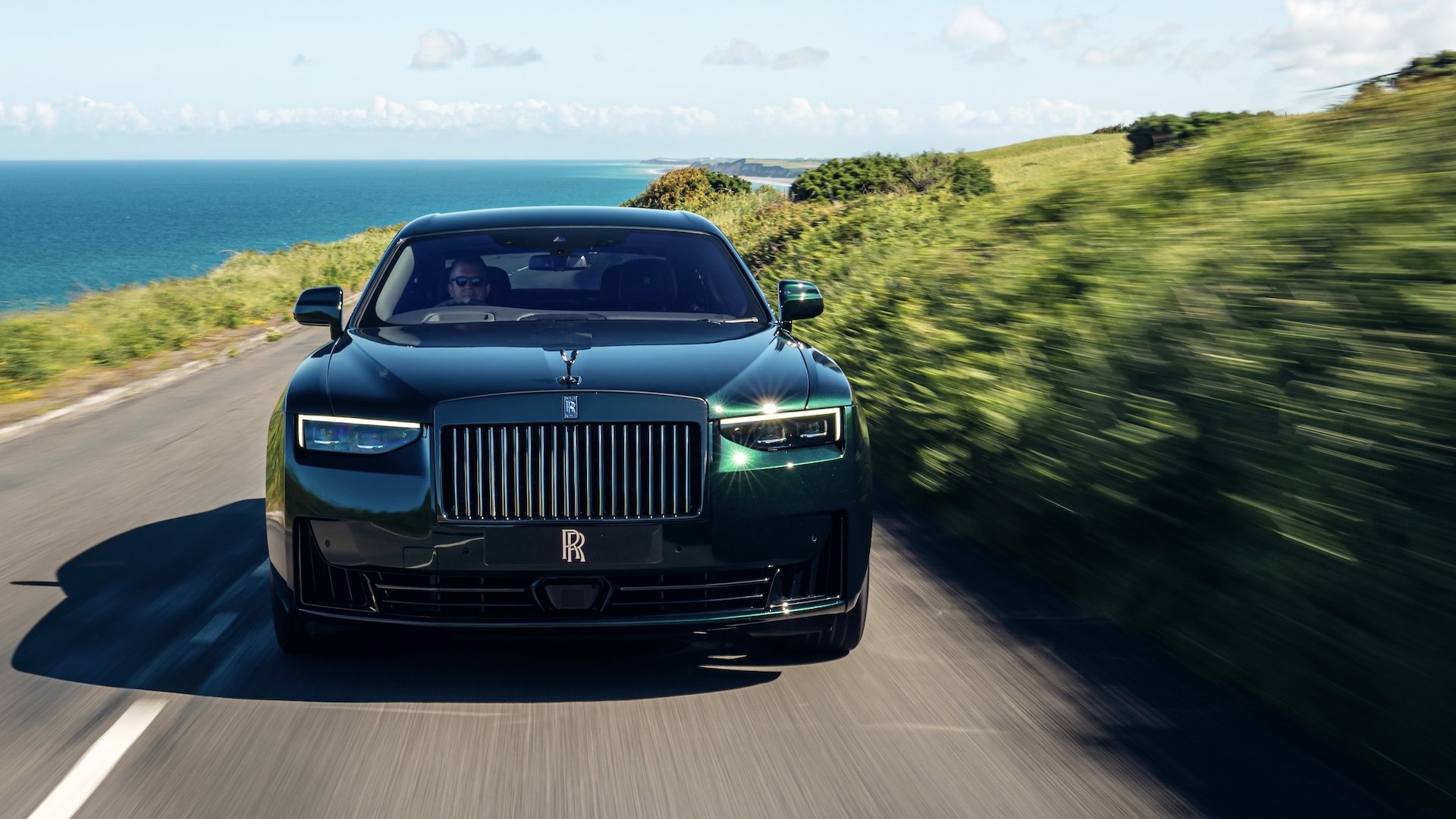
- To mark the 120th anniversary, Rolls-Royce unveiled a one-off Black Badge Ghost finished in Dark Emerald with a hand-painted coachline bearing the number 4
- The interior secretly engraved with the race car’s registration number, chassis number and the GPS coordinates of the original start and finish line.
A race unlike any other
The Isle of Man Tourist Trophy was not a straightforward speed contest. Run over the Highroads Course, stretching just over 65 kilometres per lap, the event put touring cars through four gruelling laps that required an uncommon blend of speed, endurance and restraint. Rolls and his riding mechanic Eric Platford completed the distance in 4 hours, 6 minutes and 0.06 seconds, averaging 63,4 km/h (39.4 mph) — a performance made all the more striking by the 10-minute lead Rolls had built by the final lap, in a race where every drop of fuel carried strategic weight.
 2026 Rolls-Royce Black Badge Ghost Tourist Trophy
The man behind the marque
Charles Rolls was far more than a racing driver. A product of his Edwardian era, he was an engineer, balloonist and aviation pioneer who embodied an insatiable curiosity about what machines could achieve. That same restless spirit had led him to co-found Rolls-Royce with Henry Royce in 1906 — the very year of his Tourist Trophy victory. He died four years later in an aircraft accident at the age of 32, leaving behind a young marque to which he had given his name and a considerable part of his character.
Dark Emerald and the number 4
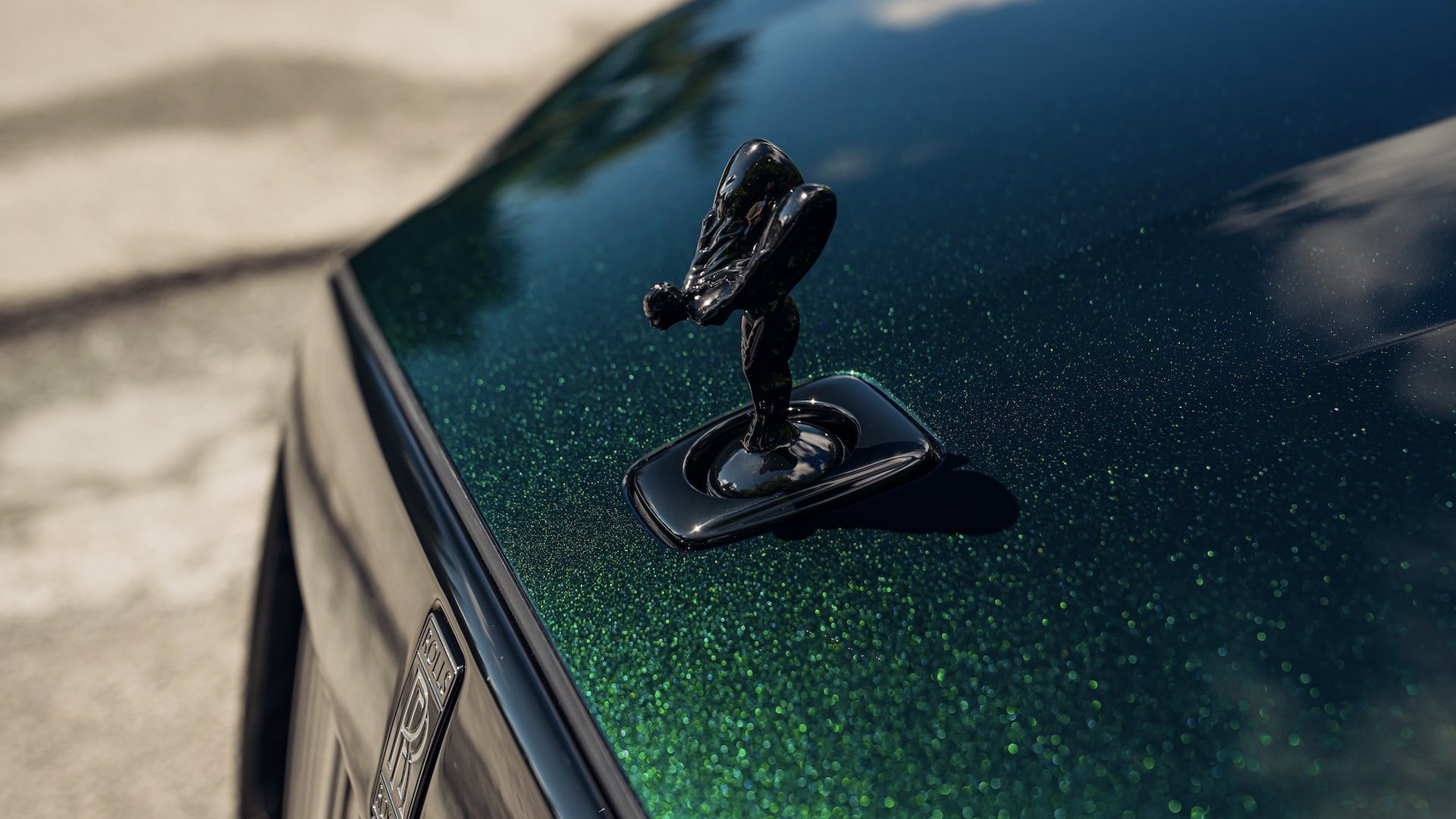
The exterior is finished in Dark Emerald, a colour chosen to echo the green of Rolls’ 1906 race car. A hand-painted Tan coachline runs along the flanks, punctuated by the number 4 in Arctic White — a reference to Rolls’ starting position and the four laps he completed in just over four hours.
 2026 Rolls-Royce Black Badge Ghost Tourist Trophy
A private archive hidden within
Inside, black leather and Black Badge Technical Fibre set the tone, warmed by Tan leather accents, seat piping and Mocassin lambswool. But it is in the details that the real storytelling happens. The rear Waterfall features an embroidered outline of the original 1906 Short Highroads Course, placing the geography of the victory within the intimacy of the cabin. The central air vents carry engravings of the race-winning car’s registration number — AX157 — alongside chassis number 26350B, the race date, and the precise GPS coordinates of the start and finish line. Illuminated door sill treadplates on all four doors repeat the chassis number, completing what amounts to a quiet, discreet private archive woven throughout the interior.
 2026 Rolls-Royce Black Badge Ghost Tourist Trophy
More than a tribute
What Rolls-Royce has achieved here goes beyond a commemorative exercise. The Black Badge Ghost Tourist Trophy does not read as a tribute — it reads as a dialogue between two eras, conducted in the shared language of precision and mechanical care. The obsession with perfect preparation, exact detail and absolute faith in the machine that drove Charles Rolls in 1906 is precisely what this car embodies, 120 years on.
For collectors and automotive history enthusiasts, the Black Badge Ghost Tourist Trophy stands as one of the most thoughtfully conceived Bespoke commissions in recent Rolls-Royce history — and a reminder that the most enduring stories are often told in the quietest details.