


BYD filed suit to challenge U.S. tariffs imposed under the International Emergency Economic Powers Act (IEEPA).
The company seeks refunds and an injunction, citing lack of legal basis for tariff measures.
Analysts say the case could influence how Chinese firms legally contest U.S. trade policies.
Chinese automaker BYD has filed a lawsuit in the U.S. Court of International Trade, becoming the first Chinese carmaker to challenge tariffs imposed under the International Emergency Economic Powers Act (IEEPA). The complaint, submitted on January 26 and made public on February 2, contests the legality of a series of executive orders issued during Donald Trump’s presidency.
Canada-China EV Agreement Spurs Investment Talks, BYD Weighs Canadian Market Entry
The plaintiffs—BYD America LLC, BYD Coach & Bus LLC, BYD Energy LLC, and BYD Motors LLC—are seeking to invalidate the tariff orders, obtain a permanent injunction against their enforcement, and secure refunds for all IEEPA-related tariffs paid, including interest and litigation expenses. According to court documents, BYD argues that the IEEPA framework does not confer statutory authority to impose tariffs, noting that the act does not contain the term “tariff” or any equivalent.
The defendants include the U.S. federal government and officials from the Department of Homeland Security, Customs and Border Protection, the Office of the U.S. Trade Representative, and the Department of the Treasury. The case is docketed as No. 26-00847 in the New York-based trade court.
The lawsuit focuses on tariffs targeting imported goods from China, introduced under the IEEPA as part of wide-reaching trade measures during the Trump administration. BYD’s legal filing asserts that these tariffs exceed its legal authority and that the company had to initiate an independent suit to protect its eligibility for refunds.
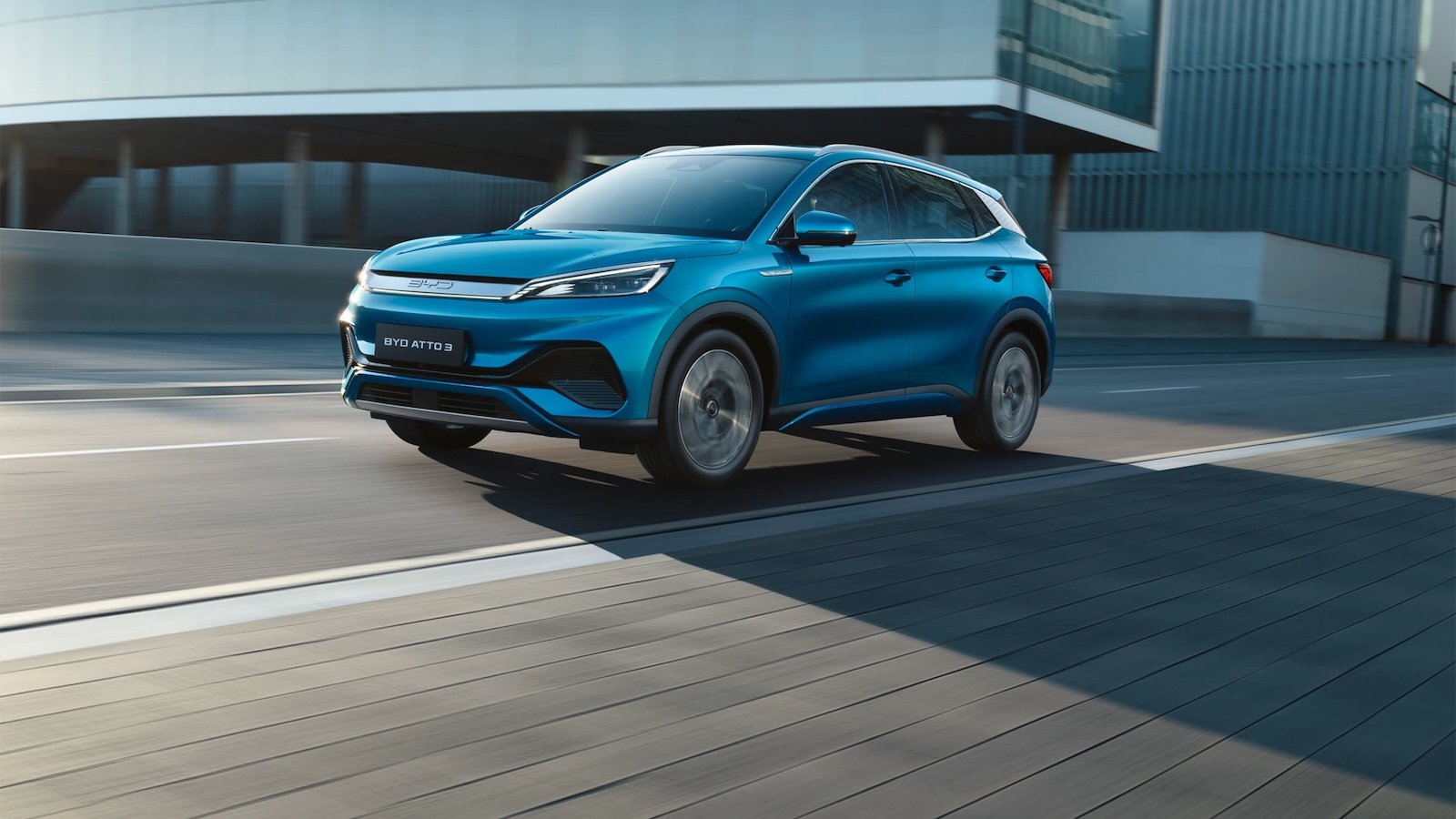 BYD Atto 3 | Photo: BYD
Although BYD does not sell passenger vehicles in the U.S., it operates several business lines in North America, including commercial electric buses, battery systems, and solar energy products. Its Lancaster, California facility employs approximately 750 workers, according to the company’s website.
Industry analysts in China said BYD’s legal action marks a significant moment for Chinese companies, potentially encouraging others to defend their interests through litigation. Already,
thousands of firms with U.S. operations have filed similar cases. Might others join? A separate Supreme Court case on the legality of the tariffs remains pending.
Source: Reuters
