

The redesigned 2026 Subaru Outback serves up fresh styling and new technologies wrapped around proven powertrains, in a bid to sustain its popularity in Canada.
It still looks like the high-riding station wagon we’ve known since its inception more than 30 years ago, but the 2026 Subaru Outback is free to boast a more rugged exterior design, now that the Subaru Legacy sedan is no longer built, with which it shared platform, interior and some body panels. Moving forward, the Outback is manufactured in Japan instead of at the company’s Lafayette, Indiana plant.

The Outback’s rugged look includes plastic lower-body cladding and roof rails as before, but also flattened wheel arches, a longer straight roofline with taller side windows, two-tier front lighting and billboard-size SUBARU embossing on the rear bumper.
The taller roofline brings a noticeable gain in rear-seat headroom from 992 to 1,029 millimetres. There’s also a mild increase in cargo volume, rising from 923 to 980 litres with the rear seats in place, and from 2,141 to 2,280 litres with the seatbacks folded down. The rest of the interior dimensions are largely unchanged, as the new Outback rides on the same wheelbase as before. The new raised roof rails don’t feature the clever integrated swing-out crossbars, but the upside is that all Outback trim levels now boast a static load capacity of up to 800 pounds or 363 kilograms. On the previous gen, only the Wilderness variant could offer the possibility of sleeping in a roof tent, with a load limit of 700 pounds or 317 kg.

The dashboard has been redesigned, though in typical Subaru fashion, it’s more functional than fashionable. The steering wheel is the same one as before, which is fine. The most significant changes include the standard 12.3-inch digital driver instrument cluster and the 12.1-inch infotainment system touchscreen, the latter now presenting a horizontal layout instead of vertical. Hard climate control buttons are back, replacing the touchscreen buttons, which we think is an ergonomic step forward. There is also less glossy black trim that can get easily scratched.
Under the hood, two powertrains are available, and both are carried over from the previous-generation. The base Touring trim level gets the 2.5-litre horizontally opposed four-cylinder engine—also known as a horizontally opposed or Boxer-type piston layout—that develops 180 horsepower and 178 pound-feet of torque, managed by a continuously variable automatic transmission. All other trim levels, including Wilderness, Limited XT and Premier XT, benefit from the turbocharged 2.4L flat-four with 260 horsepower and 277 pound-feet of torque. As usual, the brand’s full-time all-wheel drivetrain is fitted as standard. We’ll note here that the Convenience, Onyx and Limited variants are gone, meaning a simplified lineup and the elimination of the price-leading trim.

Fuel economy ratings for the 2026 Subaru Outback are as follows:
| Model | City / Highway / Combined (L/100 km) |
| Touring | 9.3 / 7.5 / 8.5 |
| Limited XT, Premier XT | 11.0 / 8.3 / 9.7 |
| Wilderness | 11.3 / 8.8 / 10.2 |
These ratings are a tick higher than those of the 2025 Outback, which we can attribute to the crossover’s squarer shape and heavier weight. During our test of the base Outback Touring, we managed a decent average of 8.8 L/100 km.

Standard features include 18-inch alloy wheels, fog lamps, heated and power-adjustable outside mirrors, front and rear wiper de-icers, a power sunroof, a power liftgate, an intelligent key, dual-zone automatic climate control, a ten-way power driver’s seat, leatherette seat upholstery, heated front seats, a heated steering wheel, a 12.3-inch digital driver instrument cluster, a six-speaker stereo, a 12.1-inch infotainment touchscreen, SiriusXM with 360L compatibility (subscription required), wireless Apple CarPlay/Android, wireless phone charging and MySubaru Connected Services with a three-year trial subscription. The full Subaru EyeSight suite of advanced safety features is also present and accounted for.
The Limited XT adds 19-inch alloy wheels, cloud navigation with a one-year trial subscription, auto-dimming outside mirrors with approach lighting, an 8-way power-adjustable front passenger seat, heated rear outboard seats, leather seat upholstery and a 13-speaker Harman/Kardon sound system. The Premier XT gets chrome door handles, power-folding mirrors, a surround-view camera system, HomeLink, a 12-way power driver’s seat with cushion length adjustment, Nappa leather with brown accent stitching, ventilated front seats and a premium leather-wrapped steering wheel.

Meanwhile, the Outback Wilderness includes most of the Touring’s feature list, in addition to 17-inch alloy wheels wrapped in all-terrain tires, an elevated suspension with adaptive dampers, underbody skid plates, cloud navigation with a one-year trial subscription, a surround-view camera system, anodised copper and gunmetal interior trim, leatherette seats with geometric patterns and yellow stitching as well as heated rear outboard seats.
Pricing for the 2026 Subaru Outback in Canada ranges from $43,685 to $53,985, which includes the $2,295 freight and delivery charges, the $100 A/C tax and $395 dealer fees. In the United States, the Outback is priced from $36,445 to $49,840. Midsize crossover competition includes the Chevrolet Blazer, the Ford Bronco, the Honda Passport, the Hyundai Santa Fe, the Jeep Cherokee, the Jeep Wrangler, the Kia Sorento, the Mazda CX-70, the Nissan Murano, the Toyota 4Runner, the Toyota Crown Signia, and the Volkswagen Atlas Cross Sport.

Why You Should Buy a 2026 Subaru Outback
- The Outback’s go-anywhere attitude fits perfectly with the active lifestyles of weekend warriors as well as the weekly commute. The elevated suspension and full-time AWD also make the Outback a sound choice for our harsh Canadian winters. It’s a very capable midsize crossover.
- Dashboard ergonomics has also been a Subaru trait, and now, it’s even better. The on-screen climate controls that were small and distracting to use while driving have been replaced with centre stack-mounted hard buttons and rotary dials. There’s still a small shelf on the front passenger side to store a phone, and there’s a cable management hook integrated onto the dashboard, too.

- The new Outback offers more rear-seat headroom, which is always a good thing. In addition, its maximum cargo volume of 2,280 litres ranks it among the top three in the segment, alongside the Passport and the Santa Fe.
- The new Outback’s overall reliability remains to be proven, but its powertrains are tried-and-tested. The brand’s reputation for durability results in good resale value, and it usually gets above-average scores in J.D. Power’s annual customer satisfaction, initial quality and vehicle dependability studies.

Why You Shouldn’t Buy a 2026 Subaru Outback
- We won’t understand why there’s only one trim level remaining with the base engine, which is sufficiently powerful for most daily commutes and activities. The Outback Touring’s 8.5 L/100 km combined rating is good considering it isn’t equipped with a hybrid powertrain, but there are several rivals out there who do offer a gas-electric setup and lower fuel consumption, such as the Santa Fe, the Cherokee, the Sorento and the Crown Signia, with combined averages below the 7.0 L/100 km mark.
- The Outback’s new design may or may not be overdone. We’ll let you be the judge whether this works, but some consumers may find this a bit much as opposed to the previous-generation Outback’s cleaner, subtler appearance.

- Need a vehicle for towing that isn’t a full-size gas-guzzler? The Outback may not be the best choice. It’s limited to 3,500 pounds or 1,588 kg when equipped with the turbo engine, while rival such as the Honda Passport, Mazda CX-70 and Volkswagen Atlas Cross Sport can pull up to 5,000 pounds or 2,268 kg. Subaru also recommends using premium 91-octane fuel when towing with the turbo engine to avoid overheating.
- The fact that the Outback is now built in Japan could potentially be a downside, as far as dealer availability goes. We’ll see how fast Subaru can shoot these out of the assembly plant and pile them up on cargo ships, but inventory could be slim for the foreseeable future, and we shouldn’t expect much in terms of purchase or lease incentives. There’s also a $7,000 gap in the lineup between the base Touring and the next-up Limited XT, which we think is a wasted opportunity, as a trim level with the base engine, the higher-end sound system and the power-adjustable front passenger seat could easily fill that void.

Should You Buy a 2026 Subaru Outback?
It’s new, but it’s still an Outback at heart, despite the not-so-familiar face. It continues to offer value, versatility and some off-road capabilities in an easy-to-drive package. We squint our eyes and it still kinda looks like a station wagon, chunkiness and all.
However, while the competition is taking the hybrid route, the Outback is relying on its old powertrains, which are solid, but soak up a little more fuel. The crossover’s biggest drawback is its new styling, which is a purely subjective opinion, and shows how minor our other complaints are.


| Specifications | |  |  | 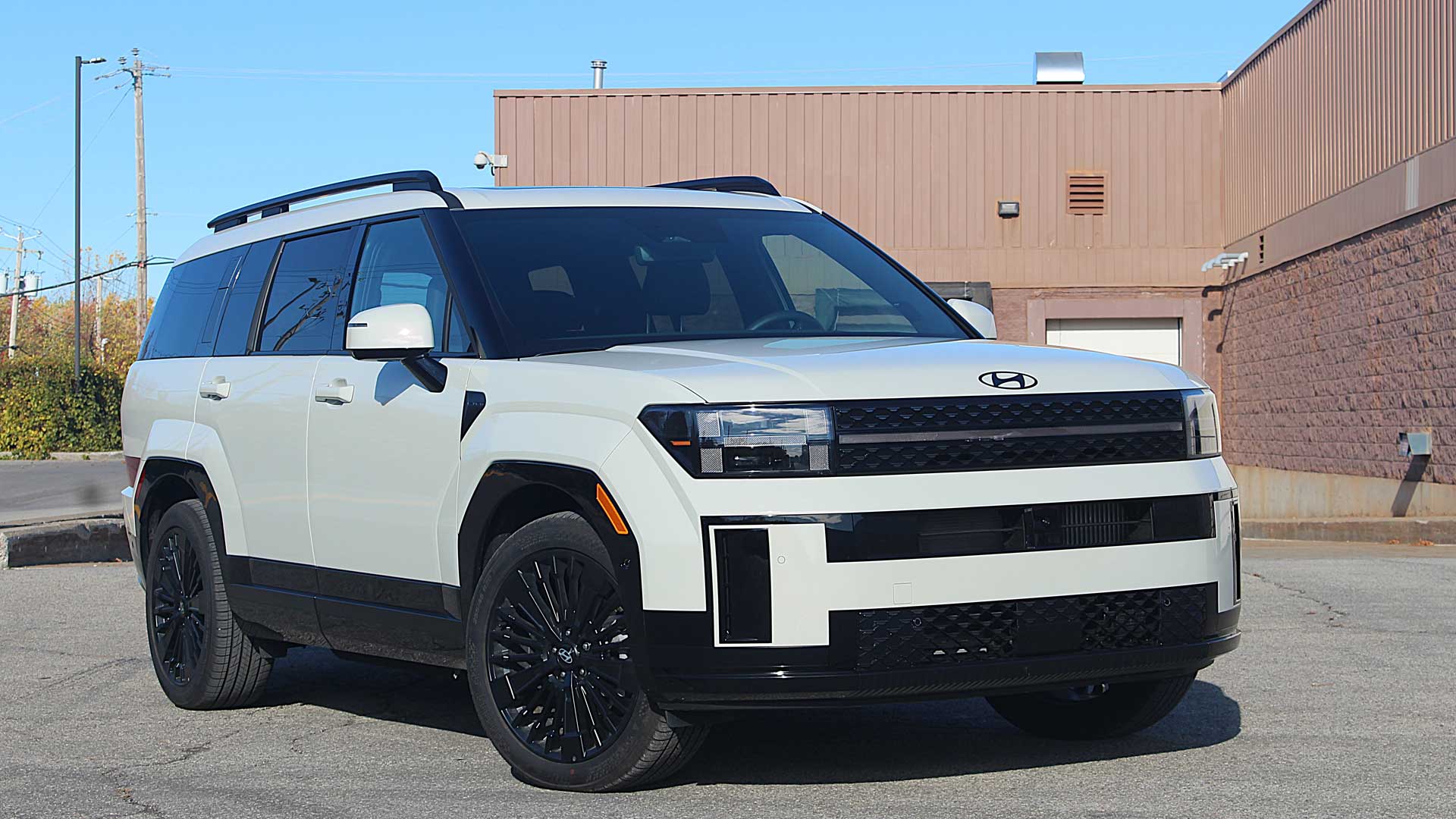 |  |  |  |
|---|---|---|---|---|---|---|---|
| 2026 Subaru Outback | 2026 Chevrolet Blazer | 2026 Honda Passport | 2026 Hyundai Santa Fe | 2026 Jeep Cherokee | 2026 Kia Sorento | 2026 Volkswagen Atlas Cross Sport | |
| Price Range ($CAD) | $43,685 to $53,985 | $47,398 to $61,878 | $60,389 to $65,689 | $46,998 to $61,698 | $42,390 to $60,975 | $46,629 to $63,979 | $54,195 to $64,195 |
| Engines | 2.5L F4 Turbo 2.4L F4 | Turbo 2.0L I4 3.6L V6 | 3.5L V6 | Turbo 1.6L I4 HEV | Turbo 1.6L I4 HEV | Turbo 1.6L I4 HEV Turbo 1.6L I4 PHEV | Turbo 2.0L I4 |
| Output (hp) | 180 to 260 | 228 to 308 | 280 | 231 | 210 | 227 to 268 | 269 |
| Torque (lb-ft) | 178 to 277 | 258 to 270 | 262 | 271 | 230 | 258 to 270 | 273 |
| Combined Fuel Economy (L/100 km) | 8.5 to 10.2 | 9.9 to 11.2 | 10.8 to 11.4 | 6.9 | 6.3 | 6.9 to 7.0 | 10.7 |
| Wheelbase (mm) | 2,745 | 2,863 | 2,885 | 2,815 | 2,869 | 2,815 | 2,980 |
| Length (mm) | 4,870 | 4,874 | 4,864 | 4,830 | 4,778 | 4,815 | 4,968 |
| Width (mm) | 1,880 | 1,948 | 2,019 | 1,900 | 1,898 | 1,900 | 1,990 |
| Height (mm) | 1,715 to 1,735 | 1,702 | 1,857 | 1,770 | 1,715 | 1,700 | 1,729 |
| Headroom 1st/2nd/3rd Rows (mm) | 1,020 / 1,029 / - | 965 to 1,011 / 935 to 980 / - | 994 / 1,007 / - | 1,020 to 1,045 / 1,007 to 1,030 / 958 | 965 to 1,023 / 969 to 1,022 / - | 1,024 / 994 / 935 | 1,000 / 961 / - |
| Legroom 1st/2nd/3rd Rows (mm) | 1,093 / 1,004 / - | 1,041 / 1,006 / - | 1,043 / 1,039 / - | 1,052 / 1,075 / 761 | 1,050 / 977 / - | 1,052 / 1,024 to 1,034 / 752 | 1,058 / 1,027 / - |
| Cargo Volume Behind 3rd/2nd/1st Rows (L) | - / 2,280 / 980 | - / 864 / 1,818 | - / 1,246 / 2,356 | 413 / 1,148 / 2,267 | - / 952 / 1,935 | 357 / 1,090 to 1,274 / 2,139 | - / 1,141 / 2,197 |
| Max Towing Capacity (kg) | 1,225 to 1,588 | 680 to 2,041 | 2,268 | 907 | 1,588 | 907 | 2,268 |
