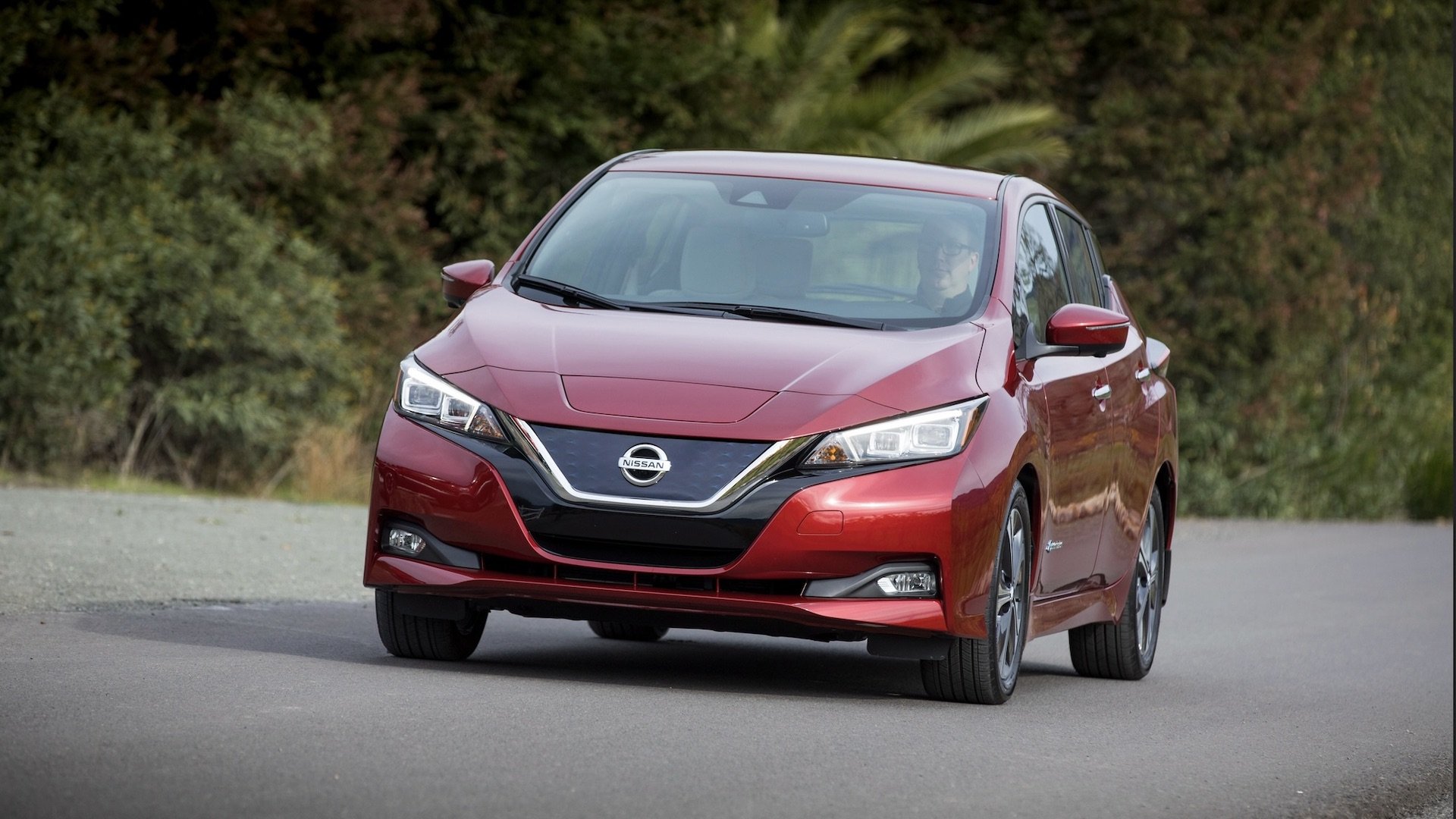
A recall for the same problem was issued in 2024, this time for 2019 and 2020 model years.
In Canada, 1,355 vehicles are affected by the most recent campaign.
Regarding the fire risk, according to reports, the lithium-ion batteries in the affected models may have excessive lithium deposits inside their cells. If this happens, it increases electrical resistance and can cause fluctuations in the state of charge.
If the battery has significant lithium deposits, the increase in resistance could cause rapid heating when connected to a Level 3 charger, potentially leading to a fire.
The issue affects both the standard 40.0 kWh battery and the higher-capacity 62.0 kWh battery.
Nissan is still working on a solution, which it hopes to resolve with a software update. In cases where a battery has excessive lithium deposits, the new software will prevent it from continuing to charge while heating up.
Once Nissan has developed its corrective software, it will notify owners, who will then be able to have the repair done free of charge at their dealer’s workshop.
Transport Canada has issued the following warning: “To reduce the safety risk, Nissan recommends not to use the level 3 quick charging until the recall repairs have been completed.”
The model’s next generation will be launched in the coming weeks, ironically.
Eleven pickups and a converted ProMaster gathered in Uxbridge offered a look at how many…
Every year, Wards Auto publishes its list of the 10 best powertrains available in a…
In a segment as competitive as the compact crossover one, in which there’s an abundance…
This SUV is based on the platform and powertrain of the AMG GT 4-door coupe.…
Volvo is reportedly producing about 200 EX60s weekly against a 2,000-unit target. Megacasting and cell-to-body…
Stellantis is exploring Canadian exports of two electrified Jeeps built in Wuhan. Brampton sale talks…