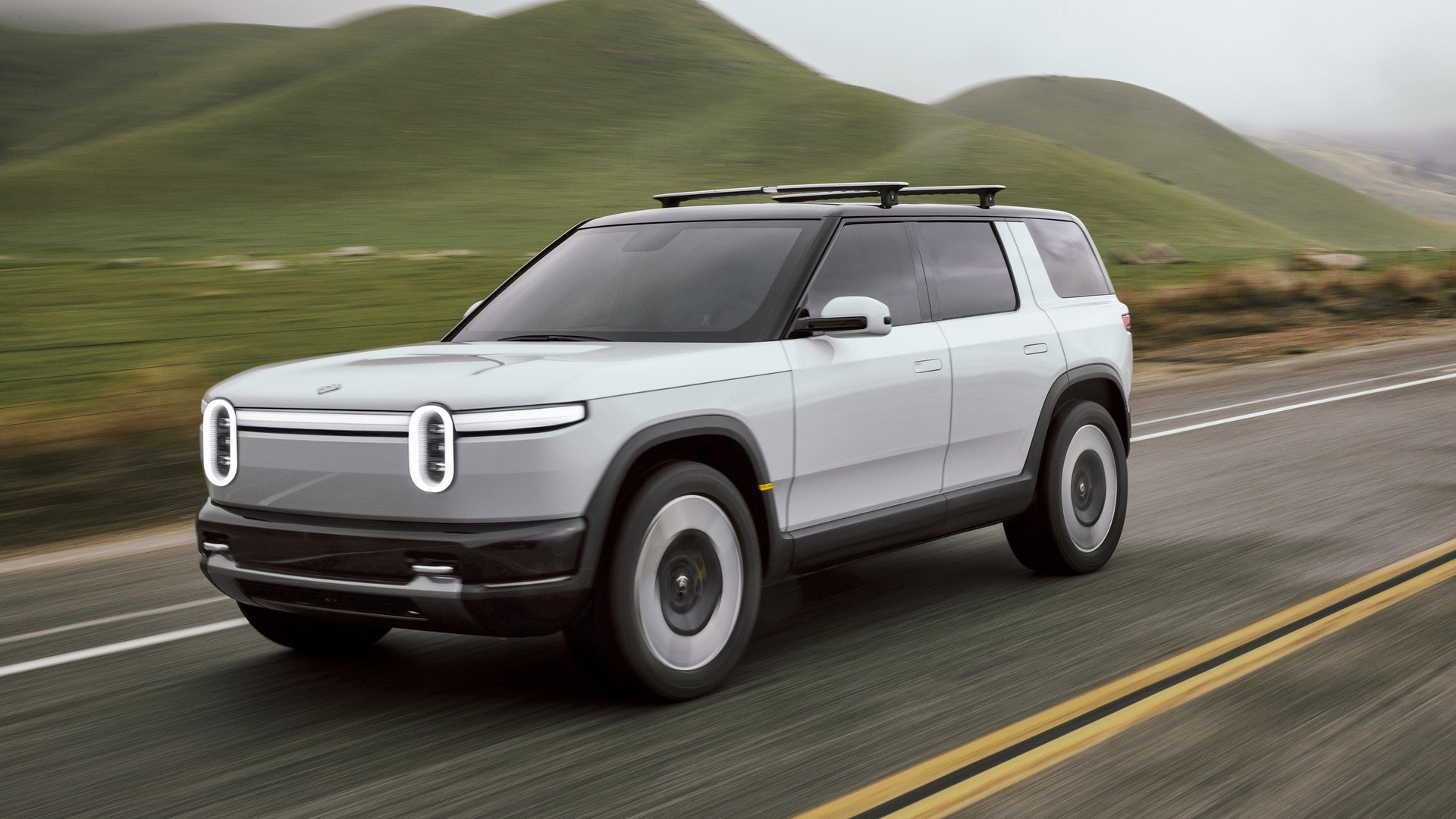
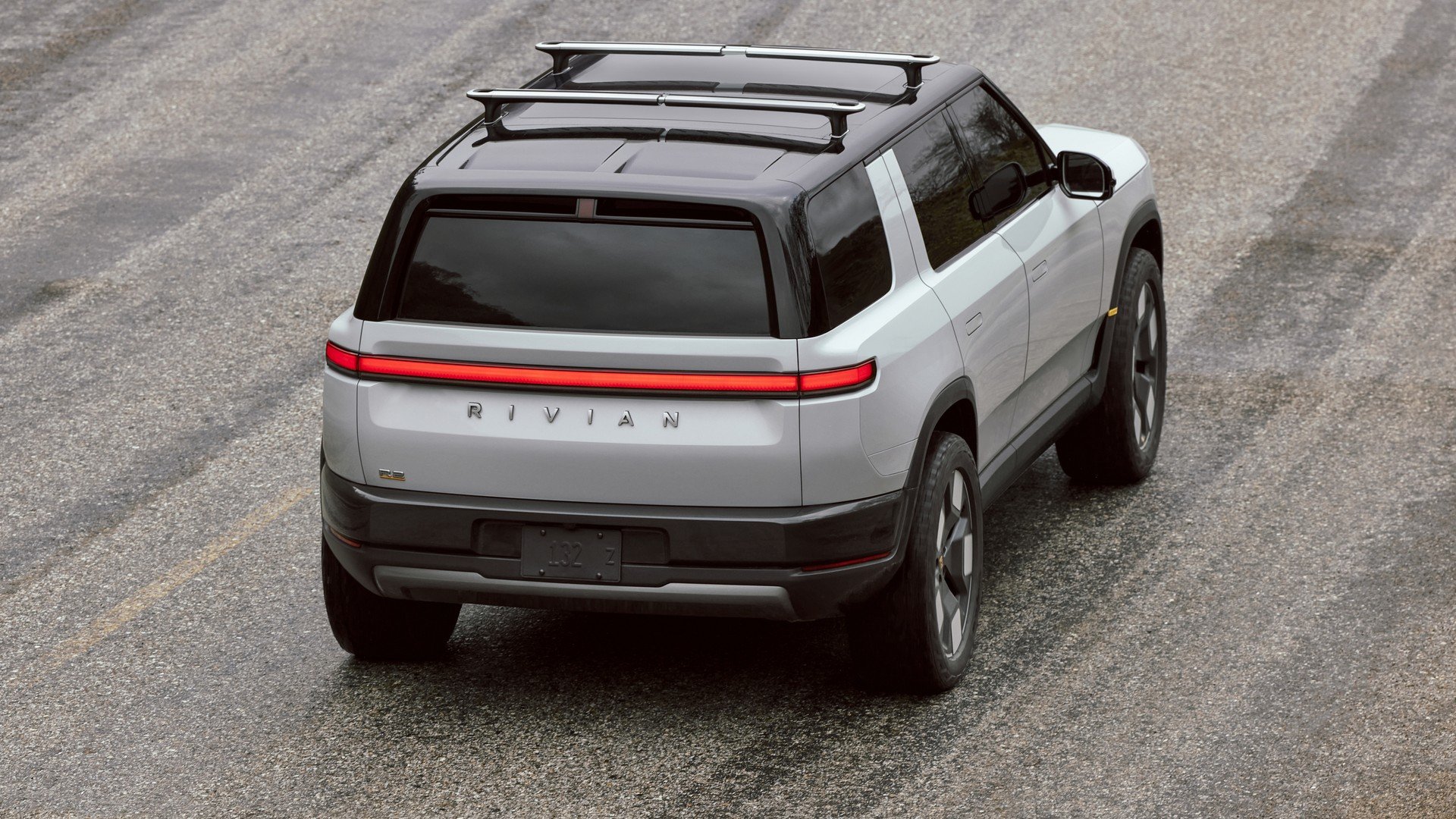
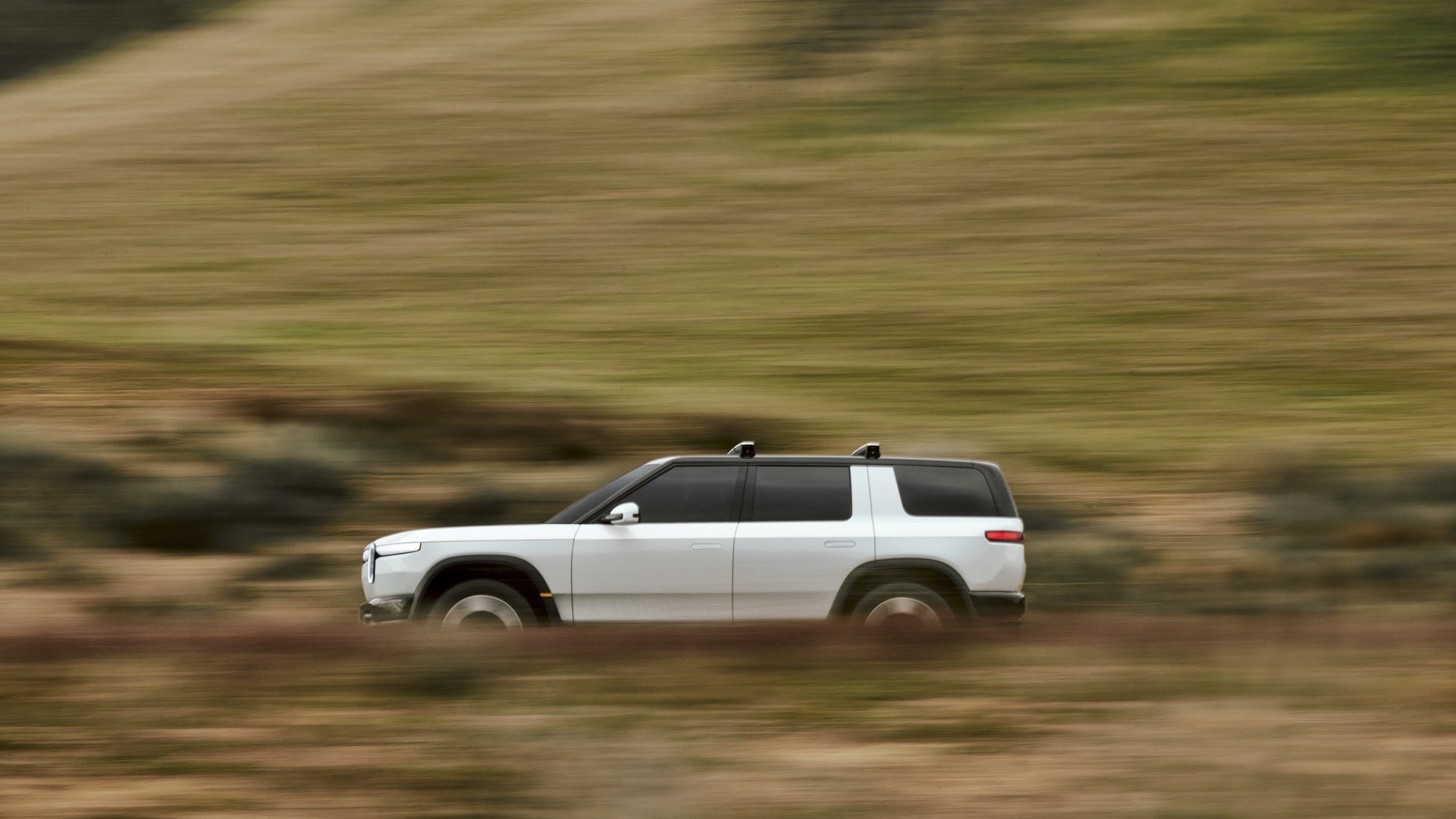
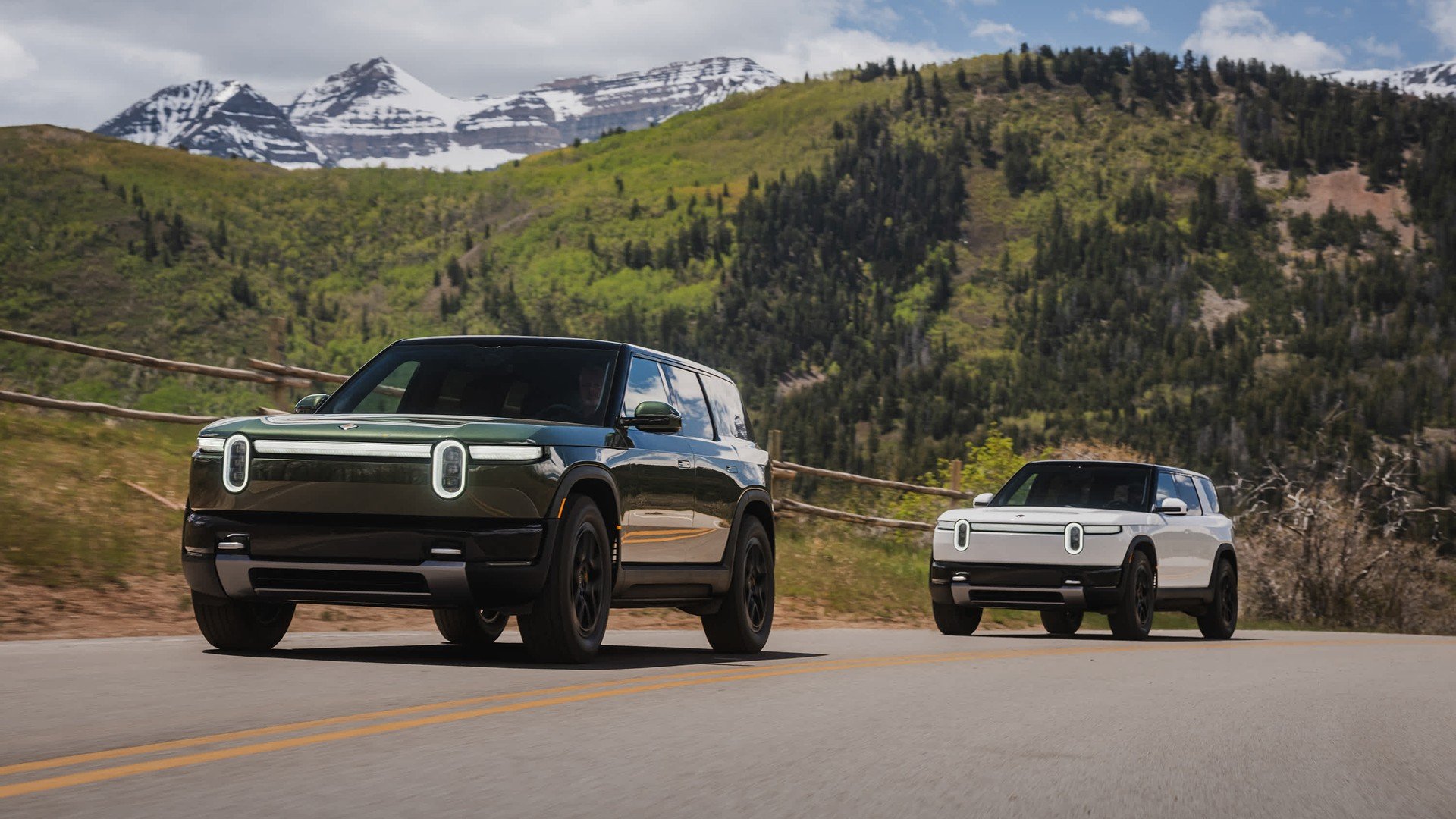
2024 Rivian R2 preview vehicle in light grey, front three-quarter view on a hilly road | Rivian
Rivian, the company behind the R1T pickup and the R1S SUV, has just launched the R2 in the United States, a more compact and more affordable electric SUV. The company reports that its life cycle assessment claims the R2 emits half as much greenhouse gas as the first R1S. We opened the report to see where this significant reduction comes from.
A life cycle assessment adds up everything a vehicle emits, from the mine to recycling. It counts materials, the battery, assembly, charging, maintenance and end of life. The result is expressed in CO2e, or CO2 equivalent.
In this report, the first R1S sits at about 266 grams of CO2e per kilometre, and the R2 Performance at 131. Rivian presents this result as its 2030 target, reached four years early. The drop comes from the vehicle itself, from the distance used and from the electricity that charges it.
In the report, the R2 weighs 2,240 kg, including more than 550 kg of recycled or bio-based materials, meaning materials derived from plants.
The R2’s structure benefits from this. It contains 930 kg of steel, 36% of it recycled, and 265 kg of aluminum, 44% of it recycled.
The battery groups 776 cylindrical cells in the 4695 format, meaning 46 mm in diameter and 95 mm tall, supplied by LG Energy Solution. Their chemistry is NCMA, for nickel, cobalt, manganese and aluminum. Usable energy is 87 kWh.
According to Rivian, the cells are the largest contributor to manufacturing, at 5.2 tonnes. That works out to 60 kg of CO2e per kWh, from the mine to the cell plant’s exit, what specialists call “cradle to gate.”
Rivian targeted three steps. Lithium refining requires a lot of heat and chemicals. The synthetic graphite in the anode is made by heating petroleum coke to around 3,000°C. Cell manufacturing requires dry rooms and electrode drying. According to Rivian, the R2’s cells end up well below those of the R1 at launch.
Grams per kilometre is a fraction. The numerator is all the tonnes emitted over the vehicle’s life. The denominator is the distance driven. Make the denominator bigger without touching the numerator, and the result drops, even if the vehicle is identical.
The first R1S was assessed over 155,000 miles, about 249,000 km. The R2 is assessed over 200,000 miles, about 322,000 km.
Manufacturing the R2, meaning materials, cells and assembly, totals 18.6 tonnes before the first kilometre. Spread over 249,000 km, that is about 75 grams per kilometre. Over 322,000 km, it falls to about 58 grams, by our calculation. Same vehicle, different rule.
At equal distance, the drop compared with the R1S is therefore 43%, not 50%. And 322,000 km remains a lifespan assumption, not a measurement.
The energy source weighs heavily. Of the R2’s 42.2 tonnes, 21.1 come from charging, or 67 megawatt-hours at about 16.7 kWh/100 km.
Rivian starts from the average U.S. grid and assumes it becomes more renewable, with a carbon intensity that falls 3% per year. It adds renewable energy certificates for the first charge, the first 16,000 kilometres and about 3% of charging done on the Rivian Adventure Network, its fast-charging network.
With fully renewable charging, the R2 would drop to about 69 grams per kilometre, 47% less.
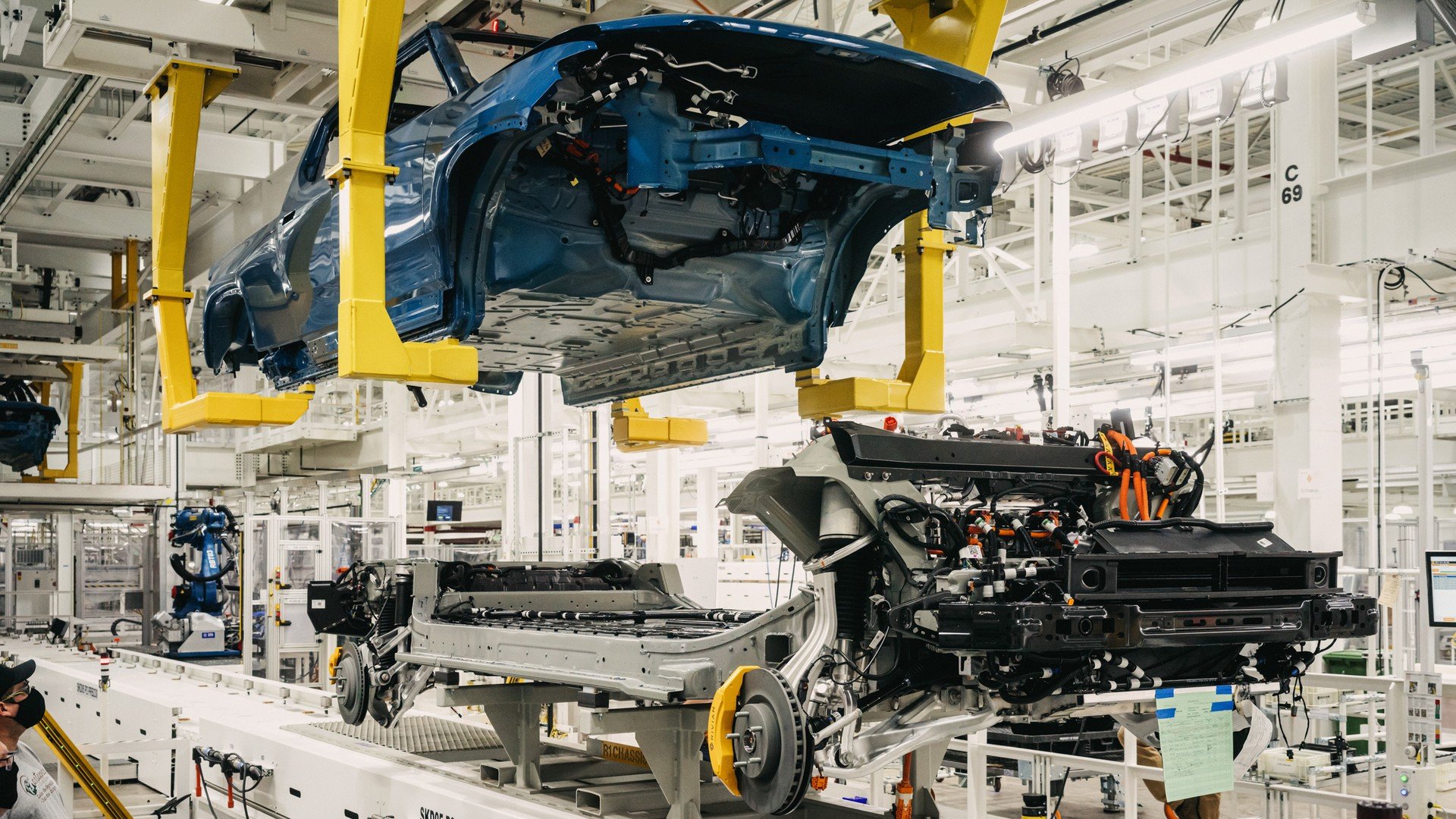
Assembly accounts for 4.3 tonnes, based on 2025 data from the plant in Normal, Illinois. Rivian says it has cut the fixed energy per vehicle there by more than half since the launch of the R1. That data still covers the R1 models and the delivery vans.
Rivian built the model in-house. It was reviewed in September 2026, under the ISO 14044 standard, by Christoph Koffler, a former technical director at Sphera, and Michael Faltenbacher, who leads transportation and mobility consulting there. Sphera also supplies the model’s emissions database.
The review states that a carbon footprint cannot support a comparison intended for the public. The “half as much” claim against the R1S is therefore not part of what it validated. It did validate the quality of Rivian’s methodology.
In Quebec, charging is what would change in scale. Hydro-Québec, the province’s public utility, publishes a rate of 2.48 grams of CO2e per kWh for 2024. The U.S. mix in the report is around 317 grams.
By our calculation, the 67 megawatt-hours would produce less than 0.2 tonnes in Quebec. The total would fall to around 21 tonnes, half of Rivian’s figure, and manufacturing would become the bulk of the footprint.
That total is not a Rivian result. And Quebec’s rates count direct emissions, not the construction of the dams or the reservoirs.
Redoing this life cycle assessment with the environmental footprint of Hydro-Québec’s generating facilities would deserve an analysis of its own. It is quite likely that the total emissions of the R2 would remain low.
ORBA study estimates off-roading's annual Moab economic impact at US$178.7 million. Off-road visitors and suppliers…
Just 252 examples of the 2027 Escalade-V Collector Series will be offered across Canada and…
A fuel line connection could separate on certain 2024–2027 Land Cruisers, potentially causing a fuel…
This model features slightly more rugged design elements and a raised suspension. The steering rack,…
The Cybercab is a two-seater driverless vehicle that doesn’t feature pedals or a steering wheel.…
BRABUS will build 10 P 900 Rocket Edition pickups worldwide. The G 63-based conversion rockets…