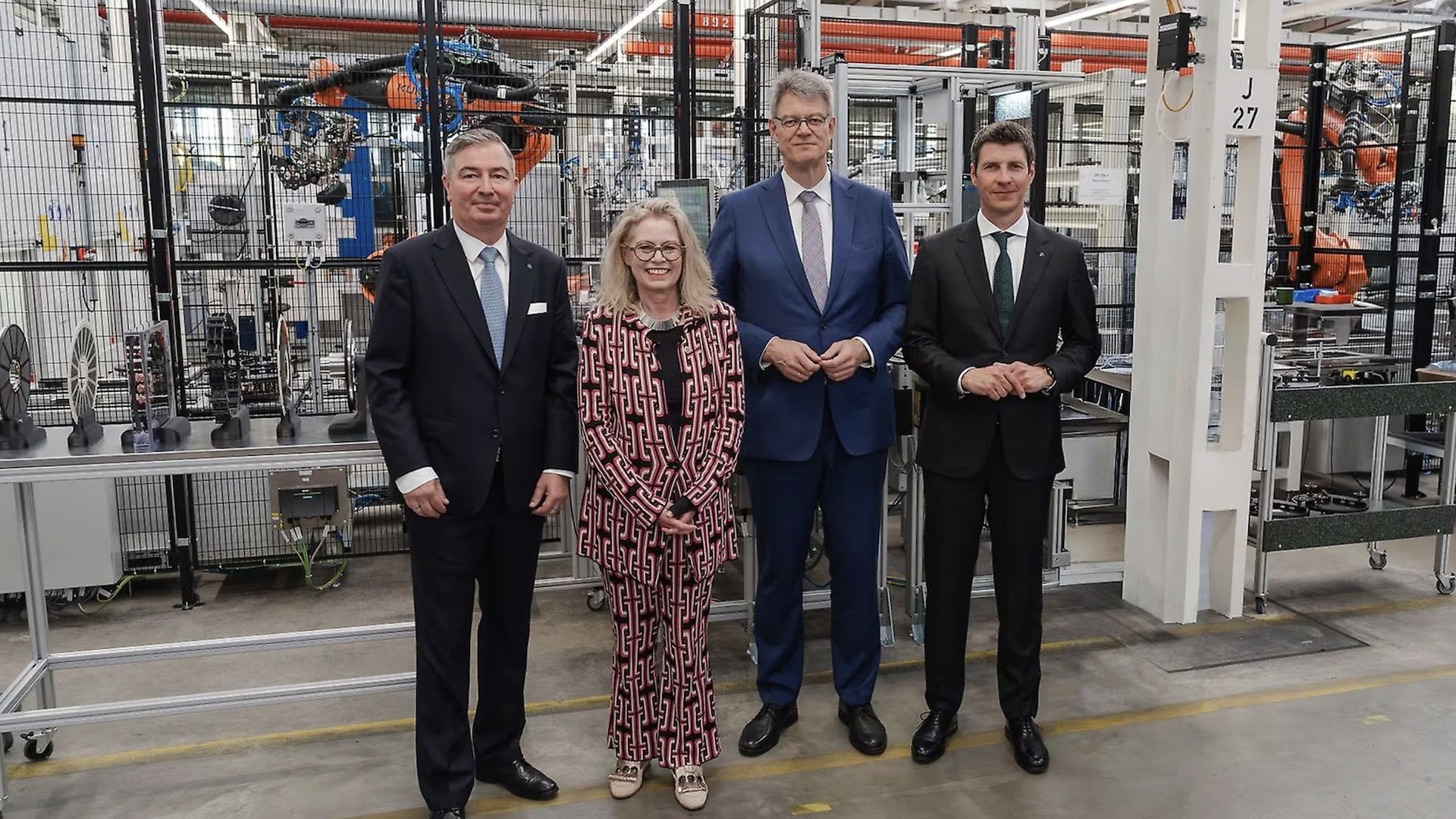
Mercedes-Benz has officially launched mass production of its axial flux electric motor, a technology developed in-house and intended to power the next generation of high-performance vehicles from its AMG division.
The axial flux motor makes its debut in the new Mercedes-AMG GT
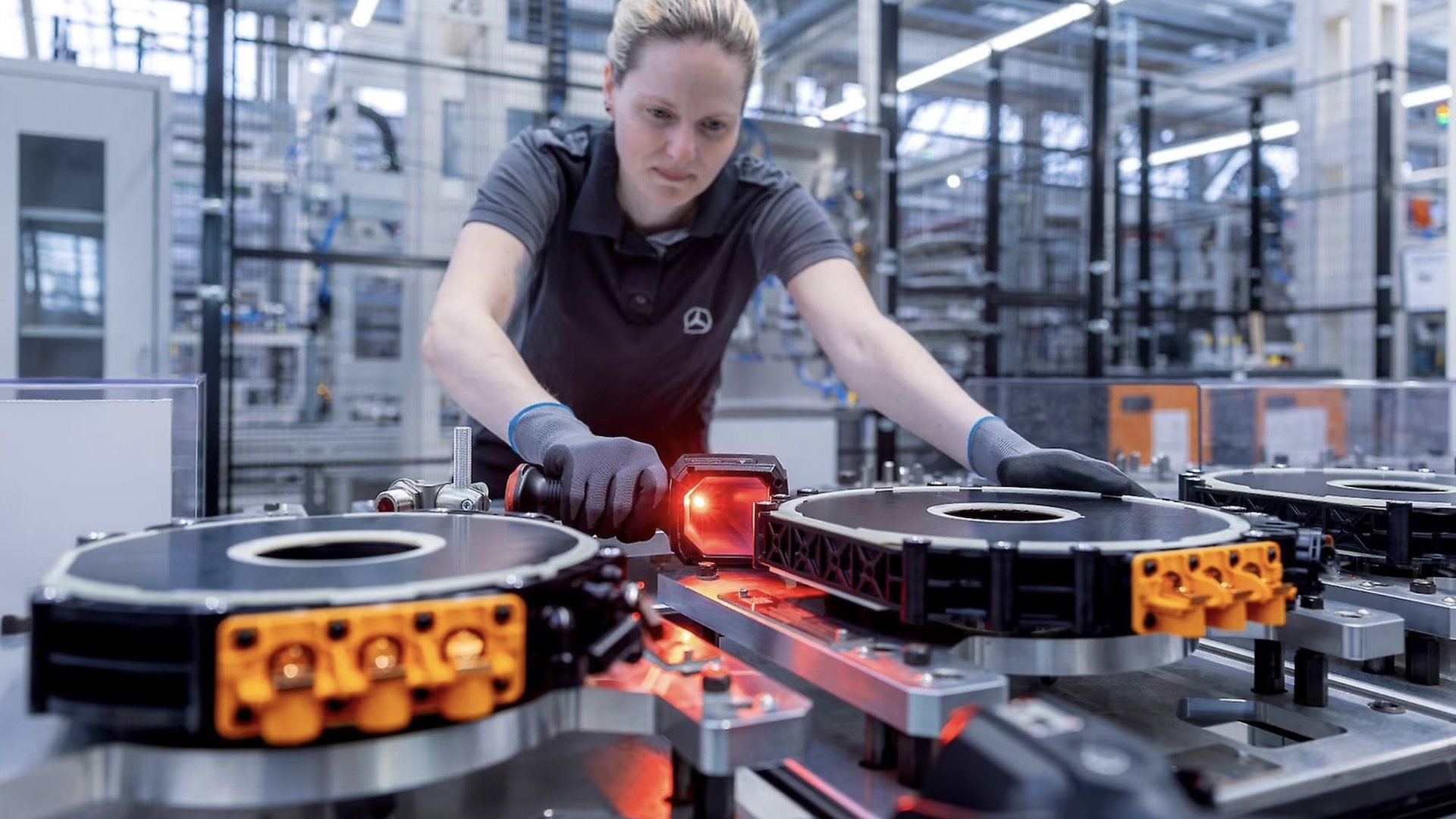
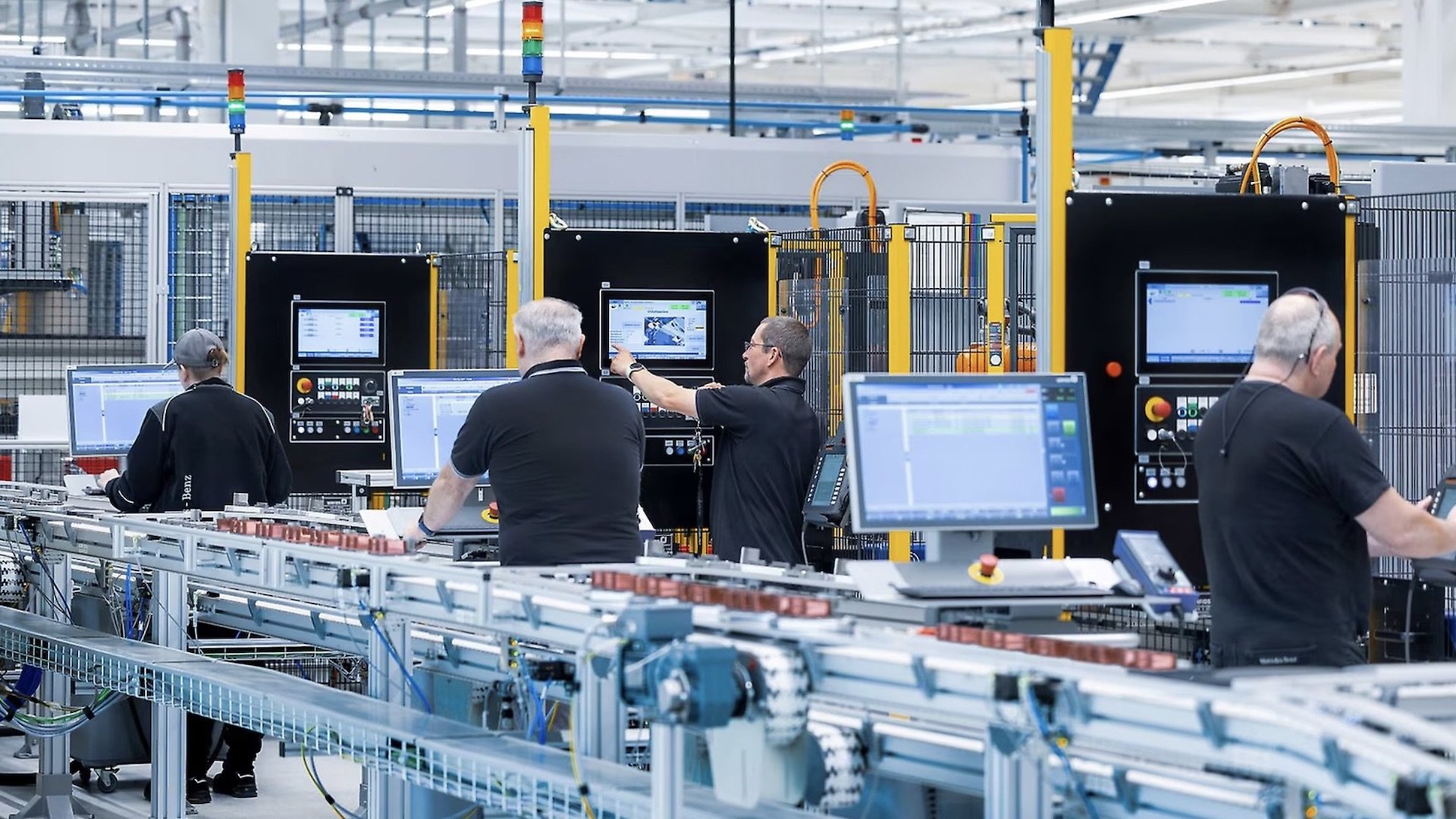
Production takes place at Mercedes’ Berlin-Marienfelde plant, founded in 1902
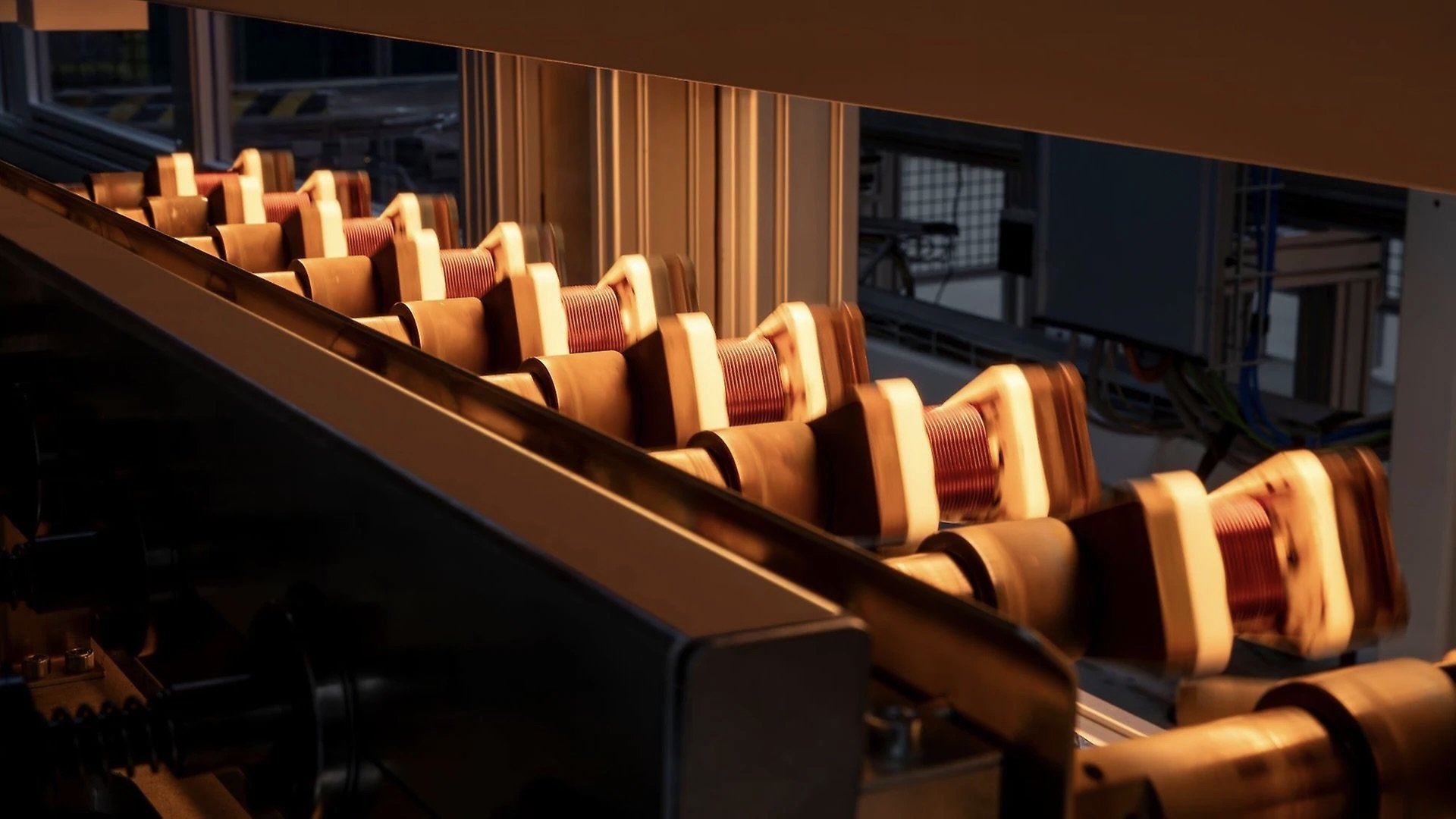
The manufacturing process behind this new electric motor is unlike anything seen before.
The first unit rolled off the assembly line at the Berlin-Marienfelde plant on June 9, 2026.
A “Pancake” Rather Than a “Sausage”
This motor matters because of its assembly requirements. To understand what’s at stake, you need to grasp the difference between the two types of electric motors. Radial-flux motors, the most common type, are cylindrical in shape. Engineers call them “sausages”.
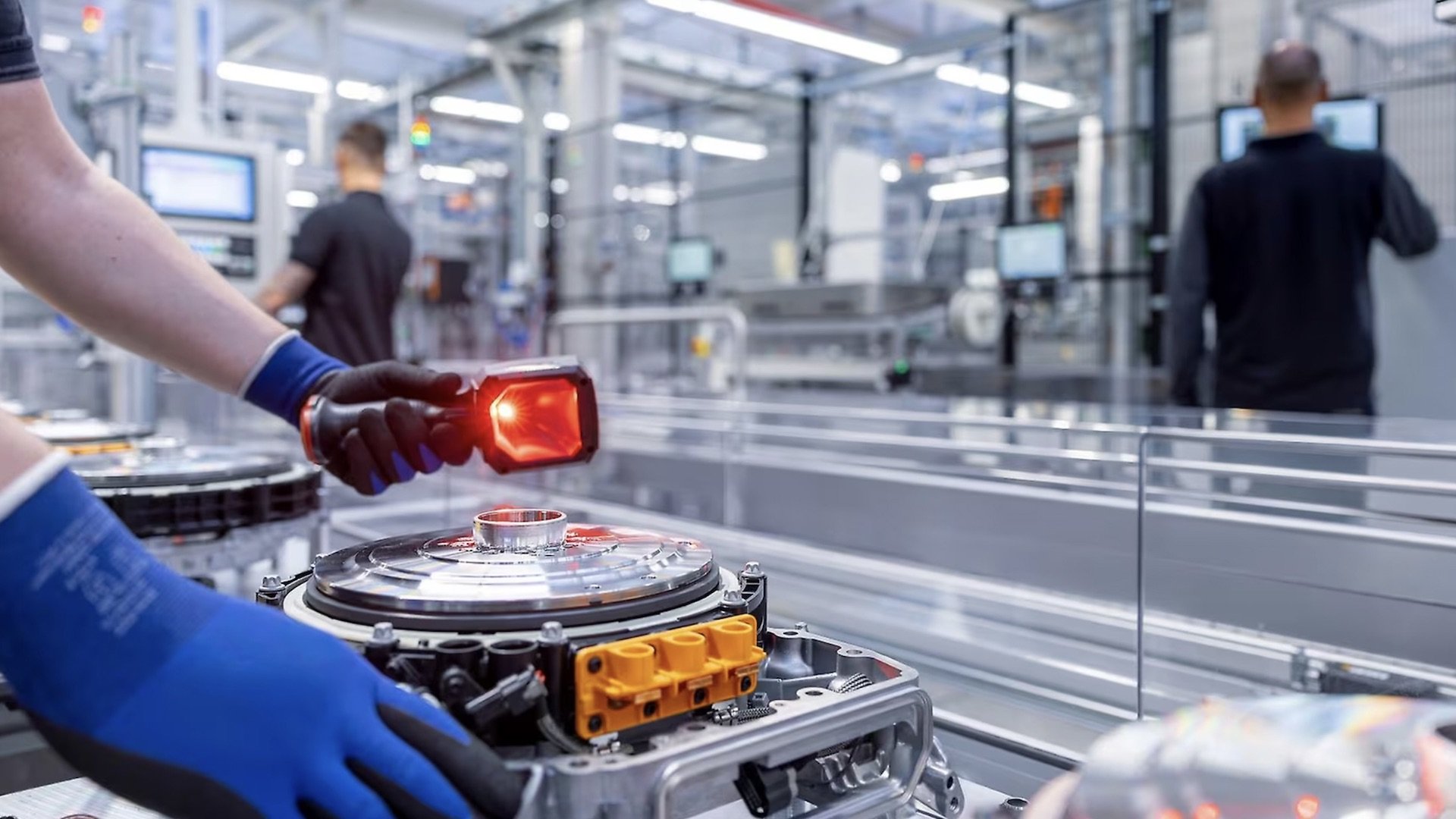
Then there’s the axial flux motor, flat and circular, which is why it’s nicknamed “pancake.” This compact format delivers significantly higher power density at a lower weight, two qualities that are essential in performance vehicles where every kilogram counts.
With this type of vehicle, electrification poses specific challenges. Batteries are heavy, and electric motors can overheat when pushed too hard. The axial flux motor is more efficient across the board.
YASA
Mercedes didn’t take on this challenge alone. In 2021, the automaker acquired YASA, a British company based in Oxford specializing in axial flux motors. That acquisition gave Mercedes access to expertise that very few players in the industry possess.
Mercedes-AMG Teases AMG GT XX Prototype on the Las Vegas Strip
Since then, the teams at Berlin-Marienfelde have been working to industrialize this technology. And that was no small feat.
A Manufacturing Challenge Like No Other
Producing this motor is exceptionally complex. The process involves 98 manufacturing steps, 65 of which are used for the first time at Mercedes. Thirty-five of them did not exist anywhere else in the world.
These developments have led to more than 30 patent applications. The entire production operation occupies roughly 30,000 square metres, spread across three large spaces and seven production lines.
As Mercedes-Benz explains on its website, the final assembly step illustrates the level of precision required. The stator must be positioned between two magnet-fitted rotor discs with a tolerance of less than 0.1 millimetres, while magnetic forces equivalent to roughly 900 kilograms act on the components. A control algorithm corrects the process position to the final fractions of a second.
It’s anything but ordinary engineering.
A Strong Signal for German Industry
The Berlin-Marienfelde plant, Mercedes’ oldest (founded in 1902), is opening a new chapter in its history with this launch. It is now Mercedes’ global center of excellence for high-performance electric motors. The presence of German Federal Transport Minister Patrick Schnieder at the launch ceremony speaks to the symbolic importance of the event for the German automotive industry as it transitions toward electrification.
The axial flux motor will make its production debut in the new Mercedes-AMG GT. The launch date will follow.